
“High-CRI LED” is a useful starting specification, not a complete acceptance result. A butcher-counter buyer still needs to view the same product sample under controlled conditions, record ambient light, check glare and shadow from customer and staff positions, and keep refrigeration performance separate from appearance.
XCCOLD lists high-CRI LED lighting for its fresh-meat showcase counter family. The same product intelligence also identifies straight glass, a rear-service counter format, anti-fog-treated glass and food-contact stainless surfaces. Those facts define the equipment under review; they establish no universal CRI value, colour temperature, lamp life or meat shelf life.
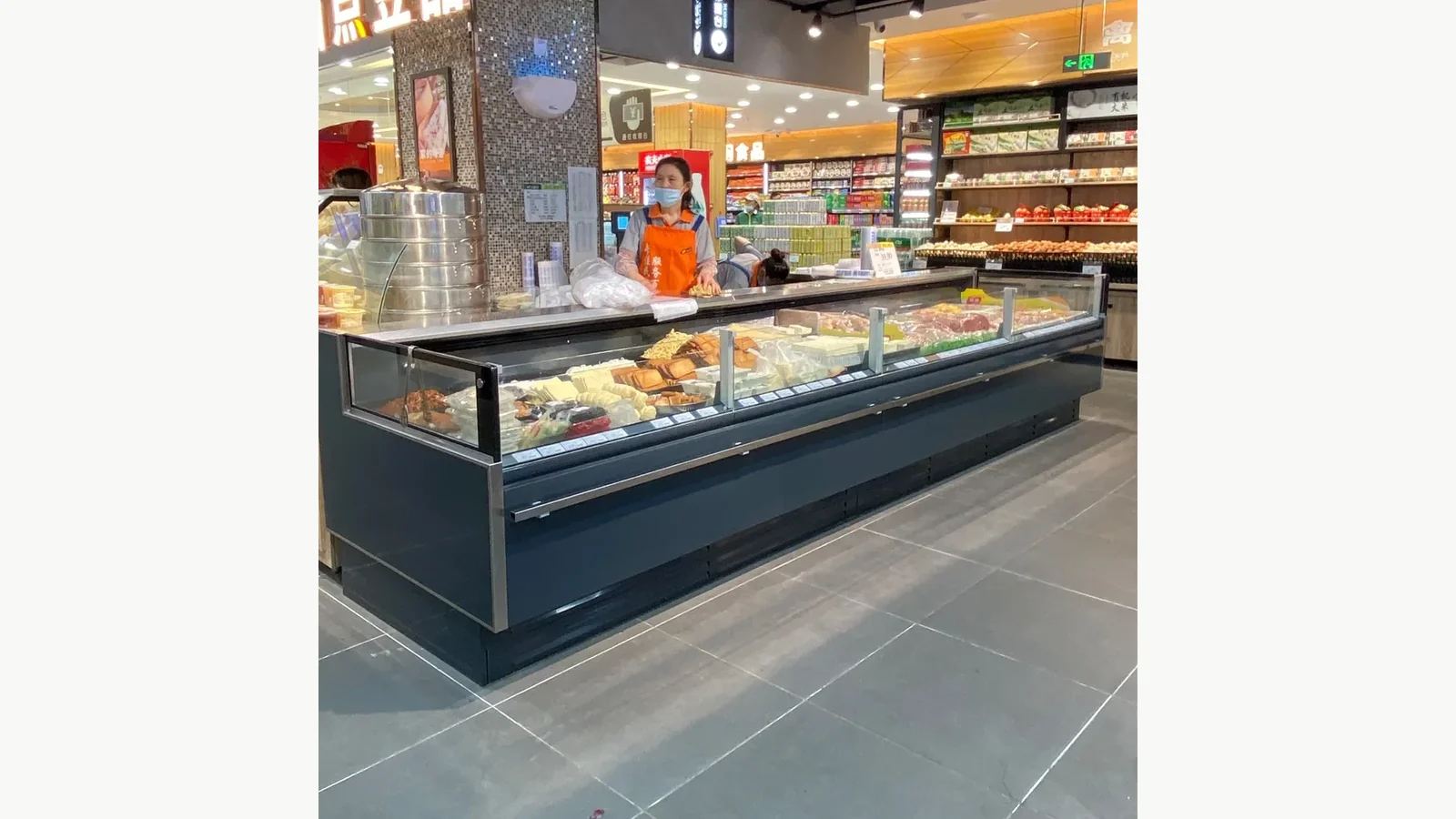
Approve What the Customer Sees—and Record How You Saw It
Colour rendering describes how a light source reveals colours relative to a reference. It does not prove that two fixtures with the same headline CRI will produce the same result after colour temperature, spectrum, intensity, geometry, glass reflection and ambient light change.
The American Meat Science Association's meat-colour measurement guidance controls lamp type, colour temperature, CRI, intensity and exposure when display studies are compared. A store project does not need to become a laboratory, but it should borrow the discipline: change one variable at a time and record the viewing condition.
Build the approval around one representative tray of the buyer's actual product. Use the same batch, cut, packaging and placement for every comparison. Comparing one fresh tray in the sample counter with an older tray under the store ceiling lights would not isolate a lighting result.
Make a One-Page Lighting Test Card
Give each trial a unique ID. The first page should capture:
| Field | What to record |
|---|---|
| Counter | Exact model or sample-unit code |
| LED | Supplier part/code and available CRI/CCT data |
| Product | Cut, package, batch and time placed |
| Position | Tray location and shelf/deck map |
| Ambient light | Store lights on/off and nearby daylight |
| Viewpoints | Customer front, left/right approach and staff rear |
| Glass | Clean/dry condition and reflection notes |
| Camera | Device, exposure/white-balance mode and file names |
| Result | Accepted, rejected or open with reason |
Keep unavailable data marked OPEN. “High CRI” without a stated value or current LED data sheet can remain a listed family feature while the buyer asks for the exact supplied-light record.
Use Two Viewing States
First inspect the display with the counter lighting on and normal store lighting controlled as planned. Second, use a defined reference state—such as the store's approved general-lighting condition or a buyer-approved inspection light. The goal is not to make the product look most vivid. It is to identify whether the counter presentation is consistent, believable and acceptable for the buyer's merchandising policy.
Record the time between states and avoid warming the sample with an unsuitable inspection lamp. If the project needs a formal meat-colour evaluation, use the responsible food-quality protocol rather than improvising one at a trade sample review.
Map Glare, Shadow, and LED Placement
Walk the full customer approach. A counter can look even from directly in front and show a bright glass reflection from one side. Mark any LED points, shelf edges, frame members or ceiling fixtures that create glare or a dark strip across the display.
Repeat the check from the rear service position. Staff need to read labels, inspect the display and work safely without the front lighting shining into their eyes. Photograph each approved viewpoint at a fixed position and put the camera location on a simple plan.
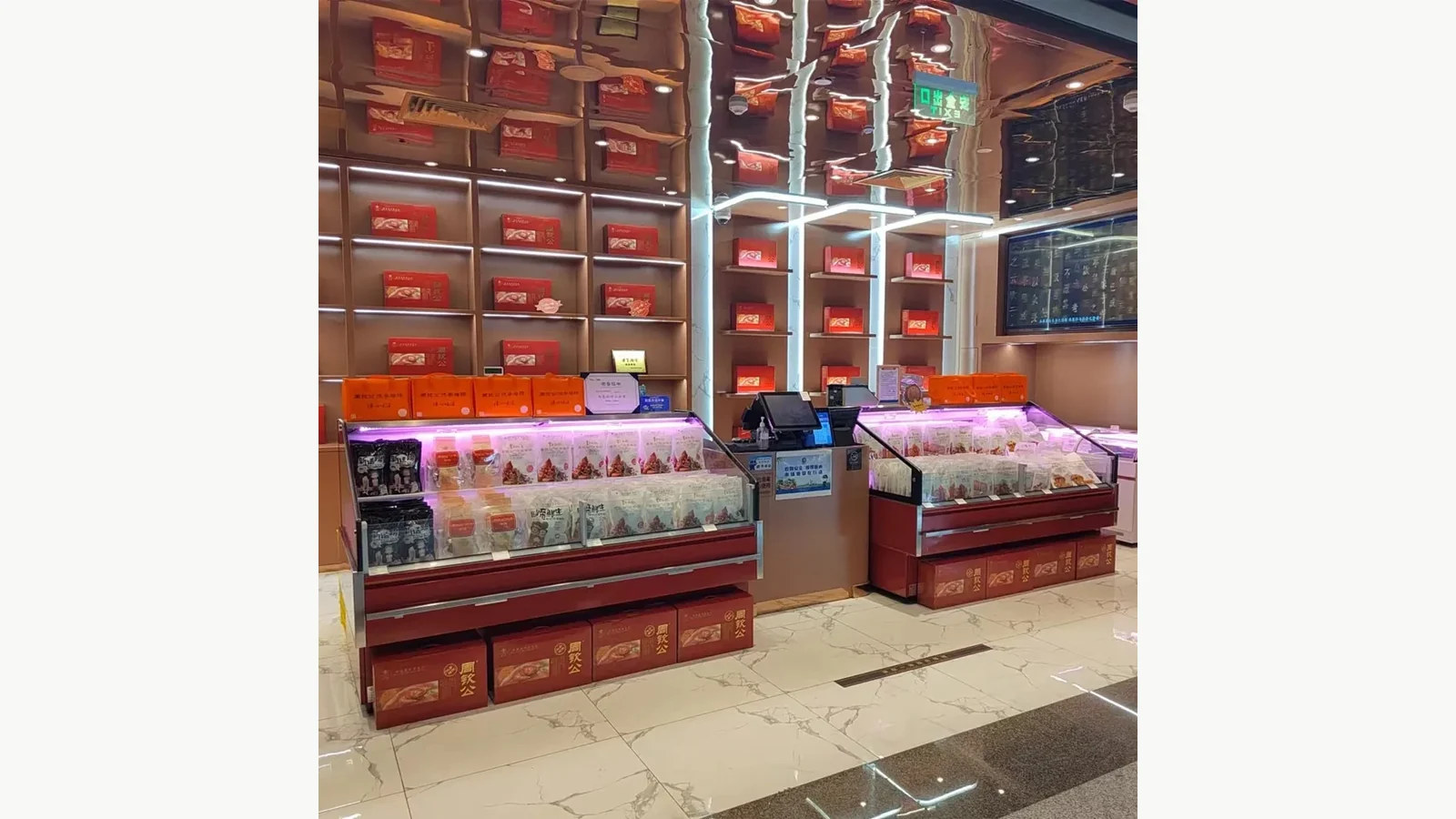
For a double-layer showcase, treat each deck as a separate observation zone. A light source that suits the lower deck may create shadow under the upper deck. A single-level result cannot transfer to a double-layer model until the exact geometry is checked.
Keep the Camera Out of the Final Decision
Automatic white balance, HDR and exposure can make two lighting conditions look closer—or more different—than they appear in person. Use photographs for traceability, not as the only acceptance method.
Lock the same camera, lens, position, exposure and white-balance setting for comparison images. Keep the original files and note any processing. Add an in-person sign-off from the buyer's responsible merchandiser or quality representative. A supplier video is valuable context, but it cannot reproduce the buyer's store light, display product or screen calibration.
Keep Glass and Lighting as Separate Test Lines
Anti-fog-treated glass supports visibility, but it is not a promise that no condensation, glare or reflection will occur in every store. Record glass cleanliness, room humidity, door/air movement, counter state and any visible mist separately from the LED observation.
The published guide to straight-glass fresh-meat showcase sample approval covers the wider sample record. Use the lighting card as one controlled attachment, not as a substitute for glass, cabinet, temperature, cleaning and service-access approval.
Likewise, high-CRI lighting presents colour; it does not preserve freshness or prove temperature performance. Temperature control, humidity behaviour, product handling and food-safety procedures stay on their own commissioning and operating records.
Match the Test to the Exact Counter Structure
The exact plug-in luxury flat-glass fresh-meat showcase sits within a range that includes plug-in and remote systems, standard and luxury lines, and double-layer options. Public family language does not define every LED layout across those six rows.
Ask the quotation to identify:
- exact counter model and configuration;
- LED part or specification supplied;
- CRI and colour-temperature data where available;
- LED position and access for replacement;
- driver/power details relevant to the project;
- control method and whether lighting is independently switched;
- spare-part and reorder identification;
- warranty and current drawing revision.
If two quotations return different LED information, normalize it before comparing price. “High CRI” in both descriptions does not prove identical parts or presentation.
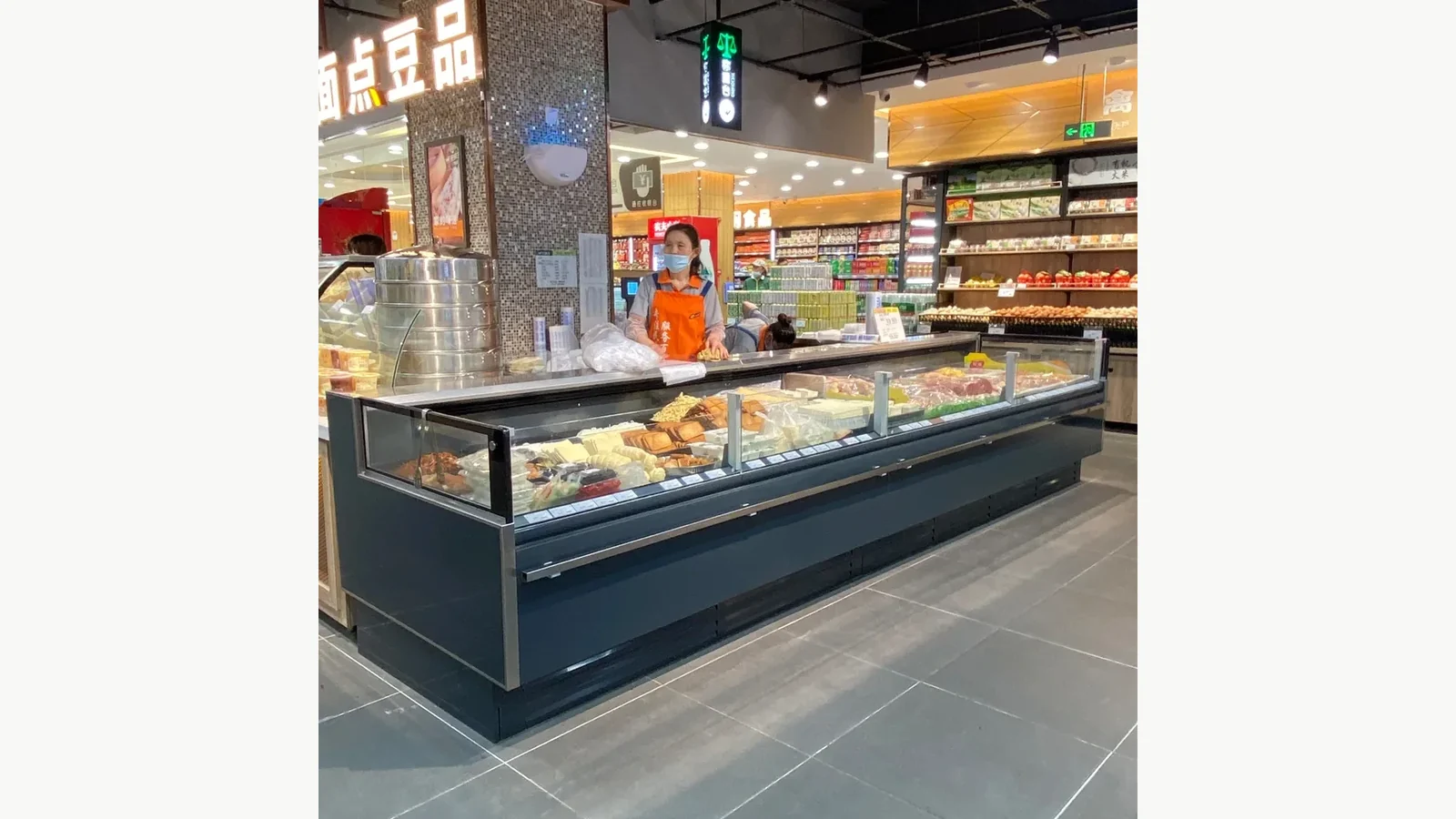
Sign Off a Reproducible Result
The approval package should contain the test card, product sample ID, plan of viewpoints, original photographs, counter and LED identifiers, open issues and signatures. Add the result to the purchase order or technical schedule so a later production unit can be checked against it.
At factory inspection or store commissioning, repeat the same core views. If the LED part, counter geometry, glass or store lighting changed, open a deviation rather than forcing the new result into the old approval.
Related Reading
- Fresh-meat showcase display depth and staff reach
- Single-deck vs double-layer fresh-meat showcases
- Recording condensation on straight-glass meat service counters
Buyer Checklist
- [ ] Exact counter and LED identifiers are recorded
- [ ] Same product sample and tray position are used
- [ ] Ambient lighting and viewpoints are controlled
- [ ] Glare and shadow are checked from customer and staff positions
- [ ] Camera settings are fixed and in-person sign-off is included
- [ ] Glass visibility and refrigeration performance remain separate tests
- [ ] Approved result is tied to the PO and commissioning record
FAQ
Does high CRI guarantee that meat will look the same in every store?
No. Appearance also changes with spectrum, colour temperature, intensity, placement, ambient light, glass and the product itself. Test the exact supplied arrangement in relevant conditions.
Can a phone photograph approve the lighting?
Not alone. Camera processing can change colour and brightness. Use controlled files for evidence plus an in-person buyer sign-off.
Does high-CRI lighting extend meat shelf life?
No shelf-life claim is made. Lighting appearance, refrigeration performance, food handling and safety controls require separate evidence.
CTA
Send XCCOLD the exact fresh-meat showcase model, store-lighting condition, representative product/packaging, required viewpoints and approval form. Ask for the current LED data, layout, control and spare-part identifiers, then run a labelled lighting test before the project order is released.