
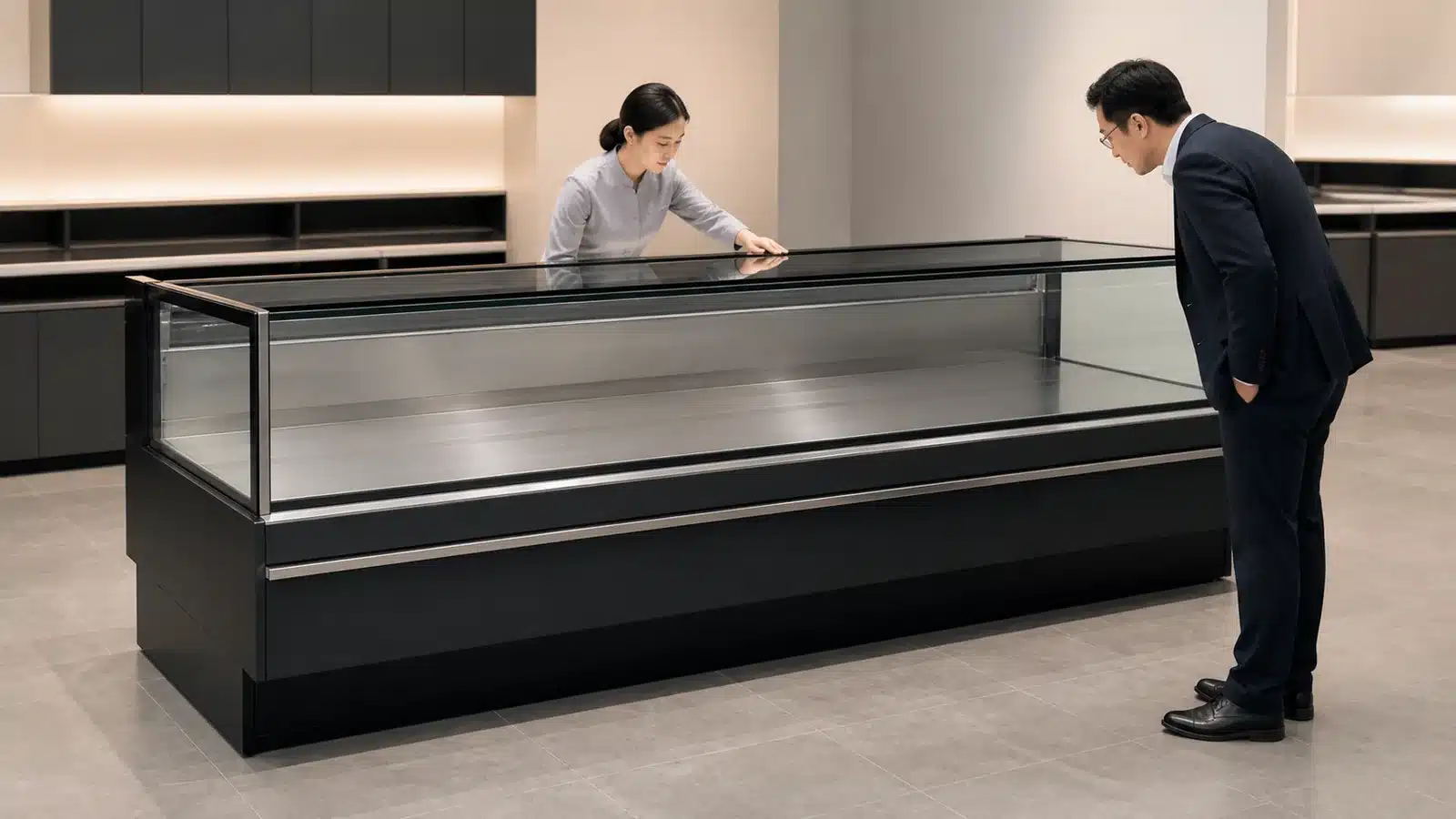
A fresh meat showcase sample can help a buyer see the straight-glass profile, counter proportions, rear service side, display area, tray relationship and visible finish. It cannot approve a production order unless the sample is identified and every approved field is recorded. The review should separate product identity, dimensional and structural checks, store workflow, documented technical evidence, appearance, packing and project interfaces. Any field not reviewed should remain open rather than becoming approved by silence.
Identify the Exact Product Entity
Record the fresh meat showcase counter model or sample ID, drawing revision, straight-glass structure, counter type, rear service side, intended fresh-meat application and project reference. Never mix the approval with a deli counter, curved-glass counter or another display case.
Photograph front, both ends, rear, top profile, display area and accessible labels. Keep filenames tied to the sample ID and view.
Define What the Sample Can Approve
List fields under structure and geometry, materials and visible finish, doors or panels, service-side arrangement, tray interface, accessories, branding, packing and documentation. Mark each approved, rejected, revision required, evidence pending or not reviewed.
A buyer viewing one finished unit should not approve hidden construction, performance, temperature, energy, capacity or durability without the required documents and qualified tests for the exact model.
Check Structure and Project Geometry
Compare cabinet length, width, height, straight-glass profile, end panels, counter height, display opening and service-side geometry with the controlled drawing using the agreed method. Record deviations by field.
Review how several counters align if the project uses a lineup. One acceptable standalone sample does not automatically prove joints, end conditions, fillers or site interfaces for a multi-counter run.
Review the Rear-Service Workflow
Simulate normal empty-counter tasks safely: staff position, access panels or doors as applicable, tray placement and removal, visible work surface relationship, cleaning reach and aisle needs. Use representative empty trays or templates, not food claims.
Record observations and project decisions separately from technical performance. The selected model documentation and qualified teams control operating and food-safety requirements.
| Approval Group | Sample Evidence | Project Decision |
|---|---|---|
| Product identity | Model, revision, structure photos | Correct entity confirmed |
| Geometry | Controlled dimensions and profile | Fits approved lineup/site |
| Service side | Empty task and access review | Staff aisle/interface accepted |
| Tray interface | Tray/template dimensions | Exact layout pending or approved |
| Appearance | Color/finish sample and photos | Visual standard released |
| Technical | Model documents and qualified evidence | Separate approval status |
Control Appearance Without Overclaiming
Review visible color, panel finish, glass appearance, lighting components if included, trim and workmanship under agreed viewing conditions. Use a signed sample, controlled color reference or approved photos. Describe visible acceptance; never claim coating life, hygiene performance or durability from appearance.
Record acceptable production variation where the contract defines it. If appearance changes by option, identify the exact project version.
Connect Technical Evidence to the Sample
Request current model-specific documents for operating scope, electrical configuration, refrigeration arrangement, controls, service requirements and other contracted fields. Qualified reviewers should assess the evidence and any required testing.
Never transfer figures from a similar counter or apply one result to every length and configuration. The sample identity and document revision must match.
Release Production and First-Unit Verification
Issue a signed approval register, redlined drawing where needed, approved appearance references, open issues, packaging requirements, project quantity and effective purchase-order revision. State that unapproved substitutions require written review.
For the first production unit or shipment, compare product identity, structure, key dimensions, appearance, documents and packing with the approved sample record. Close differences before treating the project batch as released.
Build a First-Article Comparison Sheet for the Project Batch
After sample approval, define which fields the first production unit must demonstrate before the rest of the project proceeds. Include exact entity and model, straight-glass profile, cabinet and counter geometry, end-panel and rear-service arrangement, tray interface, visible finish, labels, documented options, included parts and packing. Attach the approved sample reference for every visual field.
Inspect the first article under agreed conditions and mark match, acceptable documented variation, nonconformance, evidence pending or not applicable. Keep technical checks with qualified personnel and model-specific procedures. Never replace a required test with a visual comparison or use one reading as a public performance claim.
When the first article differs, identify whether the sample, drawing, production record or buyer expectation controls. Issue a written disposition and update the release if the change is accepted. The remaining units should be inspected under the project sampling plan. This sheet connects a single showroom sample to repeat production without claiming that every hidden feature was approved by appearance.
Separate Buyer Signoff From Technical Release
The buyer may approve appearance, structure and store workflow while qualified reviewers still hold technical fields. The matrix should show both decisions and the evidence behind them. Production begins only at the release level defined by the contract. This separation lets commercial teams progress without presenting visual sample acceptance as proof of refrigeration performance, food compliance or service life. Name who closes each pending technical line and prevent the project quantity from moving beyond the contract's approved hold point until those entries are released.
Approve Lineup Interfaces Separately From the Sample Cabinet
When several counters form a run, request joint, end, filler and alignment details for the exact sequence. Review visible glass lines, counter heights, rear-service continuity, tray transitions, access and site dimensions. A single sample can approve one cabinet's structure and finish while lineup interfaces remain pending. Mark that boundary in the matrix. Verify a first assembled section or project drawing before releasing every unit, and keep fresh-meat application distinct from deli configurations even when some exterior elements appear similar. Record which end panels are exposed, which units join, and where service access must remain. The project order should list the sequence by cabinet ID so packing and installation cannot rearrange approved interfaces casually. Before dispatch, compare package and cabinet IDs with the lineup schedule; at site, photograph the first completed joint and obtain the project review before continuing the run.
Buyer Checklist
- Record exact sample ID, model, revision, and straight-glass entity.
- List approved, rejected, pending, and unreviewed fields.
- Compare structure and geometry with the controlled drawing.
- Review rear-service and tray tasks with empty templates.
- Separate visible appearance from technical evidence.
- Release the approval into the purchase order and production record.
- Verify the first production unit against the approved sample.
Frequently Asked Questions
Does approving appearance approve performance?
No. Model-specific technical evidence and qualified review remain separate.
Can a deli sample approve a fresh meat counter?
No. Product category, application and structure must match the project entity.
Should every production unit be identical to the sample?
The contract should define controlled fields and acceptable variation; first-unit and batch checks verify that production follows the release.
Related Product or Reading
Use the fresh meat showcase buying guide for initial selection; use this sample record only after the exact structure has been chosen.
Discuss the Exact Project
Send XCCOLD the project model, drawing, straight-glass and service-side requirements, tray dimensions, finish reference, technical evidence list, quantity, lineup, packing, and approval process.