
A deeper fresh-meat display deck can create more visible presentation area, but it may also change tray handling, staff reach, rear work position, glass cleaning access, customer sightline, and the relationship with adjacent counters. Buyers should evaluate the actual straight-glass fresh-meat showcase with representative trays and a defined rear-service workflow. The result is a project and sample decision, not a universal counter-depth recommendation. Exact dimensions, temperature, service, and food-handling requirements remain tied to the selected model and responsible local procedures.
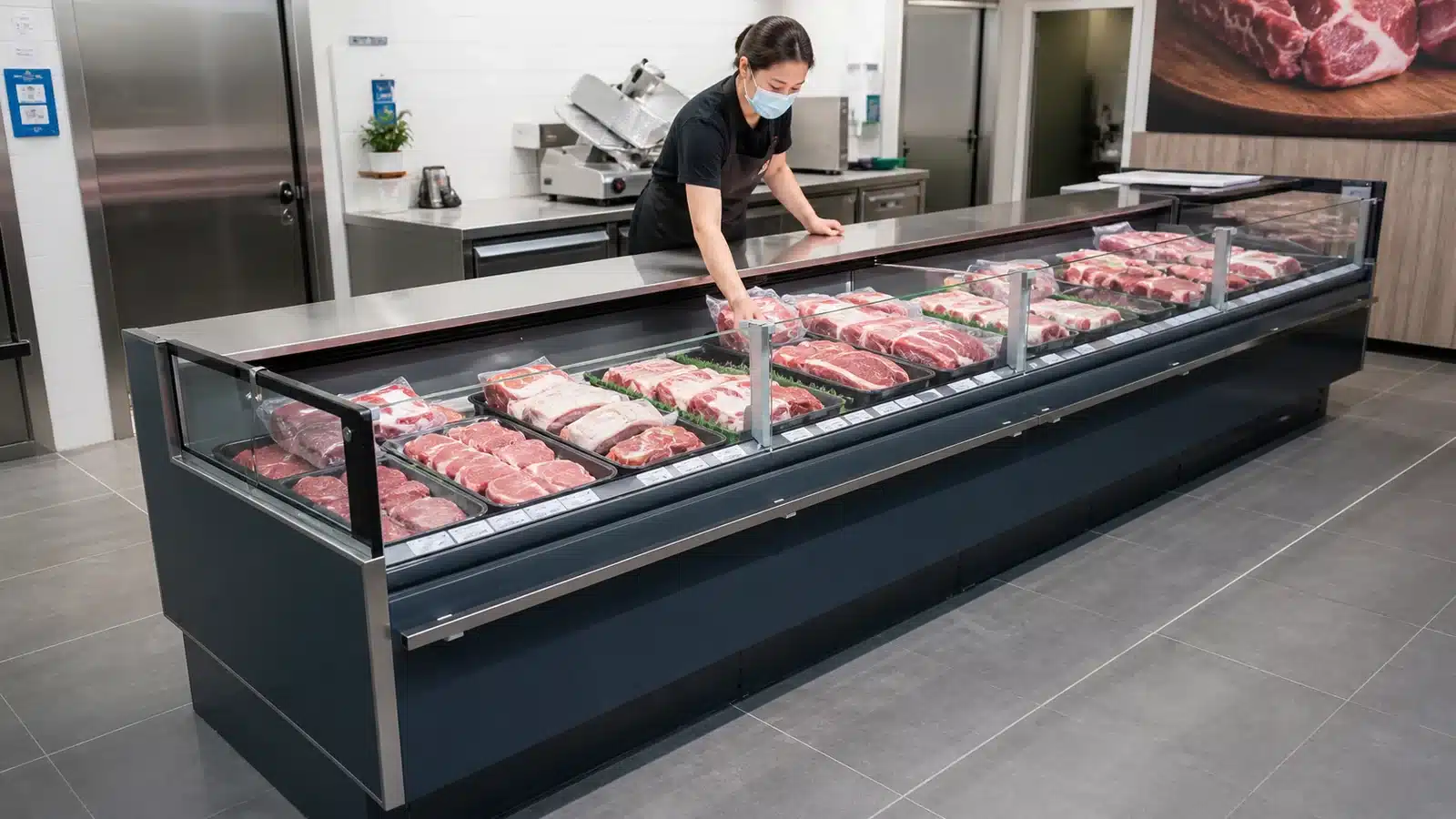
Confirm the Fresh-Meat Counter Entity
whether the proposal is the verified straight-glass fresh-meat showcase rather than a deli counter or unrelated display For this fresh meat showcase display depth staff reach task, the responsible team should check product title, URL, glass shape, display deck, rear-service side, application, and installation type. At confirm the fresh-meat counter entity, verify the fresh meat showcase display depth staff reach condition together with its identity before the working state changes.
At the confirm the fresh-meat counter entity stage, retain model, product page, straight-glass views, fresh-meat application, project code, and stated options. Link each photograph, count, mark, drawing, or note to the fresh meat showcase display depth staff reach item it describes. For confirm the fresh-meat counter entity, keep the location and responsible role beside model, product page, straight-glass views, fresh-meat application, project code, and stated options so the next reviewer can repeat the check.
Similar external glass does not make deli and fresh-meat counters interchangeable. That boundary governs fresh meat showcase display depth staff reach, not a different product or site. When evidence supports several interpretations, route the fresh meat showcase display depth staff reach uncertainty through confirm the fresh-meat counter entity to the role authorized by this release condition: the review begins with the correct product entity.
Close confirm the fresh-meat counter entity only when the review begins with the correct product entity. If open, preserve the fresh meat showcase display depth staff reach state and name the unresolved point, owner, next evidence, and follow-up action. Pair model, product page, straight-glass views, fresh-meat application, project code, and stated options with the next confirm the fresh-meat counter entity review before custody, stock, equipment, or site work changes.
Before moving on, compare model, product page, straight-glass views, fresh-meat application, project code, and stated options with the release condition: the review begins with the correct product entity. This final comparison gives the fresh meat showcase display depth staff reach handoff its usable context. For confirm the fresh-meat counter entity, the receiving role should be able to reconstruct the decision from model, product page, straight-glass views, fresh-meat application, project code, and stated options without relying on memory.
Map the Display Deck and Tray Arrangement
how usable deck areas, tray sizes, gaps, dividers, liners, and front sightlines are intended to work For this fresh meat showcase display depth staff reach task, the responsible team should place representative approved trays on the selected sample or scaled drawing and mark positions. At map the display deck and tray arrangement, verify the fresh meat showcase display depth staff reach condition together with its identity before the working state changes.
At the map the display deck and tray arrangement stage, retain deck dimensions from model documents, tray dimensions, count, orientation, product groups, label location, and photographs. Link each photograph, count, mark, drawing, or note to the fresh meat showcase display depth staff reach item it describes. For map the display deck and tray arrangement, keep the location and responsible role beside deck dimensions from model documents, tray dimensions, count, orientation, product groups, label location, and photographs so the next reviewer can repeat the check.
A tray that fits physically may still conflict with the approved display or airflow arrangement. That boundary governs fresh meat showcase display depth staff reach, not a different product or site. When evidence supports several interpretations, route the fresh meat showcase display depth staff reach uncertainty through map the display deck and tray arrangement to the role authorized by this release condition: the proposed tray map is complete or its conflicts are visible.
Close map the display deck and tray arrangement only when the proposed tray map is complete or its conflicts are visible. If open, preserve the fresh meat showcase display depth staff reach state and name the unresolved point, owner, next evidence, and follow-up action. Pair deck dimensions from model documents, tray dimensions, count, orientation, product groups, label location, and photographs with the next map the display deck and tray arrangement review before custody, stock, equipment, or site work changes.
Before moving on, compare deck dimensions from model documents, tray dimensions, count, orientation, product groups, label location, and photographs with the release condition: the proposed tray map is complete or its conflicts are visible. This final comparison gives the fresh meat showcase display depth staff reach handoff its usable context. For map the display deck and tray arrangement, the receiving role should be able to reconstruct the decision from deck dimensions from model documents, tray dimensions, count, orientation, product groups, label location, and photographs without relying on memory.
Test Rear Staff Reach
whether staff can access front, center, and rear tray positions from the intended service stance For this fresh meat showcase display depth staff reach task, the responsible team should simulate routine placement and removal with representative empty trays and qualified site review. At test rear staff reach, verify the fresh meat showcase display depth staff reach condition together with its identity before the working state changes.
At the test rear staff reach stage, retain staff position, reach route, tray mass only where known, counter edge, obstruction, task sequence, and observation. Link each photograph, count, mark, drawing, or note to the fresh meat showcase display depth staff reach item it describes. For test rear staff reach, keep the location and responsible role beside staff position, reach route, tray mass only where known, counter edge, obstruction, task sequence, and observation so the next reviewer can repeat the check.
This article supplies no universal ergonomic reach limit or work method. That boundary governs fresh meat showcase display depth staff reach, not a different product or site. When evidence supports several interpretations, route the fresh meat showcase display depth staff reach uncertainty through test rear staff reach to the role authorized by this release condition: the buyer can compare sample configurations from observed tasks.
Close test rear staff reach only when the buyer can compare sample configurations from observed tasks. If open, preserve the fresh meat showcase display depth staff reach state and name the unresolved point, owner, next evidence, and follow-up action. Pair staff position, reach route, tray mass only where known, counter edge, obstruction, task sequence, and observation with the next test rear staff reach review before custody, stock, equipment, or site work changes.
Before moving on, compare staff position, reach route, tray mass only where known, counter edge, obstruction, task sequence, and observation with the release condition: the buyer can compare sample configurations from observed tasks. This final comparison gives the fresh meat showcase display depth staff reach handoff its usable context. For test rear staff reach, the receiving role should be able to reconstruct the decision from staff position, reach route, tray mass only where known, counter edge, obstruction, task sequence, and observation without relying on memory.
Decision and Evidence Matrix
Use this compact matrix to keep the physical item, working record, and release decision aligned.
| Review Point | What to Record | Release Question |
|---|---|---|
| Confirm the Fresh-Meat Counter Entity | model, product page, straight-glass views, fresh-meat application, project code, and stated options | the review begins with the correct product entity |
| Map the Display Deck and Tray Arrangement | deck dimensions from model documents, tray dimensions, count, orientation, product groups, label location, and photographs | the proposed tray map is complete or its conflicts are visible |
| Test Rear Staff Reach | staff position, reach route, tray mass only where known, counter edge, obstruction, task sequence, and observation | the buyer can compare sample configurations from observed tasks |
| Review Customer View and Order Handoff | customer position, glass height and shape from model, tray front, label area, handoff point, queue, and adjacent fixture | the store plan supports both display and service flow |
Review Customer View and Order Handoff
whether products, labels, glass line, staff movement, and the customer order point remain coherent For this fresh meat showcase display depth staff reach task, the responsible team should view the counter from expected approach, queue, and service positions and photograph sightline changes. At review customer view and order handoff, verify the fresh meat showcase display depth staff reach condition together with its identity before the working state changes.
At the review customer view and order handoff stage, retain customer position, glass height and shape from model, tray front, label area, handoff point, queue, and adjacent fixture. Link each photograph, count, mark, drawing, or note to the fresh meat showcase display depth staff reach item it describes. For review customer view and order handoff, keep the location and responsible role beside customer position, glass height and shape from model, tray front, label area, handoff point, queue, and adjacent fixture so the next reviewer can repeat the check.
Display preference should not override documented cabinet and local food-service requirements. That boundary governs fresh meat showcase display depth staff reach, not a different product or site. When evidence supports several interpretations, route the fresh meat showcase display depth staff reach uncertainty through review customer view and order handoff to the role authorized by this release condition: the store plan supports both display and service flow.
Close review customer view and order handoff only when the store plan supports both display and service flow. If open, preserve the fresh meat showcase display depth staff reach state and name the unresolved point, owner, next evidence, and follow-up action. Pair customer position, glass height and shape from model, tray front, label area, handoff point, queue, and adjacent fixture with the next review customer view and order handoff review before custody, stock, equipment, or site work changes.
Before moving on, compare customer position, glass height and shape from model, tray front, label area, handoff point, queue, and adjacent fixture with the release condition: the store plan supports both display and service flow. This final comparison gives the fresh meat showcase display depth staff reach handoff its usable context. For review customer view and order handoff, the receiving role should be able to reconstruct the decision from customer position, glass height and shape from model, tray front, label area, handoff point, queue, and adjacent fixture without relying on memory.
Check Cleaning and Service Access
how trays leave the deck and how staff reach glass, corners, surfaces, and required service areas For this fresh meat showcase display depth staff reach task, the responsible team should walk through the approved emptying and access sequence with the actual counter structure. At check cleaning and service access, verify the fresh meat showcase display depth staff reach condition together with its identity before the working state changes.
At the check cleaning and service access stage, retain tray removal path, temporary staging, rear doors or panels where present, glass access, staff route, and responsible role. Link each photograph, count, mark, drawing, or note to the fresh meat showcase display depth staff reach item it describes. For check cleaning and service access, keep the location and responsible role beside tray removal path, temporary staging, rear doors or panels where present, glass access, staff route, and responsible role so the next reviewer can repeat the check.
Store staff should not open technical panels or improvise service access. That boundary governs fresh meat showcase display depth staff reach, not a different product or site. When evidence supports several interpretations, route the fresh meat showcase display depth staff reach uncertainty through check cleaning and service access to the role authorized by this release condition: routine cleaning and qualified service remain possible.
Close check cleaning and service access only when routine cleaning and qualified service remain possible. If open, preserve the fresh meat showcase display depth staff reach state and name the unresolved point, owner, next evidence, and follow-up action. Pair tray removal path, temporary staging, rear doors or panels where present, glass access, staff route, and responsible role with the next check cleaning and service access review before custody, stock, equipment, or site work changes.
Before moving on, compare tray removal path, temporary staging, rear doors or panels where present, glass access, staff route, and responsible role with the release condition: routine cleaning and qualified service remain possible. This final comparison gives the fresh meat showcase display depth staff reach handoff its usable context. For check cleaning and service access, the receiving role should be able to reconstruct the decision from tray removal path, temporary staging, rear doors or panels where present, glass access, staff route, and responsible role without relying on memory.
Approve the Sample With Bounded Evidence
which deck, tray, reach, glass, finish, access, and document details become the project baseline For this fresh meat showcase display depth staff reach task, the responsible team should issue an approval record with accepted features, deviations, open technical fields, photos, and effective project scope. At approve the sample with bounded evidence, verify the fresh meat showcase display depth staff reach condition together with its identity before the working state changes.
At the approve the sample with bounded evidence stage, retain sample ID, model, drawing revision, tray map, staff trial, customer views, finish, deviations, approvals, and retained record. Link each photograph, count, mark, drawing, or note to the fresh meat showcase display depth staff reach item it describes. For approve the sample with bounded evidence, keep the location and responsible role beside sample ID, model, drawing revision, tray map, staff trial, customer views, finish, deviations, approvals, and retained record so the next reviewer can repeat the check.
Appearance and reach approval cannot replace technical performance verification. That boundary governs fresh meat showcase display depth staff reach, not a different product or site. When evidence supports several interpretations, route the fresh meat showcase display depth staff reach uncertainty through approve the sample with bounded evidence to the role authorized by this release condition: bulk project documents point to the approved sample and exceptions.
Close approve the sample with bounded evidence only when bulk project documents point to the approved sample and exceptions. If open, preserve the fresh meat showcase display depth staff reach state and name the unresolved point, owner, next evidence, and follow-up action. Pair sample ID, model, drawing revision, tray map, staff trial, customer views, finish, deviations, approvals, and retained record with the next approve the sample with bounded evidence review before custody, stock, equipment, or site work changes.
Before moving on, compare sample ID, model, drawing revision, tray map, staff trial, customer views, finish, deviations, approvals, and retained record with the release condition: bulk project documents point to the approved sample and exceptions. This final comparison gives the fresh meat showcase display depth staff reach handoff its usable context. For approve the sample with bounded evidence, the receiving role should be able to reconstruct the decision from sample ID, model, drawing revision, tray map, staff trial, customer views, finish, deviations, approvals, and retained record without relying on memory.
Buyer Checklist
- Verify fresh-meat application and straight-glass structure before reviewing depth.
- Use representative trays and selected-model documents.
- Map every tray position and label area.
- Observe staff reach from the intended rear-service position.
- Check customer sightlines and order handoff on the store plan.
- Preserve cleaning and qualified service access.
- Approve a bounded sample record without treating appearance as full technical proof.
Frequently Asked Questions
Is a deeper display deck always better?
No. Display area must be considered with tray compatibility, staff reach, glass and surface access, customer sightline, cabinet design, and store workflow.
Can deli pans be used in a fresh-meat showcase?
Only when the selected model, application, tray arrangement, materials, and responsible project requirements confirm compatibility. Similar appearance is insufficient.
Does a reach trial approve food handling?
No. It supports layout and workflow comparison. Food handling and technical operation follow the responsible rules and selected equipment documents.
Related Product or Reading
Use the verified fresh meat showcase counter page as the structure and application anchor for the sample review.
Discuss the Exact Project
Send XCCOLD the fresh-meat showcase model, straight-glass reference, deck and tray data, product plan, staff position, rear aisle, customer approach, cleaning route, adjacent counters, and sample-approval requirements.