
Choose a deli showcase with storage when the base compartment has a defined operational purpose and the extra structure fits the staff, cleaning and service plan. Choose without storage when the project already has suitable back-counter holding space, wants a simpler base arrangement or cannot yet verify what the storage option includes.
The words “with storage” identify a listed XCCOLD variant. By themselves, they provide no proof of storage temperature, capacity, shelving, drainage or whether the compartment shares the display's refrigeration circuit. Those points belong in the quotation and drawing. The safest comparison holds glass shape and refrigeration format constant, then changes only the storage option.
Start With the Work the Base Must Do
A useful storage requirement names the item, quantity and hand movement. Examples include sealed deli packs waiting for display, labelled empty pans, approved packaging or a small controlled replenishment reserve. “More storage” is not a measurable requirement.
Map one busy service period:
- where prepared food arrives;
- where staff stage trays and packaging;
- which items enter the display;
- which items may use the base compartment;
- how staff open the storage area without blocking one another;
- where soiled tools and waste leave the zone;
- how the compartment and floor are cleaned;
- how technicians reach service components.
If the storage door conflicts with the staff standing zone, a trolley or a neighbouring cabinet, nominal capacity will not solve the workflow problem.
Compare Like With Like
XCCOLD's current deli-showcase catalog lists plug-in curved-glass and flat-glass variants with and without storage, plus remote options. A clean comparison uses the same:
- deli/ready-to-eat application;
- plug-in or remote refrigeration arrangement;
- curved or flat glass structure;
- nominal cabinet length and depth;
- display temperature requirement;
- worktop, finish and interior option;
- local electrical and refrigerant requirement.
Then the buyer can isolate the storage effect. Comparing a plug-in curved-glass cabinet with storage against a remote flat-glass cabinet without storage changes too many variables to produce a useful price decision.
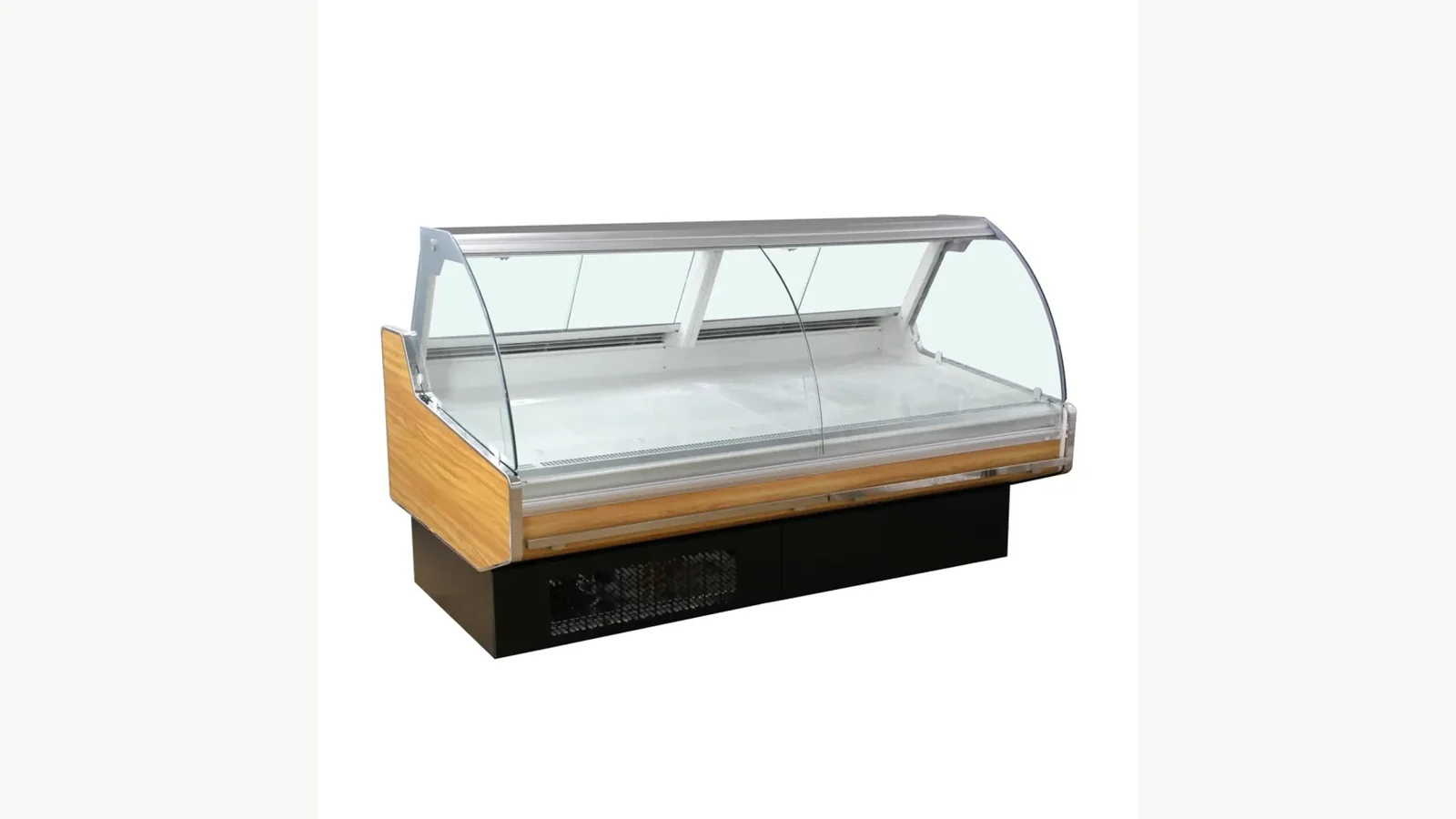
For a real inquiry target, review the exact plug-in luxury curved-glass deli showcase with storage and ask for its current drawing and technical schedule. Specifications from the flat-glass family apply only when the supplier confirms the exact model. The published curved-versus-flat deli showcase comparison keeps that glass decision separate from base storage.
What “With Storage” Must Mean in the Quotation
Add a storage schedule to the RFQ:
| Field | What the buyer needs |
|---|---|
| Compartment purpose | Food holding, packaging, empty pans or another named use |
| Storage condition | Refrigerated, ambient or OPEN pending supplier confirmation |
| Internal dimensions | Usable width, depth and height, not exterior guesswork |
| Access | Door count, swing/slide direction, handle and clear opening |
| Interior arrangement | Shelves, pans, runners or clear volume |
| Temperature | Required range, control relationship and test method if refrigerated |
| Materials | Interior surface and any SUS304 option identified separately |
| Cleaning | Removable parts, corners, drain/access and cleaning procedure |
| Service | Components behind/under the compartment and access clearances |
| Load | Supplier-approved shelf/compartment limits where available |
Leave unsupported fields open. A media caption referring to refrigerated bottom storage is a useful candidate clue, but the purchase order should rely on the current model data and supplier confirmation—not on a photograph description.
When the Without-Storage Variant Is the Better Project Fit
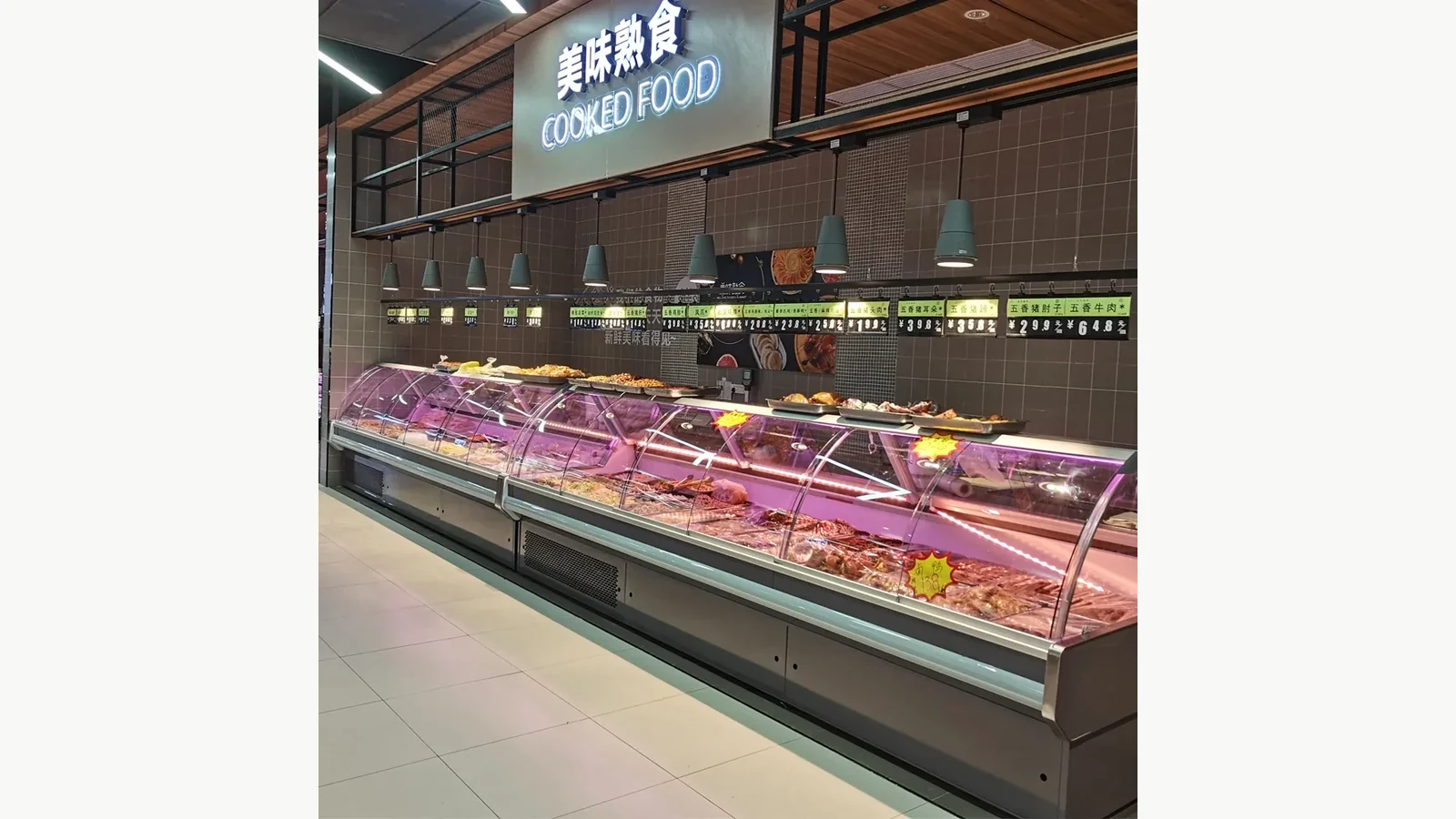
A cabinet without integrated storage can be the stronger decision when the deli already has a controlled cold room, under-counter equipment or a separate staging bench close to the service line. It may also simplify cleaning zones and prevent staff from using an undefined cabinet space for products that require a different holding condition.
“Without storage” does not mean the cabinet has no useful base or no service components. It simply means the catalog does not list that storage variant. The exact drawing must show what occupies the base and how technicians reach it.
The buyer should calculate walking and opening actions. If a separate approved holding cabinet is one step behind the operator, an integrated compartment may add little. If staff must leave the service zone repeatedly, a correctly specified storage option may reduce replenishment travel. Observe a real peak period or simulate it on the plan instead of choosing from a brochure thumbnail.
Keep Food Duty and Holding Conditions Separate
The deli showcase family is intended for deli and prepared-food display, with a listed -1 to 5°C range on the documented plug-in flat-glass family. That range cannot be copied automatically to every base storage option or every variant.
For each product group, record the responsible food-safety requirement, incoming product temperature, display duty, replenishment limit and stock rotation. A storage compartment with an unconfirmed condition cannot be assigned temperature-sensitive product. Packaging, spare trays and food stock may also need different hygiene separation.
XCCOLD's family record lists a stainless-steel worktop and optional SUS304 interior. Ask which surfaces the option covers. “SUS304 interior” should not be expanded into a claim that every panel, shelf, fastener and storage component is SUS304.
Draw the Door and Staff Envelope
On the rear-service plan, show:
- storage-door travel and clear opening;
- staff standing and passing zones;
- trolley, tray and waste routes;
- worktop overhang and handoff points;
- adjacent cabinet doors or drawers;
- floor curb, wall and column locations;
- cleaning-tool access;
- technician access panels and removal path.
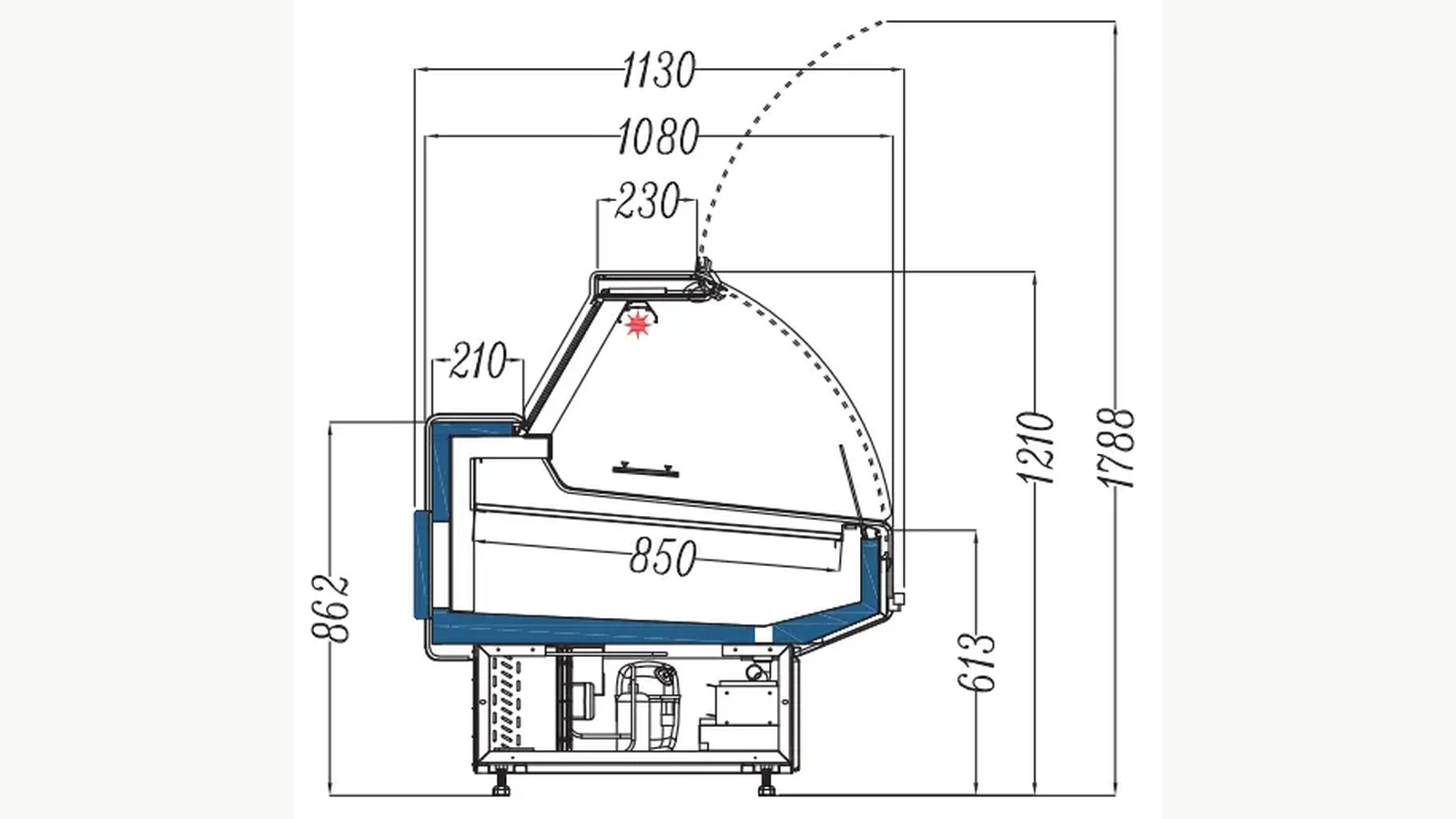
The drawing should show the door both closed and fully open. A compartment that opens into the only staff aisle can create a daily conflict even if the cabinet fits the footprint.
Normalize the Quote Before Comparing Price
Ask both suppliers to return the same schedule:
- exact model and current drawing revision;
- glass and refrigeration structure;
- display dimensions, temperature range and test condition;
- storage inclusion and condition;
- storage internal dimensions and arrangement;
- material and finish schedule;
- controller, refrigerant and local electrical selection;
- included trays, shelves and accessories;
- cleaning and service access;
- packing, delivery split, installation and commissioning scope;
- warranty, spare parts and documentation.
If one quote includes a confirmed refrigerated storage section and another merely says “cabinet with storage,” the two offers are not normalized. Keep the second line open until the supplier answers.
Sample and Factory-Acceptance Checks
At sample review or factory inspection, use the approved model code. Open every storage door, check the clear opening, photograph the interior, identify shelves or runners and verify that staff can reach the compartment from the planned standing position.
Inspect surfaces and removable parts against the approved material schedule. If the storage is specified as refrigerated, use the agreed test procedure and instruments; a cold display deck alone is insufficient performance evidence. Confirm that opening the compartment leaves required service panels, cleaning access and the adjacent unit unobstructed.
Buyer Checklist
- [ ] Storage purpose and contents are defined
- [ ] Like-for-like glass and refrigeration variants are compared
- [ ] Storage condition is confirmed or marked OPEN
- [ ] Internal dimensions, access and accessories are scheduled
- [ ] Door travel and staff routes are drawn
- [ ] Food-holding and hygiene responsibilities are separate
- [ ] Material option scope is explicit
- [ ] Service and cleaning access remain usable
- [ ] Sample inspection follows the exact model and drawing
FAQ
Does “with storage” mean the base is refrigerated?
Not automatically. The exact model quotation and technical schedule must state the storage condition, control relationship and test evidence.
Is a cabinet without storage always cheaper or easier to maintain?
No universal claim can be made. Structure, length, glass, refrigeration system, materials and project scope all affect price and maintenance. Normalize the quote first.
Can raw meat and ready-to-eat deli food use the same article specification?
No. XCCOLD separates fresh-meat showcases from deli/ready-to-eat showcases. Product duty, hygiene plan and imagery must remain distinct.
Related Reading
- Deli showcase pan and tray compatibility
- Deli showcase counter layout planning
- Deli showcase lineup sequence and counter joints
CTA
Send XCCOLD the planned deli menu, display and reserve quantities, peak-period staff route, available back-counter space, preferred glass and refrigeration structure, local electrical requirement and a marked floor plan. Ask for matched with-storage and without-storage drawings with every open field answered before the project quote is approved.