
A pan called full size, a tray called standard, and a deli showcase described by external length still may not fit together. The container's outer rim can be wider than its body, handles can project, nesting flanges can change spacing, and usable display geometry can differ from the cabinet's outer dimensions. Buyers should identify the exact straight-glass deli counter and the exact pans or trays, measure both with a common coordinate system, build a layout drawing, and confirm service handling before ordering equipment or containers in volume.
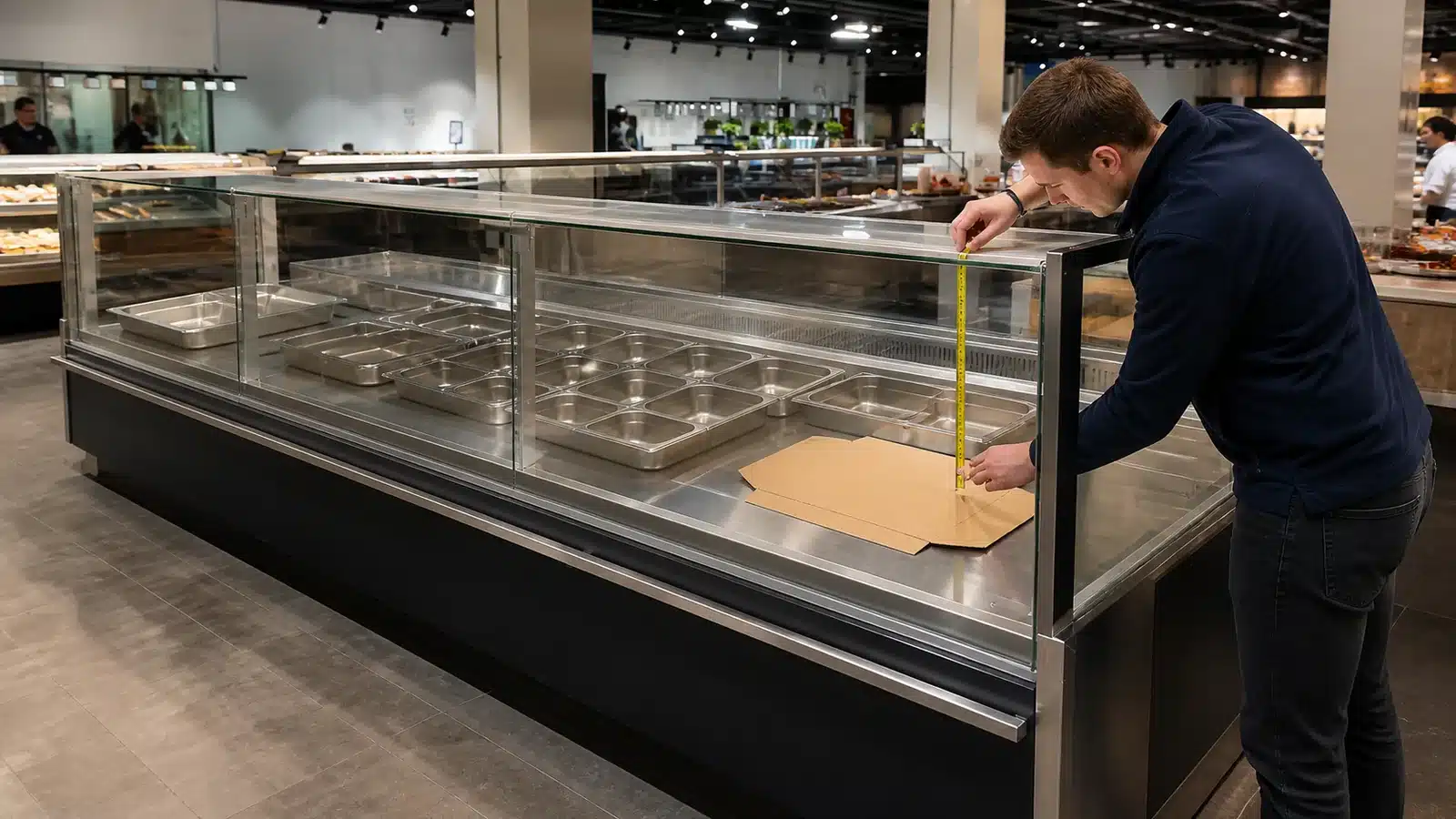
Keep the Deli Product Entity Clear
Use the selected deli food showcase counter with straight-glass, counter-type and rear-service structure for this review. Never substitute a fresh meat counter, curved-glass deli counter, upright cabinet or open chiller image or drawing.
Record model, length, display arrangement and drawing revision. The cabinet category confirms intended prepared-food display context, while exact tray geometry remains model- and project-specific.
Measure the Actual Pan or Tray
Record supplier part number, material, outer rim length and width, body length and width, overall depth, handle or lip projections, lid if used, corners, feet and nesting features. Measure representative physical samples when possible and keep photos with the dimension sheet.
Never rely only on nominal food-service names. Ask whether manufacturing tolerances and optional lids or handles change the envelope that must fit.
Request the Usable Display Geometry
Ask XCCOLD for the selected model's approved display-area drawing, tray-support or deck arrangement, internal boundaries, levels, access direction and any parts that reduce usable space. External cabinet length is not the pan layout length.
Avoid guessing clearance near glass, lighting, air paths, drains, doors, panels or service components. Qualified product documents should define the applicable restrictions.
Draw Every Pan Position
Create a plan view with pan IDs, orientation, rim envelope, gaps, row spacing and unused zones. Add a section for depth, support and vertical relationship. Show how staff approach from the rear service side and which pan must move first.
Use a revision number. If the buyer changes container supplier, lid, handle or portion format, update the layout rather than assuming the old pan name is enough.
| Compatibility Field | Pan/Tray Record | Showcase Record |
|---|---|---|
| Plan envelope | Outer rim and projections | Usable display length/width |
| Body | Lower dimensions and corners | Support/opening geometry |
| Depth | Overall with lid or handle | Available section and access |
| Handling | Grip points, nesting, removal path | Rear-service workflow |
| Quantity | Positions and spare format | Exact model layout revision |
Test Empty Handling Before Food Use
Use clean empty sample pans or dimensional templates to review placement, removal, adjacent-pan interference and staff reach. Confirm that the arrangement does not contact glass or block documented cabinet features. Record the order in which pans can be removed and replaced.
Food preparation, holding, hygiene, loading and temperature procedures remain with the store, local requirements and qualified teams. A dimensional fit check is not a food-safety validation.
Separate Fit From Display Quality
A layout may fit physically but create poor labels, inaccessible rear rows, awkward portioning or unused gaps. Let merchandising and operations review visibility, product grouping, staff sequence and cleaning access. Keep those business decisions separate from technical model approval.
Never fill a gap with an improvised container that lacks an approved support and handling plan. Record alternative pan IDs and conditions if flexibility is required.
Release a Model-Specific Compatibility Schedule
The final schedule should list showcase model and revision, every approved pan or tray part number, dimensions, quantity, location, orientation, lid condition, support arrangement, drawing and approval date. Mark untested alternatives clearly.
Connect the schedule to purchasing so equipment, pans and spares use the same revision. At delivery or sample approval, verify both cabinet structure and representative containers before the store creates the final prepared-food display.
Control Pan Changes During the Life of the Store Layout
The pan schedule should have its own revision and effective date. When the store changes supplier, portion format, lid, handle or material, compare the new container with the approved dimensional envelope before purchasing volume. Record old and new part numbers, rim, body, depth, projections, nesting and handling differences. A familiar commercial name is not proof of equivalence.
Trial clean empty samples in the exact showcase model and pan position. Check support, spacing, removal order, adjacent-pan contact and rear-service handling without blocking documented cabinet features. Route any new support or cabinet modification request to the supplier and qualified project team.
After approval, update purchasing, spare stock, tray map, cleaning procedure references and opening-handoff documents. Segregate obsolete pans when mixing them would change spacing or handling. This revision process lets the store evolve its prepared-food offer while keeping cabinet identity and food procedures separate from dimensional compatibility.
Name the Owner of the Pan Schedule
Purchasing should order only listed container revisions, store operations should control tray placement, and the equipment supplier should confirm the selected showcase geometry and approved interfaces. Food procedures remain with the responsible local and store teams. Assigning these roles prevents a container substitution from becoming an undocumented cabinet change or an unsupported food-safety conclusion. Keep the current schedule at the ordering and opening-handoff points so a spare or supplier change is checked before it reaches the display.
Plan Spare Pans Without Changing the Approved Envelope
Spare stock should use the approved part number or verified dimensional envelope and remain labeled by layout revision. Record how nested pans, lids and handles are stored so damage or deformation does not alter fit. When a spare is introduced, staff should compare identity before placing it in the showcase. A pan that physically enters the opening but changes rim spacing, support or removal order should become a compatibility exception. This keeps everyday replacements from slowly rewriting the released display map. Include spare quantity and storage location in the handover, then audit it when a supplier or container revision changes. Retire incompatible spares through the store's controlled inventory process instead of mixing them with the current set. Cleaning and food-operation teams should receive the same current pan list so daily handling, replacement purchasing and the showcase layout all reference one approved container family.
Buyer Checklist
- Confirm the exact straight-glass deli showcase model.
- Measure pan rim, body, depth, handles, lids, and corners.
- Request the usable display geometry, not outer cabinet length alone.
- Draw every pan position in plan and section.
- Test clean empty handling from the rear service side.
- Separate physical fit from merchandising and food procedures.
- Release a model-specific pan compatibility schedule.
Frequently Asked Questions
Will a standard pan always fit?
No. Compare actual container dimensions and features with the selected model's approved usable geometry.
Can external showcase length determine pan quantity?
No. Internal boundaries, supports, access and project arrangement affect the usable layout.
Does an empty fit test approve food use?
It confirms geometry and handling only; store procedures and qualified food-safety requirements remain separate.
Related Product or Reading
After pan compatibility is approved, use the straight-glass deli opening-handoff article to preserve the released tray map during store setup.
Discuss the Exact Project
Send XCCOLD the selected deli showcase model, drawing, pan part numbers, full dimensions, lids and handles, target quantity, layout, service workflow, and sample-approval needs.