
A stainless steel meat display counter should be specified surface by surface, not with one unchecked phrase. Start by marking every food-contact, splash-zone, removable, visible, hidden, and structural area on a section drawing. Then state where stainless steel is required, what grade or evidence the contract needs, and which areas may use other documented materials.
XCCold's fresh-meat showcase range supports food-grade stainless-steel contact surfaces and reinforced cabinet construction. That series-level statement does not prove that every panel, trim, frame, base, or hidden component is stainless, nor does it establish a grade for every model. A material schedule closes that gap before suppliers are compared.
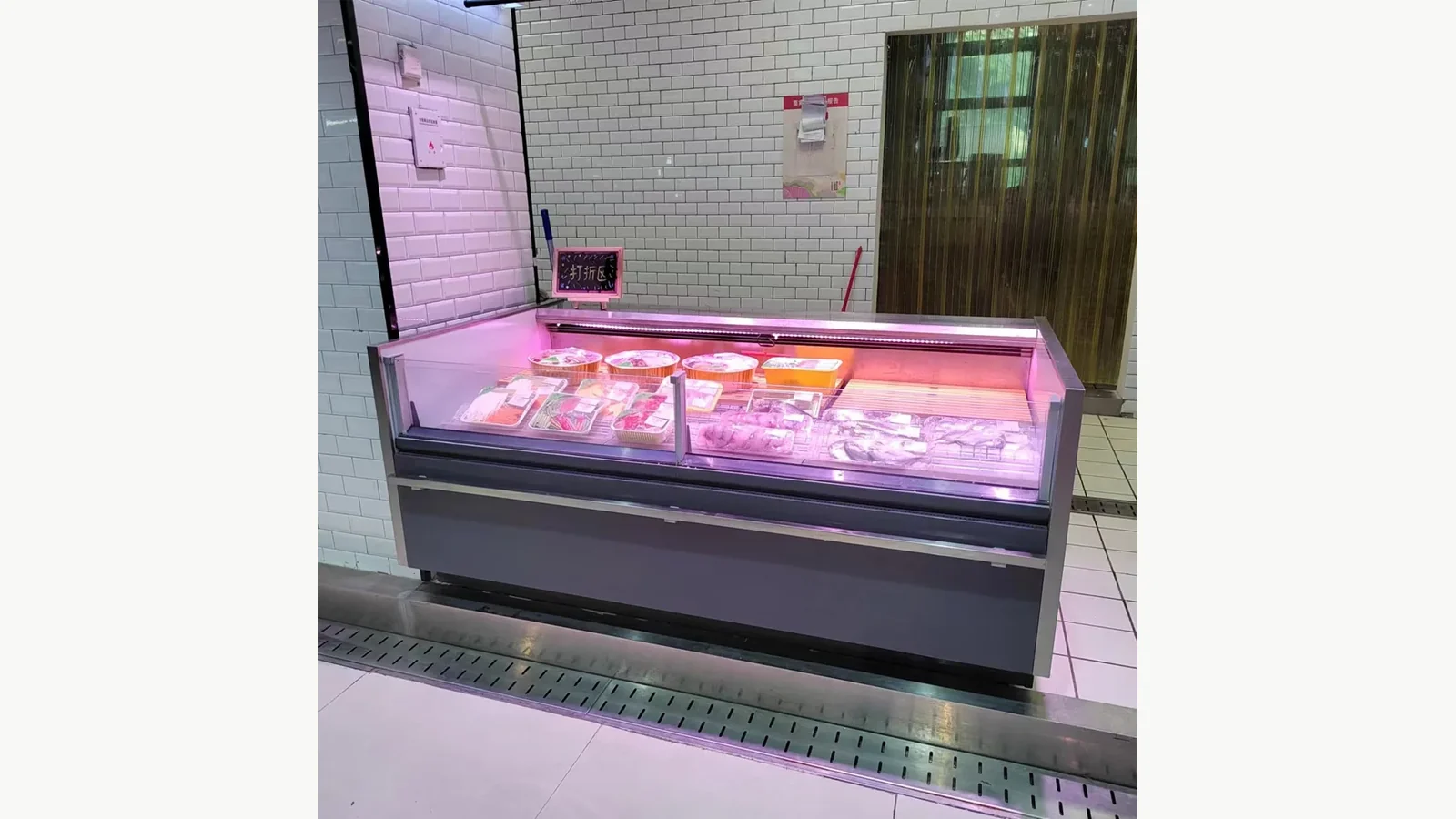
Put the Exact Cabinet at the Top of the Schedule
The range contains six configurations: plug-in luxury double-layer, plug-in luxury flat-glass, plug-in standard, remote luxury double-layer, remote luxury, and remote standard fresh-meat showcase counters. They share a raw-meat service-counter application and straight-glass family identity, but their system, tier, and display arrangement differ.
Link the schedule to one model, one drawing revision, and one refrigeration scope. For example, the Remote Luxury Fresh Meat Showcase Counter is a specific remote, luxury, straight-glass service-counter variant. Its remote identity affects the project boundary, but it does not determine the stainless scope by itself.
The first schedule fields should include:
| Control field | Buyer entry |
|---|---|
| Product and model | Exact catalog title and supplier model code |
| System | Plug-in or remote |
| Display structure | Single level, double layer, flat-glass, or other exact approved variant |
| Drawing | General arrangement and section revision |
| Intended product | Raw meat; a deli-food application cannot be substituted by name alone |
| Cleaning brief | Buyer-approved products, frequency, rinse method, and removable-part process |
| Material standard | Required grade, finish, thickness, or declaration only where specified |
| Approval evidence | Datasheet, drawing callout, sample, certificate, and receiving method |
This header prevents a material note from being copied across non-equivalent cabinets.
Divide the Counter Into Observable Zones
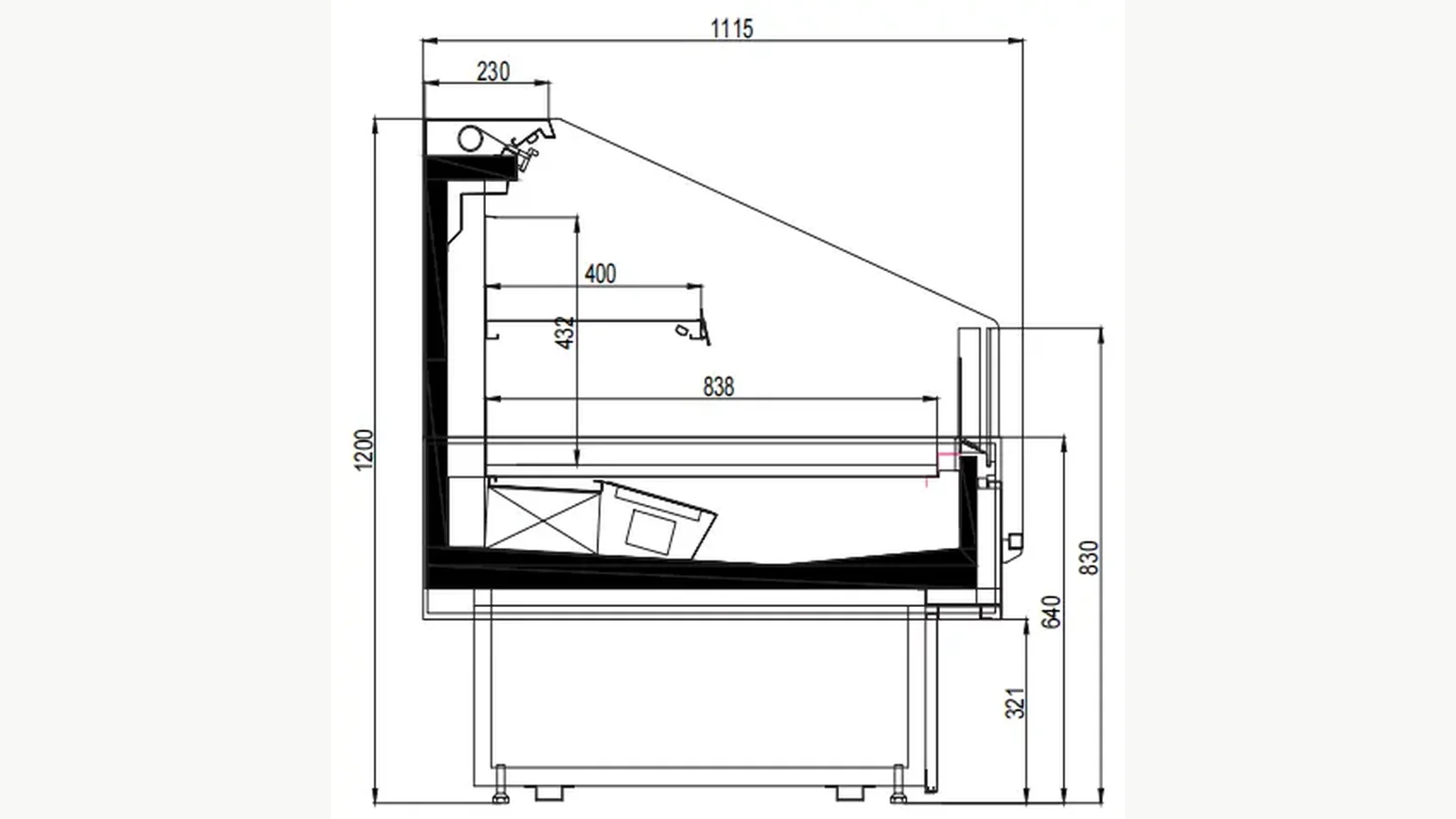
Draw a simple zone map before writing material requirements. The map does not need to be a fabrication drawing, but it must let both parties point to the same surface.
Useful zones include:
- the main display deck where trays or packaged raw meat sit;
- removable pans, trays, grilles, drain covers, or dividers included in the quoted scope;
- rear work surfaces used by staff;
- interior walls and corners exposed during routine loading;
- front and side trims that may receive splash or wiping;
- drainage and collection parts included with the cabinet;
- door, panel, and service-access interiors;
- structural frame, base, kickplate, and exterior decorative panels; and
- fixings, hinges, brackets, welds, and joints visible within food or cleaning zones.
Not every cabinet contains every listed part. Mark “not applicable” rather than allowing a blank row to be read as approval. If a loose tray or pan comes from the operator rather than the cabinet supplier, keep it outside the supplier's material schedule.
The published fresh-meat showcase buying guide covers display, glass, service workflow, and order information. The schedule here has a narrower job: turn “stainless contact surface” into model-specific, inspectable tender evidence.
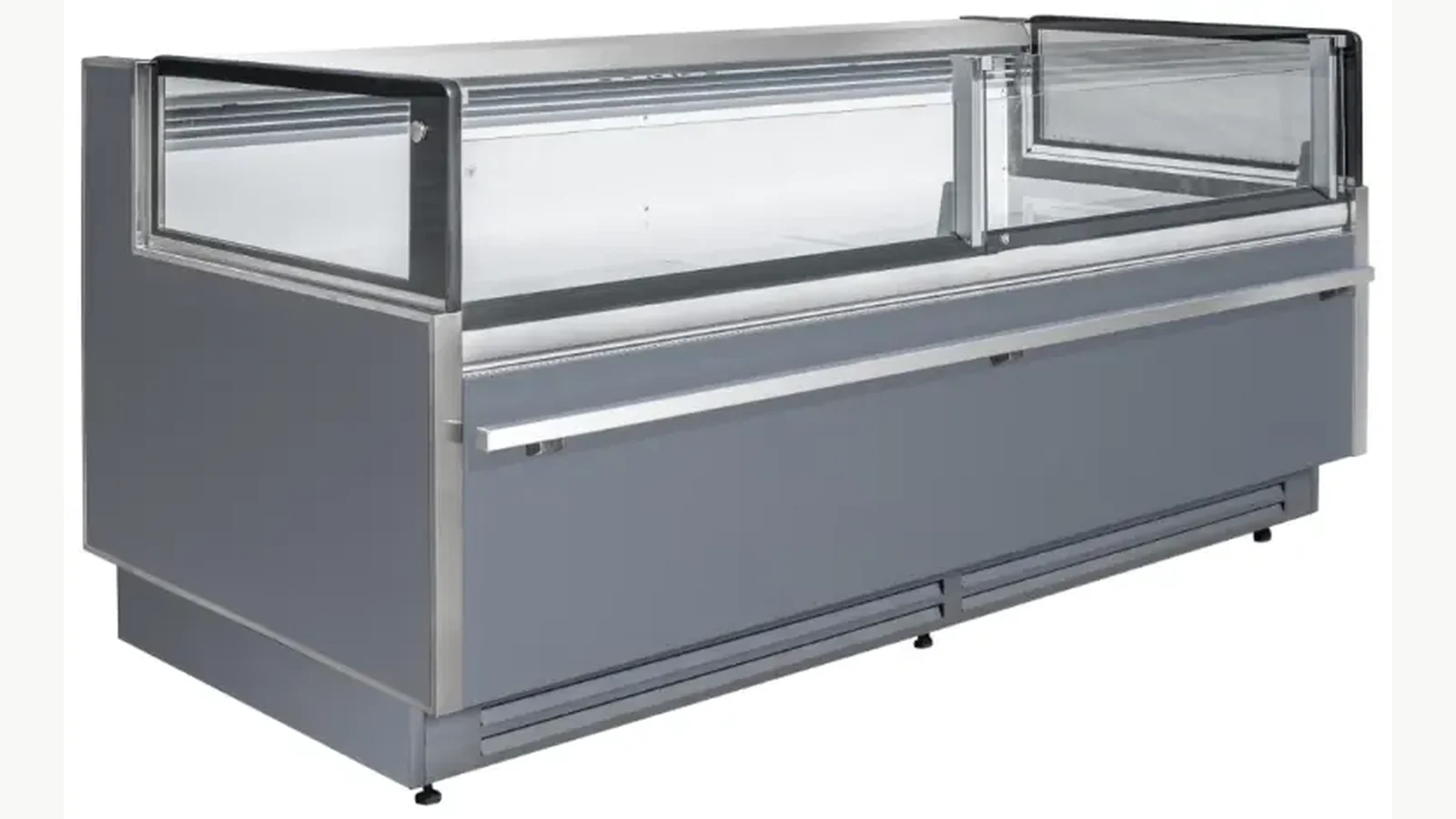
Distinguish Contact Surface, Stainless Grade, and Whole-Cabinet Claims
Three statements can sound similar but mean different things:
- The product family has food-grade stainless-steel contact surfaces.
- A named zone is stainless steel of a stated grade and finish.
- The complete cabinet is made of stainless steel.
Only the first statement is supported at series level by the current product intelligence. The second needs a current model drawing, datasheet, material declaration, or sample confirmation. The third should never be inferred from a reflective interior or a marketing image.
If the buyer requires a specific stainless grade, surface finish, thickness, or weld treatment, write it into the schedule and ask the supplier to accept or qualify that row. “Food grade” is not a substitute for the grade and evidence required by a tender. Conversely, a grade used on another project is not automatically suitable; match the requirement to the buyer's hygiene plan, local rules, and operating conditions.
Photographs help identify a visible zone, but color and reflection cannot identify alloy. A magnet test alone is also not a complete grade-verification method. Define the evidence that the buyer will accept—such as a supplier declaration tied to the model and batch, a material certificate for a specified scope, or a controlled sample—before production.
Link the Material Schedule to Cleaning Access
Material choice and cleaning access should be reviewed together. A durable surface can still be difficult to maintain if a joint traps residue or a removable part cannot be lifted safely. Ask the supplier to mark removable components, drainage access, internal corners, joints, and service panels on the same section drawing.
The buyer should provide the intended cleaning agents and process for compatibility review. Every stainless grade, sealant, plastic, glass treatment, and adhesive needs its own compatibility check for chemical concentration and contact time. The supplier should respond for the exact quoted materials, and the operator should retain the approved cleaning method at handover.
Use a sample or factory inspection to observe:
- whether named surfaces match the approved visual and documentary description;
- whether removable parts can be removed and returned without tools where promised;
- whether edges, corners, and joints are accessible to the agreed cleaning method;
- whether welds and seams in the scheduled zone match the approved sample;
- whether sharp edges, damage, or contamination are visible; and
- whether labels or protective films are removed according to the handover plan.
These are observable acceptance points. They cannot prove microbiological performance, corrosion life, or compliance with an unnamed jurisdictional standard.
Control Substitutions With a Row-by-Row Response
Send the schedule with the RFQ and require the supplier to answer every row with “included,” “alternative proposed,” or “not applicable.” An alternative should identify the proposed material and why it differs. Silence is not acceptance.
During quotation comparison, normalize the answers. One supplier may include stainless on the display deck and rear worktop; another may use stainless only on the deck. A headline such as “stainless interior” can hide that difference. Compare the exact zones, model, grade evidence, removable parts, and cleaning access before comparing price.
Once the buyer accepts a configuration, freeze the schedule revision with the general-arrangement drawing, technical datasheet, and finish sample. If engineering changes a panel material or construction method, issue a new revision and show the changed rows. A late email saying “same as sample” is insufficient when the sample scope was never marked.
Inspect the Same Zones Before Shipment and at Receiving
The pre-shipment inspection sheet should use the same zone names as the tender. Ask for an overall cabinet image, model plate, display deck, rear work surface, removable parts, drain area, interior corners, exterior panels, and any certificate or declaration required by the order. Keep photos tied to the unit or lot identity.
At receiving, inspect for transport damage before cleaning or installation hides evidence. Compare the model, drawing revision, scheduled zones, visible finish, loose parts, and documents. If a surface differs, quarantine the affected unit or lot and obtain a written disposition. A cosmetic touch-up cannot resolve an unknown base material or an unauthorized substitution.
For remote cabinets, material acceptance does not release the remote refrigeration system. Plant selection, line sizing, refrigerant, controls, drainage, commissioning, and local compliance remain separate project responsibilities unless explicitly included.
Related Reading
- Self-Contained or Remote Butcher-Counter Scope separates cabinet supply from external refrigeration responsibilities.
- High-CRI LED Acceptance for Butcher Display Counters shows how to turn another series claim into an observable buyer test.
- Straight-Glass Fresh-Meat Showcase Sample Approval expands the full pre-production approval beyond the material schedule.
Send a Marked Drawing, Not “All Stainless”
Use the XCCold inquiry route to send the exact fresh-meat showcase model, plug-in or remote scope, drawing revision, raw-meat application, marked contact zones, required grade/finish/evidence, cleaning brief, removable-part list, quantity, destination, and inspection plan. Ask for a row-by-row material response and a current model datasheet before quotation approval.