
A fresh meat showcase counter is both a display case and a service workstation. It presents meat products to customers, supports staff service from behind the counter and must fit the store’s daily cleaning and restocking routine. Choosing the right counter requires more than selecting a cabinet length from a catalog.
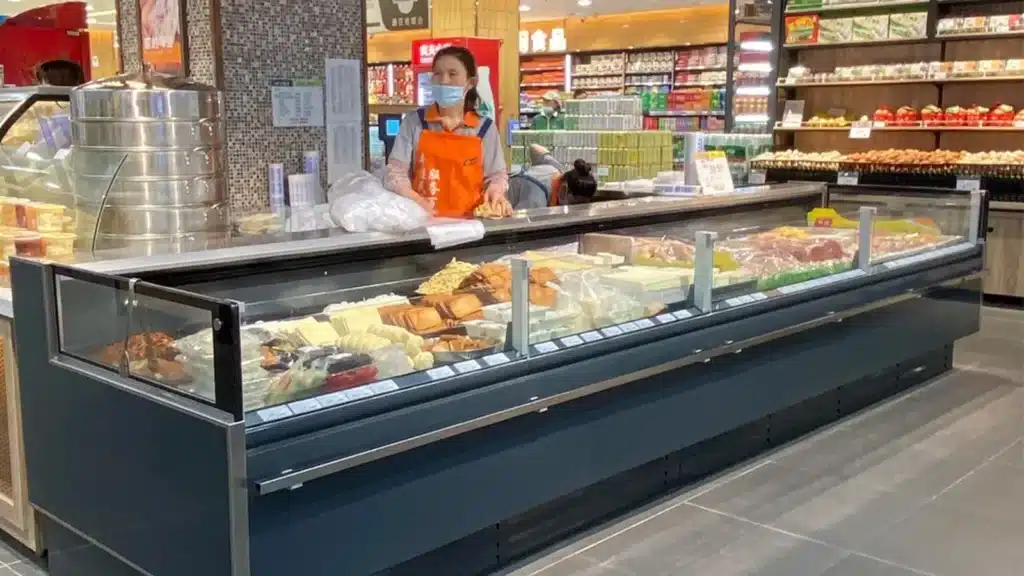
This guide focuses on buying details for fresh meat showcase counters within a supermarket or butcher-style service area. It avoids unsupported temperature claims and focuses on layout, visibility, access and order information that buyers can actually verify.
Define the Service Model First
Before comparing cabinet models, define how the store will sell meat. A counter used for staff-served fresh meat needs different workflow from a self-service chilled shelf. Staff need space to reach products, weigh or pack items, communicate with customers and restock without blocking the selling area.
Useful questions include:
- Will staff serve every order from behind the counter?
- Will products be pre-packed, tray-packed or cut to order?
- How often will the counter be restocked during the day?
- Is the counter part of a butcher area or a general fresh food zone?
- Does the store need straight, curved or corner layouts?
- Will the counter connect visually with deli or seafood zones?
For a broader refrigeration plan, this product may be used together with deli food showcase counters, multideck open chillers or glass door cabinets. Each case type should match its product zone.
Glass Design and Product Visibility
The glass front is central to the buying decision. It should give customers a clear view of the product while allowing staff to access the display area for service and cleaning. Buyers should check the shape of the glass, opening method, viewing angle and how the cabinet looks under store lighting.
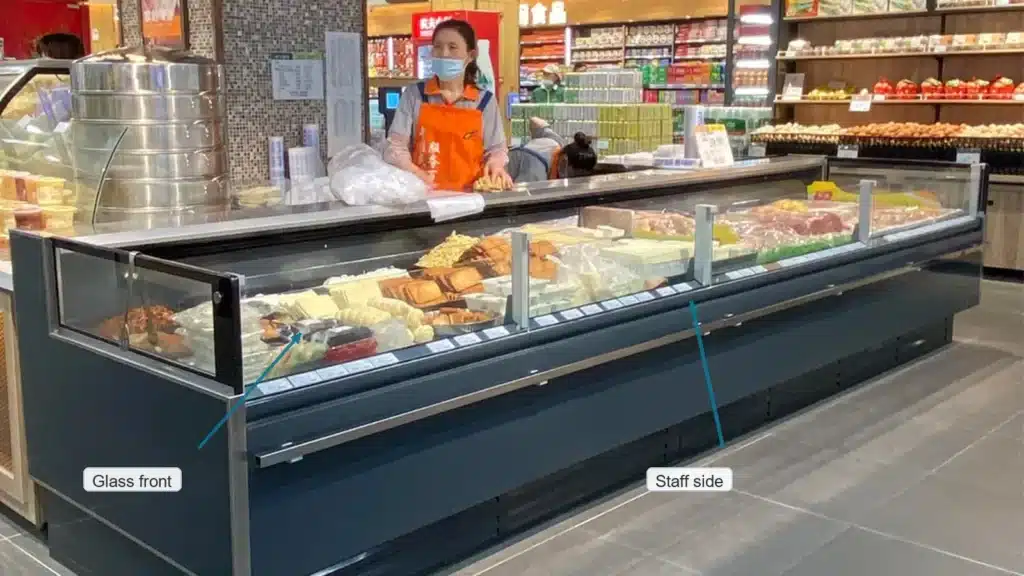
Important glass and structure checks:
| Feature | Why It Matters |
|---|---|
| Front glass shape | Affects viewing angle and store appearance |
| Glass opening or lifting method | Affects cleaning and staff access |
| Display deck depth | Affects product arrangement and reach |
| Rear service side | Affects staff workflow and restocking |
| Lighting position | Affects product visibility and glare |
| End panel design | Affects line-up and corner planning |
Do not choose only from a front photo. Ask for side view, rear service view and installation dimensions.
Layout and Customer Flow
Fresh meat counters often become a destination zone. Customers stop, compare products and speak with staff. The layout should allow people to wait without blocking the main aisle. Staff behind the counter need enough working space, and restocking should not conflict with customer service.
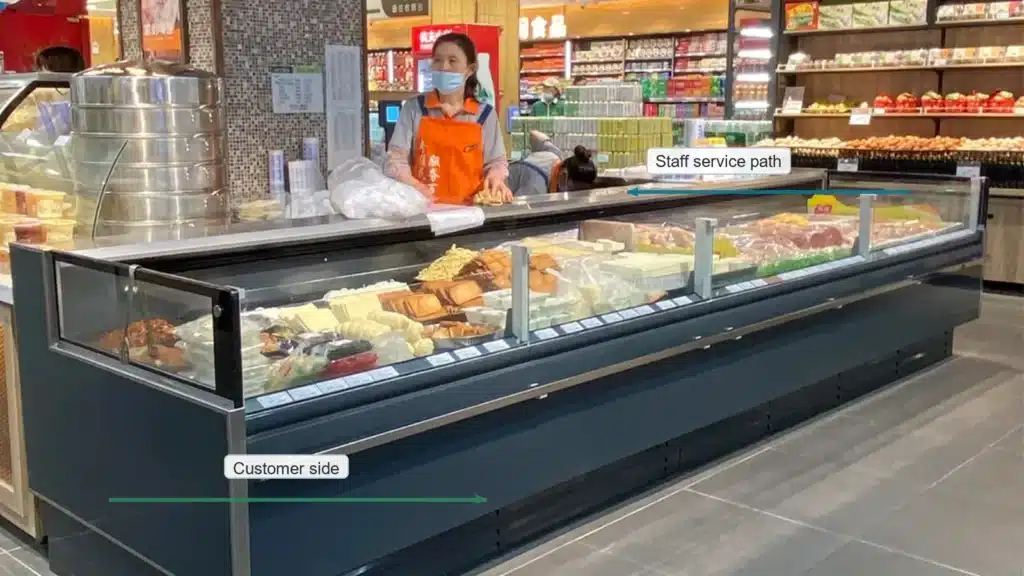
Confirm:
- Counter length and total line-up
- Aisle space in front of the counter
- Staff working depth behind the counter
- Position of weighing, packing or cutting areas
- Restocking path from cold storage or prep area
- Corner modules or end panels if needed
- Sight lines from the main fresh food aisle
The counter should support the store’s selling process. A visually impressive counter that leaves staff with poor access will become inefficient in daily operation.
Line-Up Planning With Other Fresh Food Cases
Fresh meat counters rarely stand alone. They may sit near deli counters, seafood counters, wall chillers or preparation rooms. The line-up should make sense to customers and staff. If the meat counter is placed beside a deli counter, the store should still keep product zones visually clear. If the counter is near a prep room, the staff route should be short and practical.
Buyers should confirm whether the counter will be installed as a single straight run, an L-shaped service area or a line with multiple case types. End panels, corner sections and matching cabinet heights can affect the final appearance. These details should be checked before ordering, because they are harder to change after production.
When reviewing a line-up, check:
- Whether case heights align visually
- Where customers enter and leave the service queue
- Whether staff can pass behind the counter safely
- Whether adjacent product zones are easy to understand
- Whether cleaning access remains available at ends and corners
This planning step prevents a common problem: each cabinet looks acceptable individually, but the finished fresh food area feels crowded or awkward.
Cleaning Access and Daily Maintenance
Fresh meat display areas require disciplined cleaning routines. The counter should make cleaning practical. Buyers should ask how staff access the display deck, glass, drainage areas and rear service side. The design should reduce hidden areas where residue can be difficult to remove.
Food safety rules depend on local regulations and operating procedures. As a general reference, the FDA provides the Food Code 2022, but each supermarket must follow its own applicable jurisdiction and food safety program.
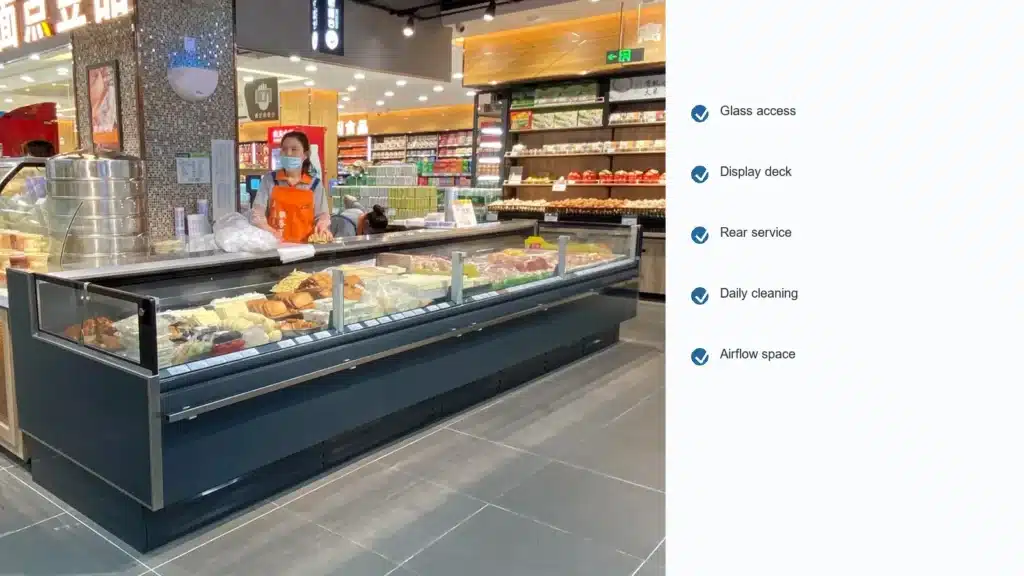
Maintenance questions to ask:
- How does the front glass open for cleaning?
- Is the display deck easy to remove or wipe?
- How are drainage or condensation areas handled?
- What rear panels or service parts need access?
- How should staff avoid blocking airflow during loading?
- What routine checks are recommended by the equipment supplier?
Avoid claims such as “maintenance-free” or “self-cleaning” unless supported by a real product feature and documentation.
Product Loading and Display Discipline
A fresh meat showcase counter is not bulk storage. Products should be arranged for visibility, service and airflow according to the equipment guidance. Overloading the display area can reduce presentation quality and may affect performance. Buyers should ask how product trays, dividers or display decks are arranged.
The store should also plan backup stock separately. Staff should restock from suitable storage or preparation areas rather than using the display counter as the only inventory location.
Order Details to Send the Supplier
A clear inquiry reduces mistakes. For a fresh meat counter, the supplier needs both product and store information.
Include:
- Store format and fresh meat service model
- Required counter length or available floor space
- Straight, corner or line-up layout
- Product type: tray-packed, pre-packed or staff-served
- Rear service space and workflow notes
- Glass preference or visibility requirement
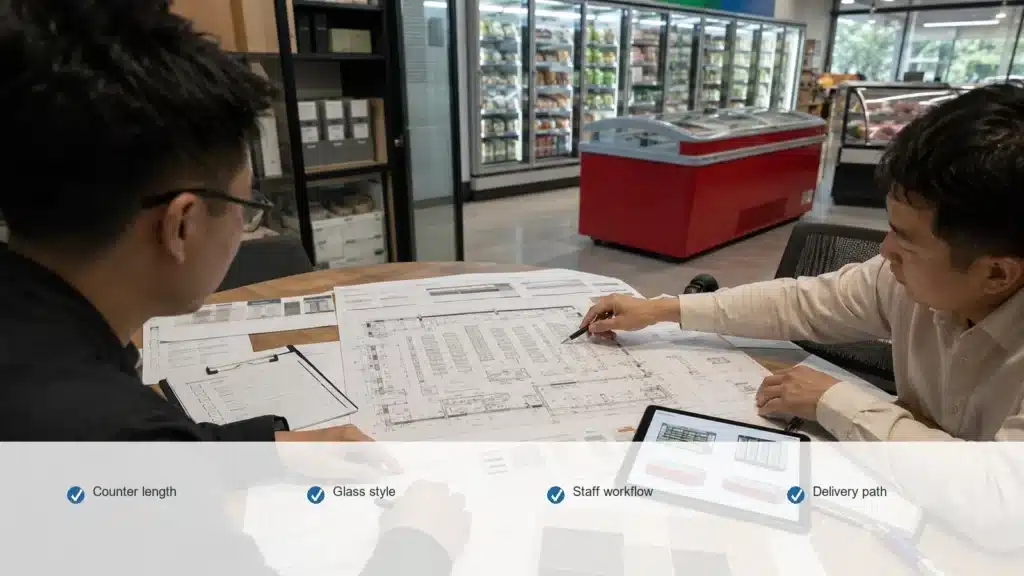
- Site photos or layout drawing
- Delivery path and installation constraints
- Packing and shipping requirements
- Any real documentation requirements
For quotation comparison, ask suppliers to quote against the same layout and specification. A lower price may reflect shorter length, different glass, fewer accessories, different packing or a simpler service structure. If the quotations are not based on the same assumptions, the price comparison is not useful.
The clearest comparison uses one shared drawing, one shared counter length and one shared list of required accessories. This gives the buyer a defensible basis for technical and commercial review.
Do not request unsupported temperature ranges, energy-saving percentages or service life promises without project conditions. Refrigeration performance depends on cabinet design, installation, ambient conditions, loading practice and maintenance.
Common Buying Mistakes
The first mistake is choosing by front appearance only. A counter must also work from the staff side.
The second mistake is ignoring cleaning access. If the glass or display deck is difficult to clean, daily operation becomes harder.
The third mistake is ordering a counter before confirming the layout. Fresh meat service needs customer waiting space and staff workflow behind the counter.
The fourth mistake is mixing fresh meat, deli and frozen products into one generic cabinet plan. Different product zones require different refrigeration equipment.
The fifth mistake is comparing quotations without matching length, glass design, service structure, accessories and packing.
Conclusion
A fresh meat showcase counter should be selected by service model, product visibility, staff workflow and cleaning access. Start with the store layout and operating process, then confirm glass structure, counter length, rear access and order details.
If you are planning a supermarket fresh meat area, XC Cold can help review the counter layout, product display needs and project information. Send drawings, photos and requirements through the contact page before final selection.
FAQ
What is a fresh meat showcase counter used for?
It is used to display fresh meat products in a supermarket or butcher-style service area while allowing staff to serve customers from behind the counter.
Is a fresh meat showcase counter the same as a deli counter?
No. They may look similar, but product handling, service workflow and display requirements can differ. Choose equipment based on the product zone.
What should I check before ordering?
Check counter length, glass structure, rear service access, cleaning method, store layout, delivery path and product display style.
Can I use the counter as bulk storage?
It should be treated as a display and service counter, not the main storage area. Backup stock should be managed separately according to store procedures.
What information should I send to the supplier?
Send the store layout, counter length requirement, product type, service workflow, site photos, installation constraints and packing or shipping requirements.