
“High humidity” and “anti-fog glass” sound specific, yet they are incomplete RFQ lines. A buyer still needs to know which exact counter model carries the statement, under what ambient and operating conditions it applies, what can be checked before shipment and what must be verified after installation.
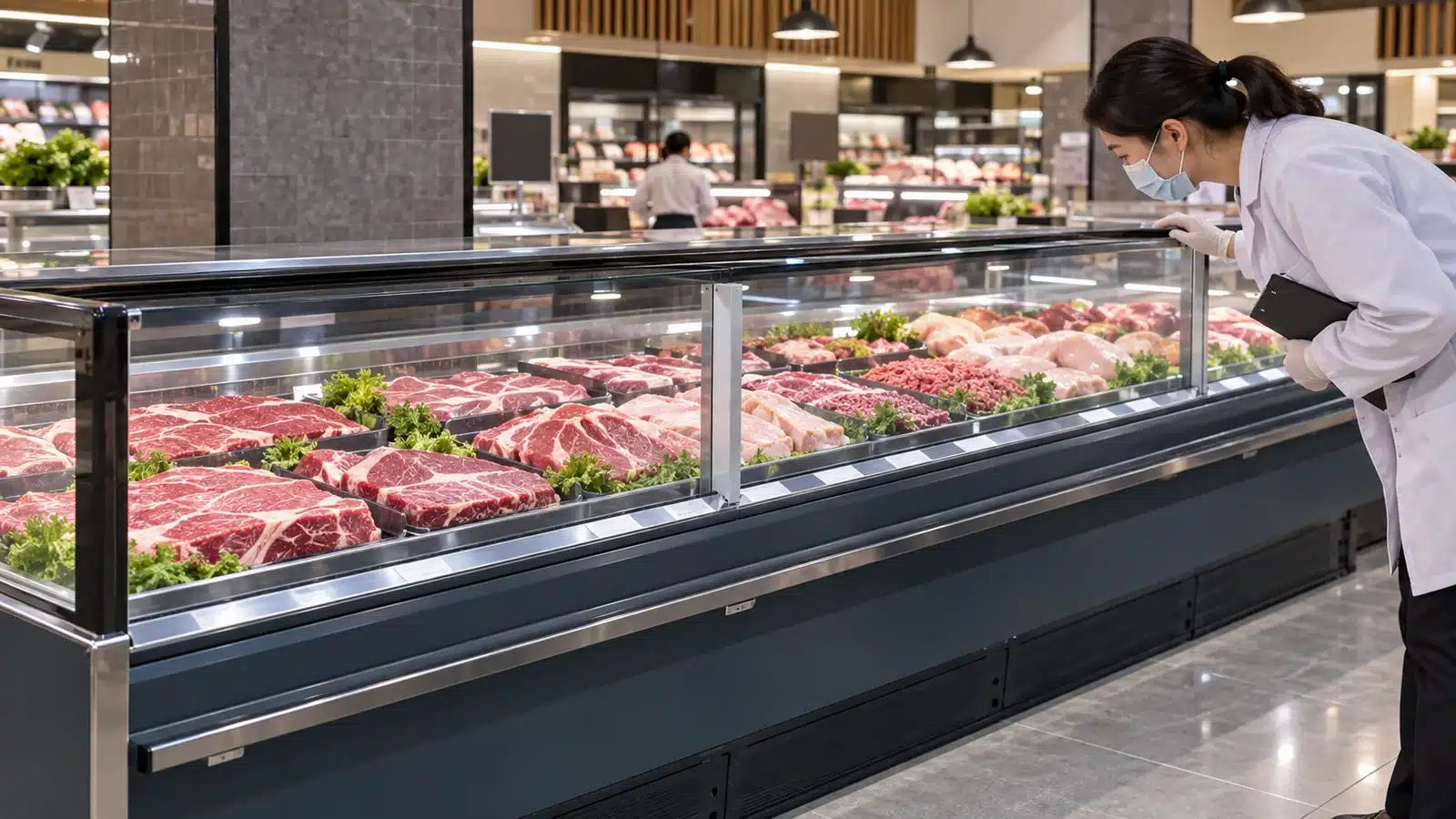
XCCOLD's fresh-meat showcase counter category is intended for raw-meat display and identifies straight-glass counter formats. Current product intelligence also records high-humidity series positioning, anti-fog-treated glass, high-CRI LED lighting and food-grade stainless-steel contact surfaces. These are useful starting points, but a quotation should bind them to one named model and evidence package.
Separate a Series Statement From a Model Datasheet
Build the RFQ in two columns. The first holds verified series-level facts: raw-meat application, straight-glass counter structure, rear-service format, high-humidity positioning, anti-fog-treated glass, high-CRI LED and food-grade stainless contact surfaces. The second column asks for model-bound values and documents.
Model-bound items include cabinet dimensions, climate class or stated ambient limits, refrigerant, rated input, defrost method, controller, temperature set range, display volume and any humidity measurement the supplier is prepared to guarantee. If a numeric value is absent from the current model evidence, mark it pending rather than copying a number from another showcase.
The plug-in luxury flat-glass fresh-meat showcase can anchor the product discussion, but its visible product identity alone does not prove a requested humidity value or condensation result.
Define What “Anti-Fog” Must Demonstrate
Anti-fog treatment reduces a visibility problem under stated conditions; it is not a promise that condensation can never occur. Door openings nearby, store humidity, air-conditioning cycles, night covers, loading pattern, case temperature and airflow obstruction can change what appears on the glass.
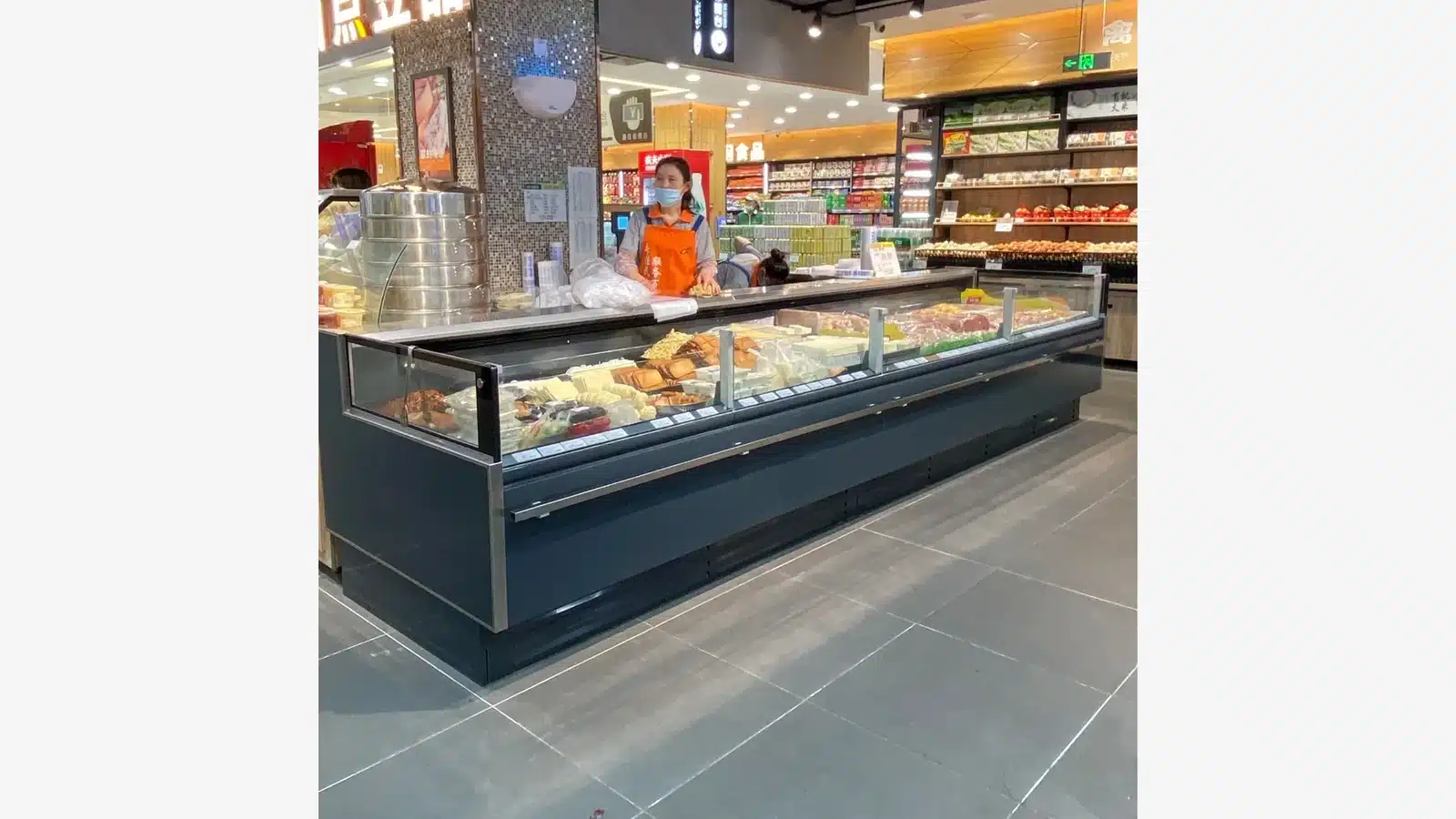
Ask the supplier to identify the glass construction and treatment used on the quoted model. Request photos or video from a documented test, together with ambient temperature, relative humidity, case state, operating duration and viewing area. A useful record distinguishes light edge condensation from a film that blocks product visibility.
For site acceptance, define observation times after stable operation and after representative service events. Record ambient conditions and case settings beside each photo. This turns “clear glass” from a subjective comment into a repeatable inspection.
Make Humidity Evidence Product-Safe
Raw meat loses appearance and quality when display conditions are poorly controlled, but a showcase RFQ should not invent an ideal humidity target for every product. Meat type, packaging, dwell time, food-safety plan and local regulation shape the required operating range. The buyer's food-safety team should approve the target.
Ask whether humidity is actively controlled, passively influenced by the refrigeration design or simply part of series positioning. If the quoted model includes a sensor or control, request its location, display resolution, accuracy statement and calibration or verification method. If it does not, state what proxy evidence will be reviewed and who owns product-condition validation.
The published guide to high-CRI LED acceptance for butcher display counters offers a useful parallel: lighting, like humidity, needs a defined sample, condition and acceptance record instead of a broad adjective.
Close the Gap Between Factory and Store Conditions
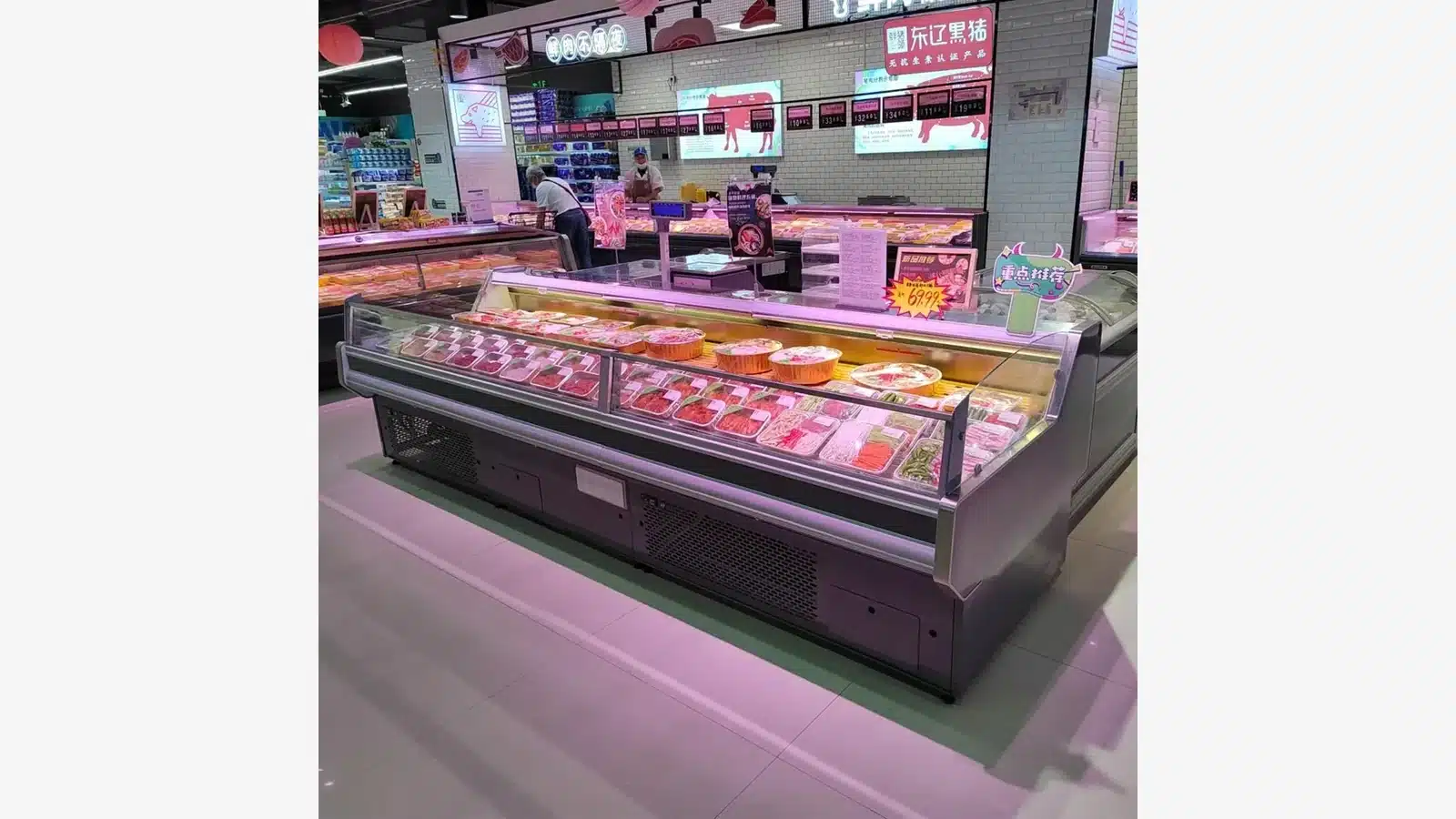
Before shipment, verify the nameplate, controller, glass, lighting, stainless contact surfaces and requested model documents. Capture the factory-test setup. After installation, repeat only the checks that depend on store ambient, placement, loading and service pattern.
Name the responsible parties. The supplier can provide model evidence and test records. The installer owns placement, clearances, connections and commissioning within the agreed scope. The operator controls loading and service practices. The buyer releases the counter against the agreed criteria.
Related Meat-Display Checks
- Document straight-glass condensation patterns during site acceptance
- Specify stainless contact surfaces for a raw-meat display counter
- Approve a straight-glass fresh-meat showcase sample before the order
Request a Model-Bound Evidence Schedule
Send the raw-meat format, packaged or open display condition, store ambient range, service pattern, model shortlist and required acceptance records through the XCCOLD contact page. Ask the quotation to mark every humidity and anti-fog line as verified, pending test or buyer-owned site validation.