
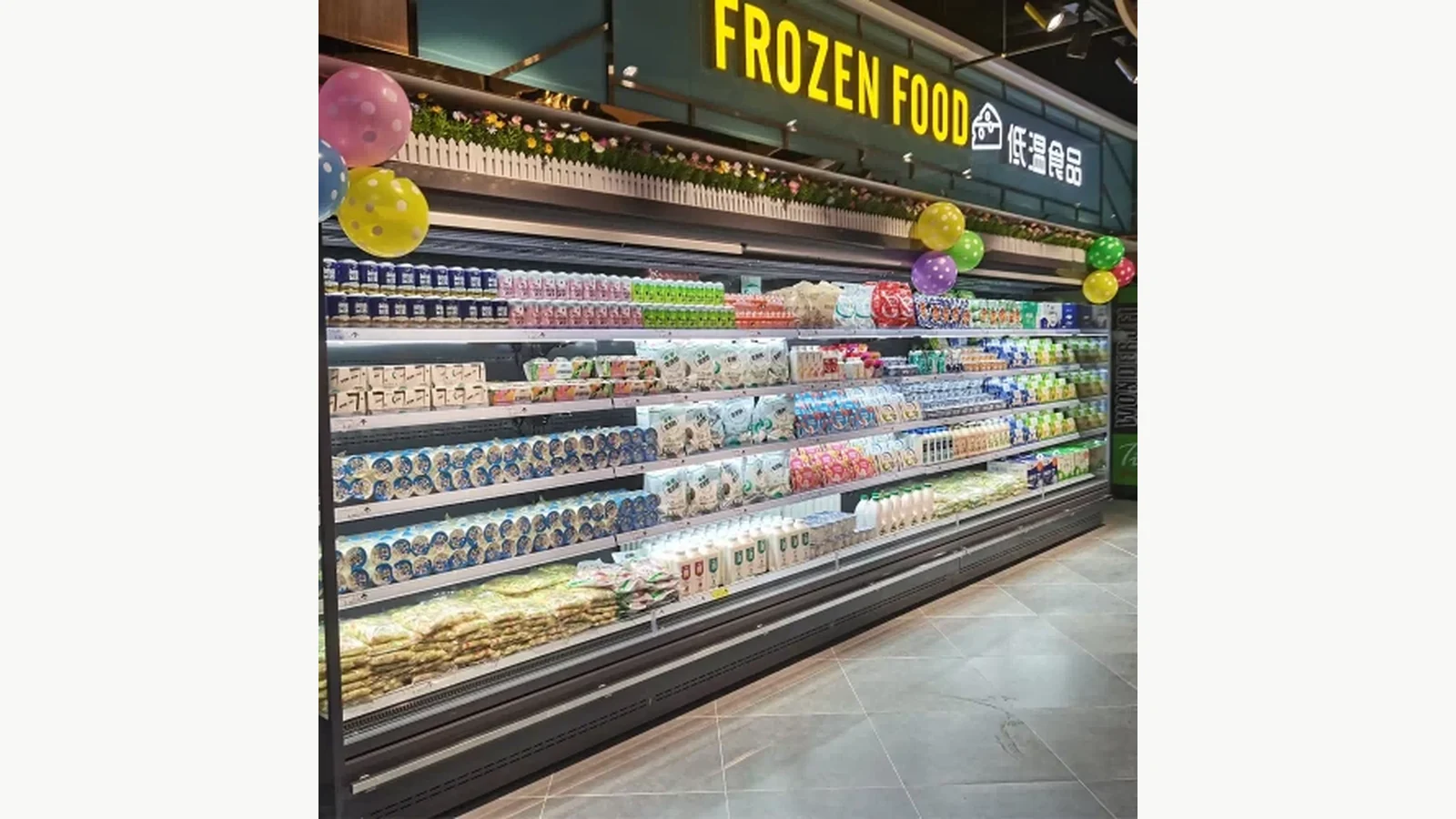
The name “4 Layers Shelves Open Vertical Multi Deck Display Chiller” confirms a useful starting structure: an open-front, vertical, multideck merchandiser with four shelf layers. It does not, by itself, settle the refrigeration arrangement, temperature range, dimensions, shelf load, electrical data, refrigerant, drainage, or exact site interface for a quoted model.
A clarification sheet turns that uncertainty into an orderly buying process. It places verified public facts in one column, supplier-confirmed project data in another, and unresolved fields in a visible action list. The result is a quotation and drawing package tied to one product-page identity rather than a mixture of similar open-chiller specifications.
Preserve the Exact Product Identity
Start from the named 4 Layers Shelves Open Vertical Multi Deck Display Chiller page. Record the page URL, WordPress product identity or supplier item code where available, page revision date, screenshot, and the full displayed title.
The current product catalogue supports these fields for this exact record:
- product family: open chiller;
- visible structure: open type and multideck;
- title-level shelf statement: four layers;
- vertical display format;
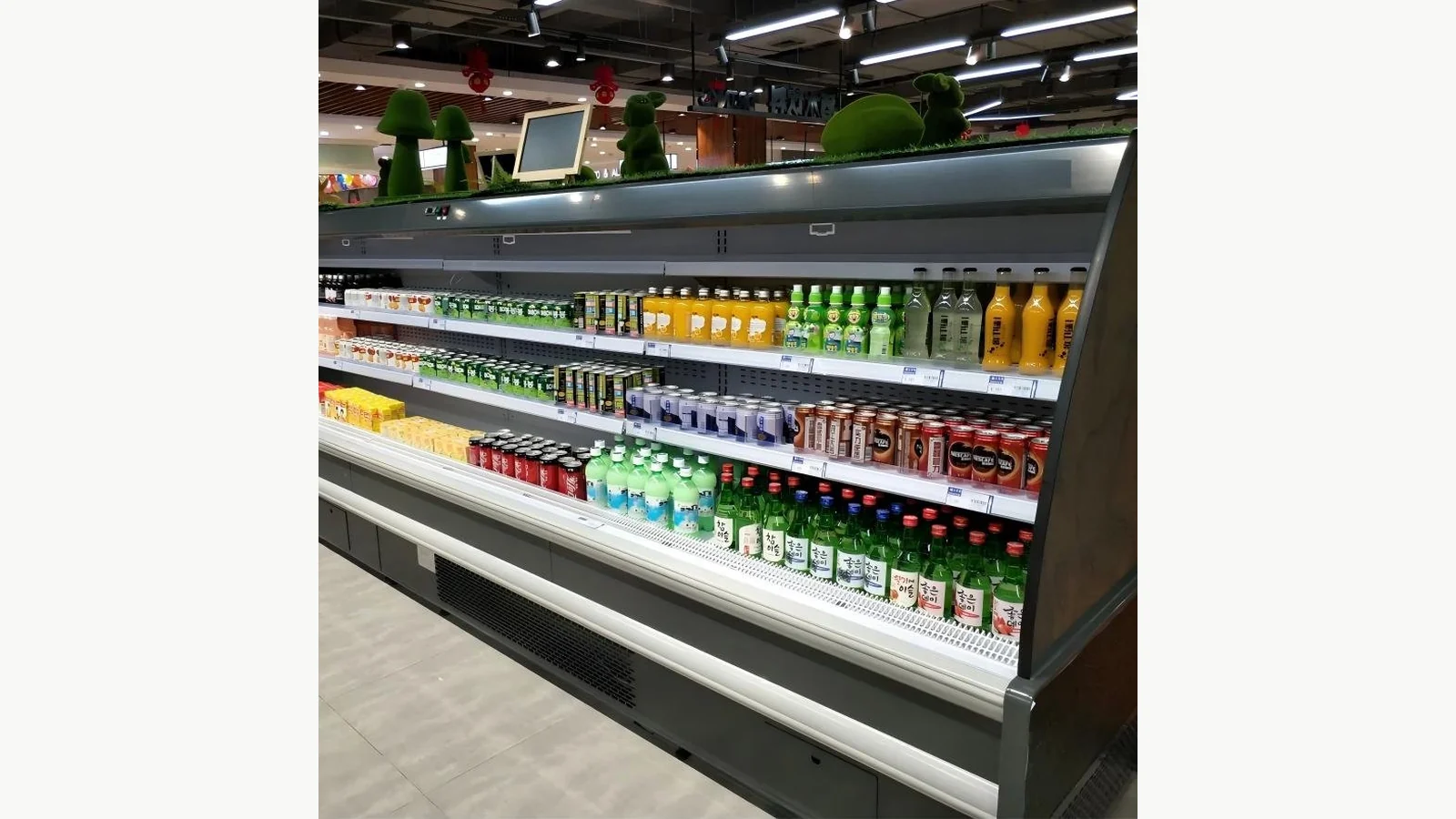
- intended chilled-merchandise context: beverage, dairy, produce, and packaged chilled food.
Keep those facts separate from the wider multideck open-chiller category, which contains plug-in, remote, full-height, semi-high, mini-island, and round-island products with model-specific temperature statements. A category feature can guide questions, but it cannot fill a blank field for this product automatically.
Use Three Evidence States
Give every specification one of three statuses:
- VERIFIED PUBLIC — directly supported by the exact product page, image, or current catalogue record;
- SUPPLIER CONFIRMED — answered in a dated quotation, data sheet, drawing, or written clarification for the exact item;
- PENDING — still unresolved or supported only by another model.
This simple status prevents a familiar procurement error: copying a temperature, refrigerant, or dimension from a visually similar cabinet and allowing it to become an unchallenged tender fact. The clarification sheet should show source file, revision, responder, and date beside every supplier-confirmed answer.
Ask Whether the Cabinet Is Plug-In or Remote
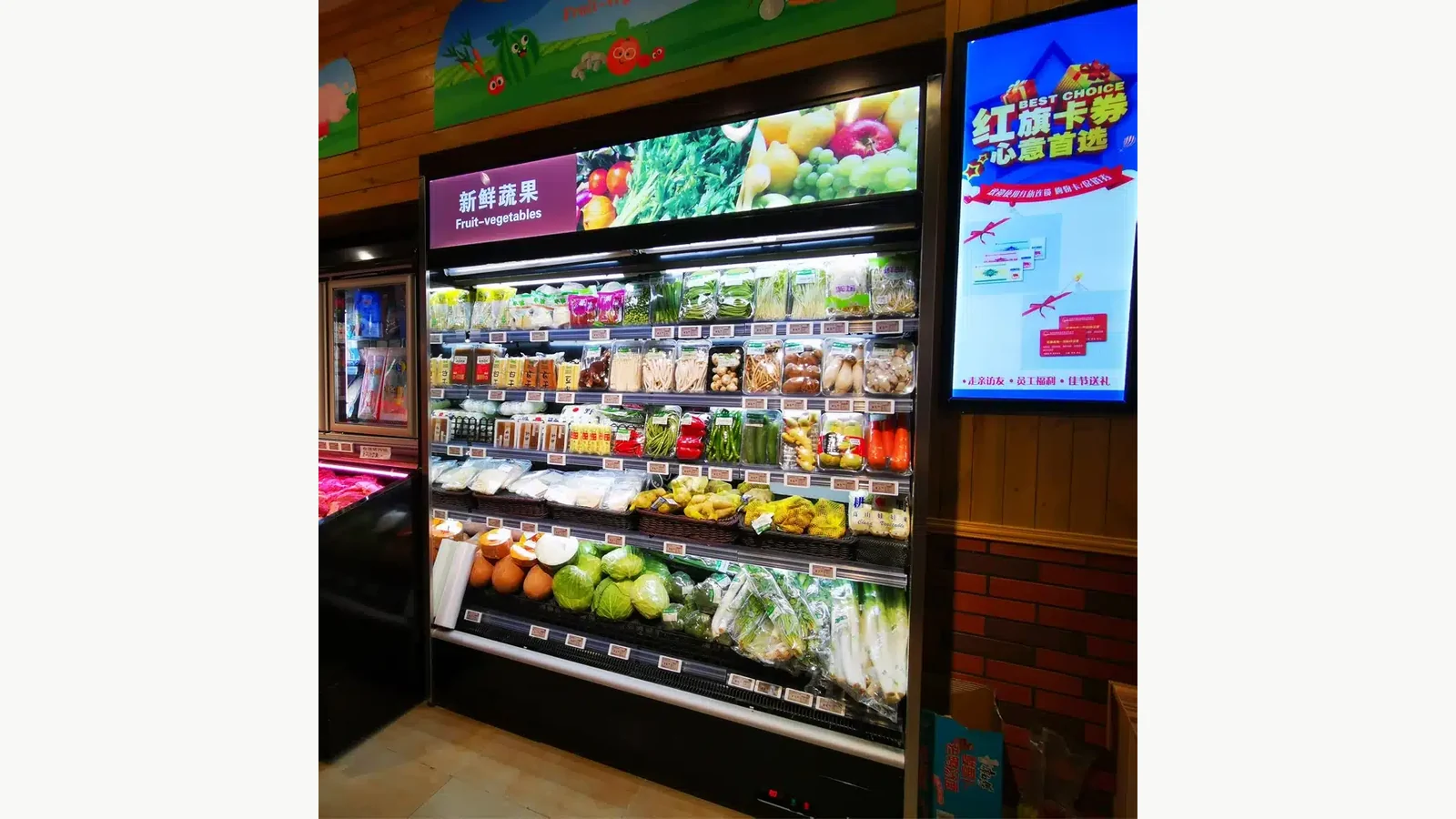
Refrigeration system is the first major pending field because it changes project scope. A plug-in cabinet normally includes a self-contained refrigeration system within the case; a remote case depends on an external plant and coordinated piping, controls, commissioning, and responsibility boundaries. The selected drawing and quotation must confirm the actual arrangement.
Ask for:
- refrigeration system type and exact model code;
- condensing-unit or plant scope;
- required pipe, drain, cable, and control interfaces;
- heat-rejection and ventilation requirements;
- service access zones and removable-panel locations;
- factory and site commissioning responsibilities.
Avoid site assumptions while the system field is pending. A floor plan that reserves only an electrical outlet may be incomplete for a remote cabinet, while an enclosed plinth or wall treatment could obstruct ventilation or service access on a self-contained case.
Bind Temperature to Merchandise and Model
List the merchandise the store intends to display, its required storage conditions, package dimensions, stocking pattern, and local food-safety controls. Then ask the supplier to state the operating temperature range for the exact four-shelf model, the test or rating basis, climate class where relevant, control range, and any loading or ambient boundaries.
The XCCOLD range includes open-chiller rows with 0–5°C and 2–8°C statements, but those values are model-bound. The published open-chiller temperature-category RFQ guide explains why a buyer should not transfer one row’s range to another. Keep the four-shelf clarification status PENDING until the supplier returns a dated answer for this product identity.
A temperature answer should support a merchandise decision. “Chiller” alone is too broad for a store team choosing among dairy, packaged drinks, produce, or prepared chilled food. Record the category, target range, pack format, loading limit, and monitoring plan together.
Request Dimensions as a Coordinated Drawing Set
A useful dimension sheet covers more than overall width, depth, and height. Ask for a plan, front elevation, side section, and service diagram showing:
- cabinet envelope and adjustable-foot or base condition;
- total height and shelf-by-shelf clear opening;
- canopy, lighting, price-rail, and shelf projection;
- rear clearance, end-panel thickness, and lineup joints;
- front customer zone and replenishment access;
- delivery dimensions, packed weight, and handling points;
- utilities, drain, piping, and control connection locations;
- access panels and maintenance-removal path.
Use the current store survey as the drawing background. Mark columns, walls, bulkheads, sprinklers, cameras, signs, trolley routes, doors, floor transitions, and nearby heat or air sources. The supplier can then answer against a real site rather than a blank catalogue request.
Define What “Four Shelf Layers” Means
The title confirms four shelf layers, yet the commercial drawing still needs to define how they are supplied. Ask for shelf quantity per bay, nominal width and depth, pitch or adjustment range, bracket type, edge rail, price-strip provision, lighting relationship, load rating, and permitted product overhang.
Use actual packages for a facing test. Record pack height, width, depth, weight, label position, case-pack quantity, and replenishment frequency. Create a shelf sketch showing the intended front line and vertical clearance. The open-chiller load-line and air-path review gives the store team a separate operating check after the cabinet geometry is confirmed.
Shelf-load values require supplier evidence for the exact shelf and bracket arrangement. A photograph of a heavily stocked display is merchandising context, not a load certificate. Keep the proposed assortment within the returned limits and have the project team review any concentrated heavy packages.
Complete Electrical, Refrigerant, Drain and Control Fields
Ask the supplier to return a technical schedule rather than a single total-power number. The schedule can include rated voltage, frequency, phase, input, protection requirement, plug or hardwire arrangement, controller, lighting load, defrost method, drainage arrangement, refrigerant, charge where applicable, sound data, and remote-plant requirements.
Site electrical and refrigeration engineers verify the final design against local rules and the exact equipment schedule. If a custom voltage or frequency is requested, give it a separate configuration code and make sure it appears on the quotation, drawing, production release, nameplate proof, and packing list.
Mark every response with a source. A salesperson’s message can be a clarification record when it names the model and revision, but the final production release should cite the approved technical document. If two answers conflict, keep the field PENDING until the supplier issues a corrected source.
Turn Answers Into an Approval Register
Use one row per field and one owner per open question:
| Field | Status | Evidence required | Owner |
|---|---|---|---|
| Product title and URL | VERIFIED PUBLIC | current page capture | buyer |
| Four shelf layers | VERIFIED PUBLIC | title and image context | buyer |
| Plug-in or remote | PENDING | model data sheet and drawing | supplier/project engineer |
| Temperature range | PENDING | exact model technical schedule | supplier/store operator |
| Overall and service dimensions | PENDING | approved drawing | supplier/site planner |
| Shelf load and adjustment | PENDING | shelf schedule | supplier/merchandising team |
| Electrical and refrigerant | PENDING | data sheet and nameplate proof | supplier/engineer |
| Delivery and commissioning | PENDING | method statement and responsibility matrix | project team |
Close each row with the answer, document ID, revision, date, and approver. A verbal “same as previous model” remains PENDING until the referenced previous model and approved equivalence are identified.
Release the Quotation Only When the Evidence Joins Up
Before price comparison, confirm that each supplier offer covers the same product identity, refrigeration system, temperature duty, dimensions, shelf schedule, utilities, finish, optional equipment, delivery scope, and commissioning responsibility. Separate base equipment, optional items, remote plant, freight, installation, and site works.
For production release, freeze the approved quotation, data sheet, drawing set, configuration code, electrical schedule, artwork or color direction, nameplate proof, packing mark, and change register. Later changes should cite the affected field and replace the old revision visibly.
Send XCCOLD the exact product-page URL, intended merchandise, temperature requirement, store layout, delivery route, site utilities, preferred refrigeration arrangement, shelf-facing test, destination, quantity, and clarification sheet. That turns a broad request for “a four-layer chiller” into a model-bound inquiry the technical team can answer.