
A remote round open chiller tender should never be compared as a cabinet price alone. The project must show who supplies the display cabinet, condensing equipment, valves and controls, refrigerant piping, insulation, drains, power, control wiring, supports, testing, commissioning, and site training. If those responsibilities remain hidden, two quotations that look similar may describe very different systems.
Start with the exact cabinet variant and an approved site drawing. Then issue one responsibility matrix shared by the equipment supplier, refrigeration contractor, electrical contractor, main contractor, consultant, and buyer. Mark every unresolved interface before award rather than discovering it during installation.
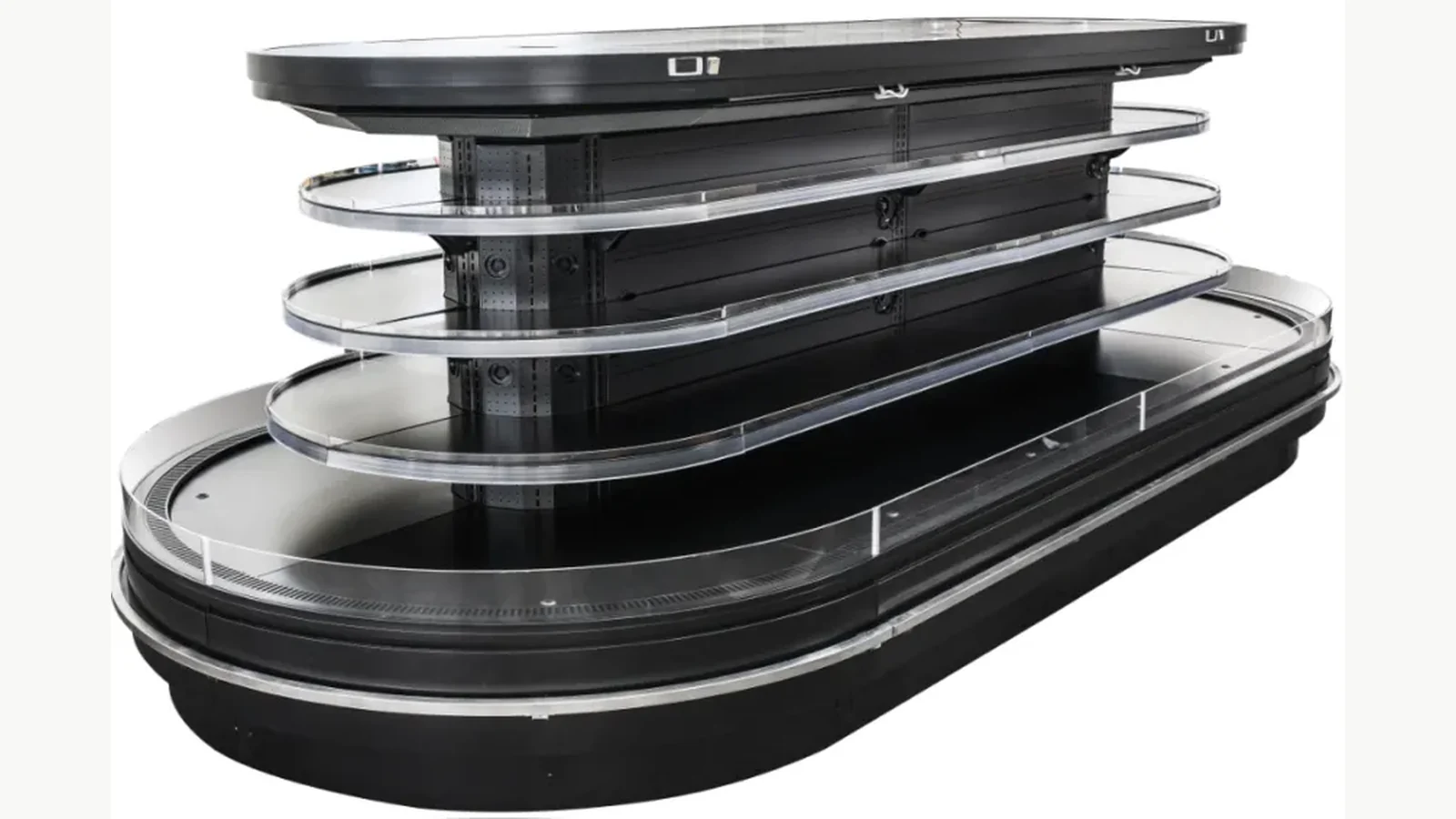
Identify the Exact Round, Remote, Semi-High Variant
The current remote round island semi-high multideck open chiller is an OPEN_CHILLER variant with remote, open-front, multideck, island, semi-high, round, and luxury structure tags. Its current product record states a 2–8°C temperature range and an external-compressor configuration. It is intended for chilled display categories such as beverages, dairy, produce, and packaged chilled food.
Those facts are insufficient to define the complete refrigeration plant. They also provide no proof of cabinet dimensions, duty, ambient design point, refrigerant, pipe sizes, charge, electrical load, drain detail, or controller architecture for a specific project. Request the current model submittal and project drawing before using any of those values in the tender.
The published comparison of standard, semi-high, mini-island, and round open-chiller formats owns the format decision. This article assumes the round remote variant has been shortlisted and focuses on making its system interfaces commercially visible.
Build the Responsibility Matrix Before Pricing
Use one row per deliverable and one accountable party per action. A row can include supply, installation, connection, testing, documentation, and final approval as separate columns. “By others” is not enough unless the named other party accepts the scope.
| Interface | Tender decision required |
|---|---|
| Display cabinet | exact model, quantity, section arrangement, finishes and accessories |
| Condensing equipment | selection, quantity, location, mounting, weather protection and controls |
| Refrigeration circuit | valves, pipework, insulation, supports, penetrations, pressure testing and refrigerant |
| Electrical | isolators, feeders, cabinet circuits, plant circuits, control wiring and earthing |
| Drainage | cabinet outlets, traps, fall, connection point, condensate treatment and test |
| Controls | sensors, controller, alarms, communications, setpoints and handover access |
| Installation | unloading, positioning, assembly, levelling, sealing, protection and waste removal |
| Commissioning | evacuation, charging, settings, temperature checks, records and sign-off |
The buyer does not need to prescribe an unsupported engineering value. The tender can require the responsible designer or supplier to calculate it and submit evidence against the confirmed site conditions.
Separate the Cabinet From the Remote Plant
Define what arrives with the cabinet. List shelves, ticket strips, lighting, night covers if offered, end or joining parts, controllers, valves, sensors, drain components, and loose accessories. Then state what is excluded. Photographs can identify the cabinet family, but they cannot prove which hidden or loose components are supplied.
For the remote plant, record who selects the condensing unit and on what duty basis. The schedule should name the required design inputs: cabinet model and quantity, approved product temperature class, site ambient, line length and lift, equipment location, operating diversity, power supply, noise constraints, and applicable project standard. Final capacity, refrigerant, pipe sizing, and charge must come from the project engineer and approved supplier data.
The remote multideck open-chiller tender-boundary guide addresses long cabinet lineups. A round island may have different geometry and service routing, but the same rule applies: never let the word “remote” substitute for a defined plant scope.
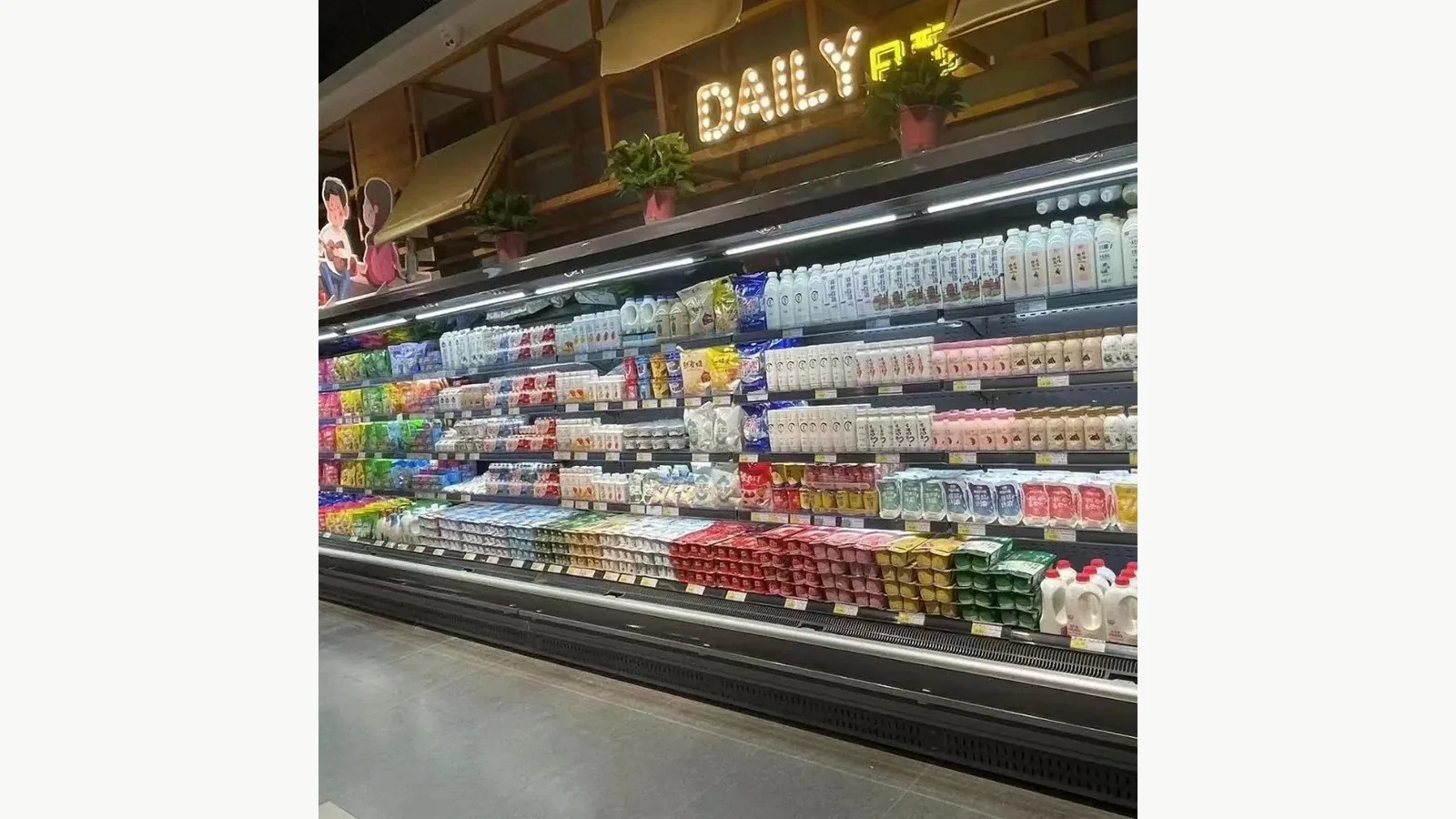
Map Piping, Electrical, Drain, and Access Routes
Put the cabinet footprint, plant location, pipe route, cable route, drain route, access panels, and maintenance clearances on the coordinated drawing. For a round island, confirm whether services rise through the floor, approach from an adjacent structure, or use another approved path. A product image is not evidence of a central floor entry.
Review these route questions:
- Where are the cabinet connection points on the approved model drawing?
- Who makes and seals floor, wall, or ceiling penetrations?
- What route avoids shopper circulation and merchandise zones?
- Who provides sleeves, fire stopping, waterproofing, and floor-finish repair?
- Where can technicians isolate, test, and service the circuit?
- How are drain fall, traps, and cleaning access verified?
- Which power and control circuits remain live during service isolation?
The separate condensing-unit location guide helps the project team review heat rejection, noise, access, and route consequences. The final decision remains project-specific and should be signed off by qualified refrigeration and electrical professionals.
Define Controls and Commissioning Evidence
The cabinet temperature label, controller display, product simulator if used, and independent test instrument may show different values. The commissioning plan should identify each measurement point and the required stabilization condition. Keep the current product record's 2–8°C range attached to the exact round remote variant; copying the 0–5°C range from a different open-chiller model would be inaccurate.
Require a commissioning pack that records:
- cabinet and plant model/serial identity;
- approved drawings and final responsibility matrix;
- pressure-test and evacuation records from the responsible contractor;
- refrigerant and charge evidence for the installed circuit;
- controller, sensor, alarm, and communication settings;
- electrical test and protection records;
- drain and condensate test;
- empty-cabinet and agreed loaded-condition observations;
- exceptions, corrective actions, approver, and date;
- manuals, spares, warranty contacts, and operator handover.
No universal stabilization time, pull-down time, ambient rating, test duration, or acceptance threshold is claimed here. Those values must come from the approved project specification, model data, local requirements, and commissioning authority.
Make Tender Exclusions Visible
Ask every bidder to return a line-by-line compliance schedule. For each row, allow only included, excluded, alternative, or clarification required. An alternative should identify the technical and commercial effect. A clarification should have an owner and due date.
Common hidden gaps include unloading equipment, night work, temporary storage, builders' work, floor repair, pipe supports, electrical isolators, drain connections, refrigerant, controls integration, network access, commissioning labour, repeat visits, travel, local permits, and operator training. Whether these items are required depends on the project; the matrix prevents them from disappearing between trades.
Send a Tender Package That Produces Comparable Bids
For an XCCold review, send the exact round remote product link, store and project location, plan and reflected ceiling drawings, cabinet quantity, merchandise category, temperature requirement, ambient design basis, power supply, plant location, preliminary routes, installation programme, control/monitoring requirements, contractor split, document requirements, and named decision owners.
Ask the supplier to return the model data, cabinet supply list, exclusions, connection schedule, required project inputs, and marked responsibility matrix. This creates a quotation that can be compared, coordinated, and commissioned—rather than a cabinet price surrounded by assumptions.