
“Low-E glass” should be treated as an exact-model specification, not a family-wide description of every island freezer with a transparent lid. In the current XCCOLD island-freezer range, specific plug-in combined models list Low-E sliding glass. Other models may look similar in photographs but require their own current specification evidence.
For a supermarket tender, the safe workflow is straightforward: identify the exact model, request the current glass statement and drawing, approve a physical sample or model-bound evidence, and carry that identity into production and receiving. This keeps a useful construction feature from turning into an unsupported promise about thermal performance or energy cost.
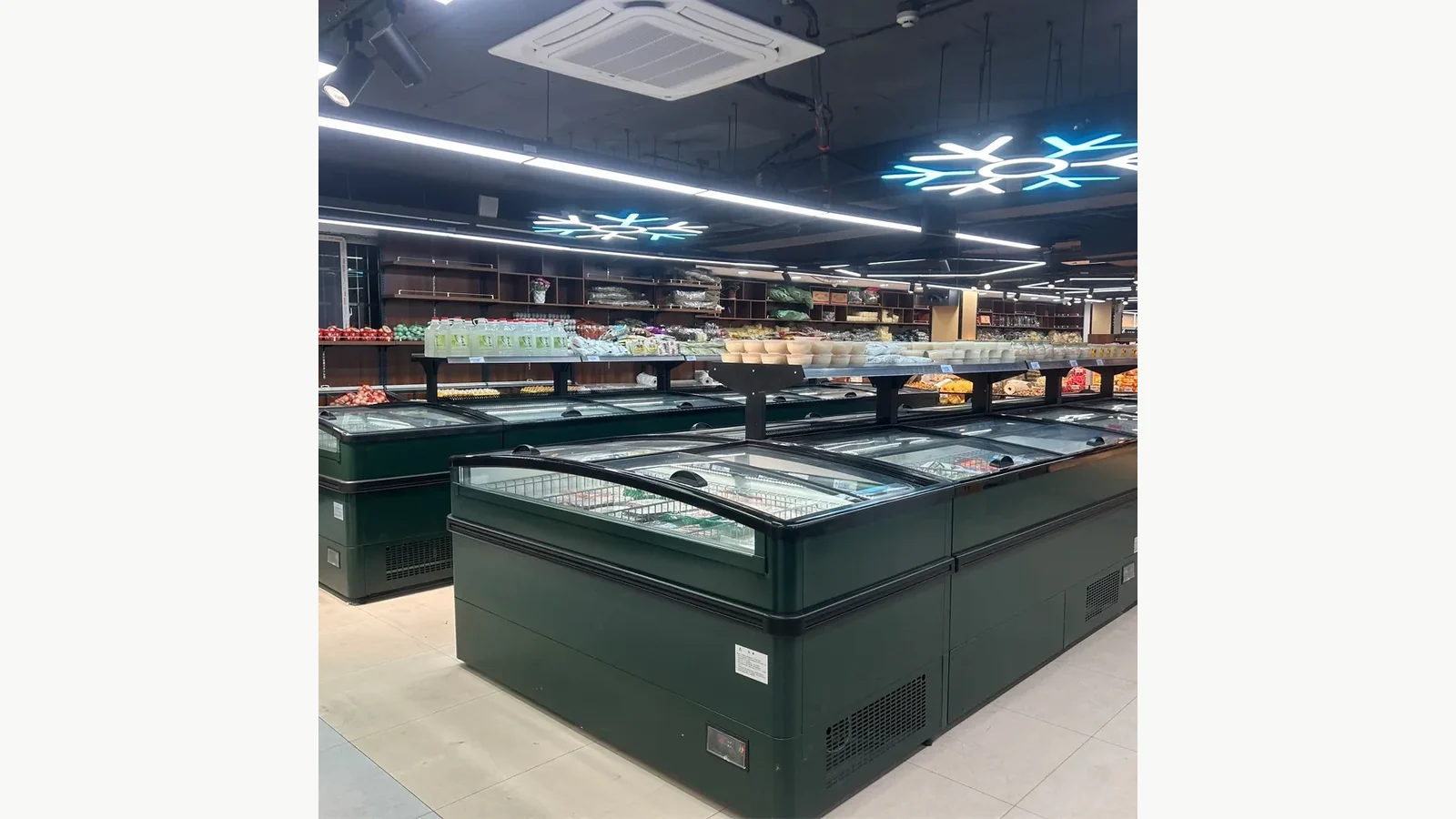
Start With the Two Verified Model Rows
The present product record specifically lists Low-E glass for two plug-in variants:
| Exact model | Verified structure statement | Product-page use in the tender |
|---|---|---|
| Plug-in Double Sides Sliding Door Combined Island Freezer | double-sided sliding access and Low-E glass | bind glass, access direction, and model identity together |
| Plug-in Standard Combined Island Freezer | standard combined form with sliding Low-E lids | bind the standard lineup and lid specification together |
The plug-in standard combined island freezer is therefore a valid landing page for this exact claim. The category also contains high-vision, lower-vision, double-temperature, Type-B, Type-C, remote single-sided, and remote double-sided forms. Their membership in the same family does not automatically transfer the Low-E statement.
The category's listed temperature range is -18 to -22°C. That temperature identity and the glass construction are separate fields. One cannot be used as proof of the other, and neither alone approves a complete project cabinet.
Understand What the Low-E Label Does and Does Not Prove
Low-emissivity glass is a construction description associated with how a surface manages radiant heat transfer. For procurement, the label should identify the glass assembly specified by the supplier. It does not automatically establish a complete cabinet's energy use, U-value, condensation behaviour, climate-class suitability, or operating cost.
Those outcomes depend on the full assembly and test conditions: glass layers, coating position, spacers, seals, frame, cabinet insulation, refrigeration system, ambient conditions, loading, access frequency, defrost, and test method. If a project needs a numerical result, the tender must name the test, condition, unit, evidence, and exact model.
Avoid writing “energy-saving Low-E lid” as the only requirement. It combines a construction phrase with an undefined performance promise. A stronger line is: “Low-E sliding-glass assembly for the exact quoted model, supported by the supplier's current model-bound specification and approved sample.”
Ask for an Evidence Ladder, Not a Marketing Phrase
Different projects need different evidence depth. Define it before quotation comparison:
- Model-bound product statement. The exact page or datasheet names the model and Low-E sliding glass.
- Glass construction declaration. The supplier identifies the assembly, coating description, and applicable revision.
- Drawing or bill-of-material reference. The glass item is tied to the cabinet and lid arrangement.
- Physical sample or production reference. The approved evidence carries the model and revision.
- Performance report where required. Any numerical claim names the test method, conditions, specimen, model linkage, date, and result.
Not every order needs all five levels. The buyer's tender, market, risk, and customer promise determine the required evidence. The key is to state the level instead of assuming that a photograph or product-family brochure proves every detail.
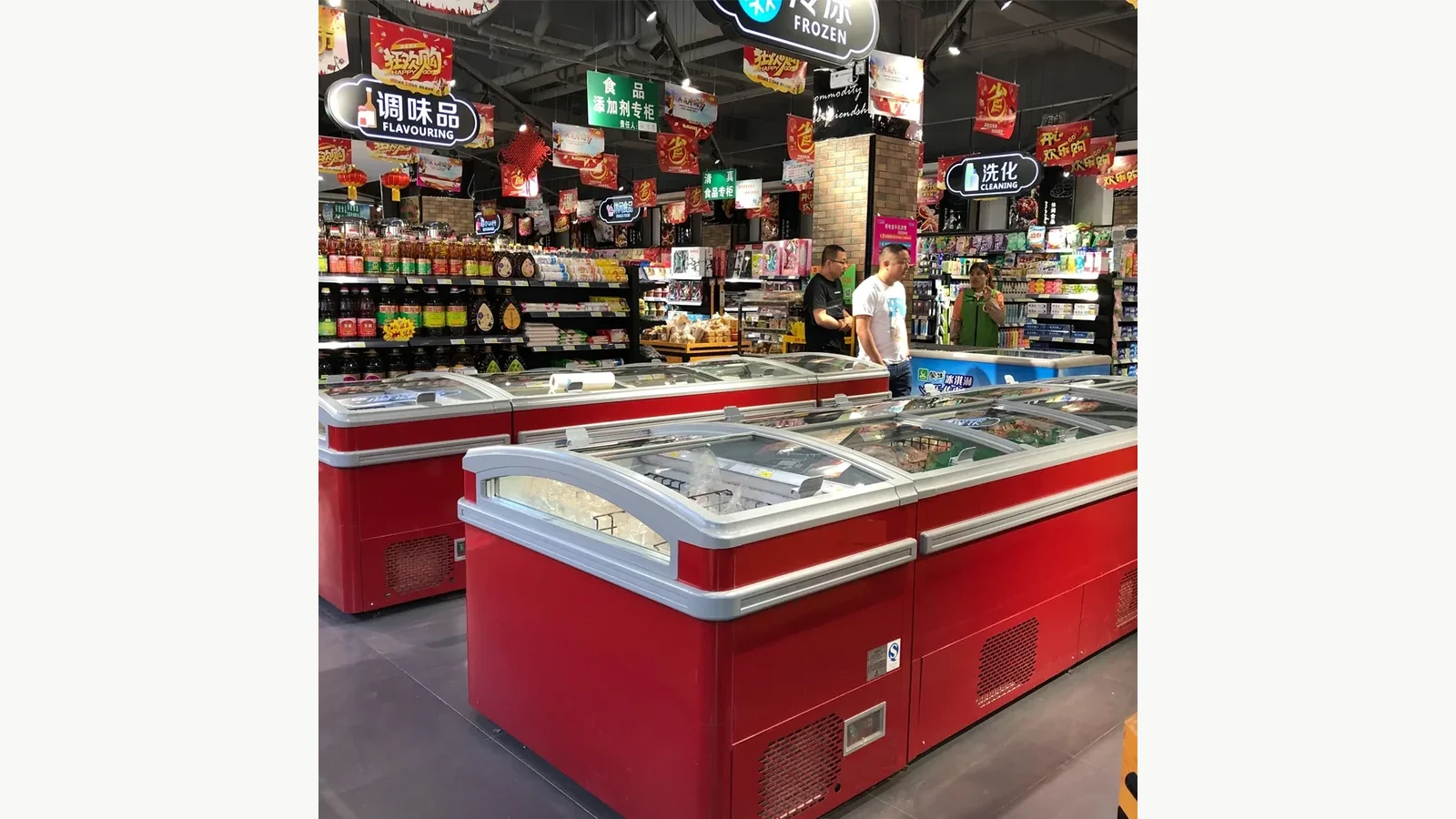
Keep Sliding Access and Glass Construction Separate
The double-sided model and the standard combined model solve different layout questions. Double-sided access can support shoppers on both sides of an island; a standard combined arrangement may follow another aisle plan. Sliding direction, overlap, handle position, anti-lift features, stops, frame, and access opening belong to the lid schedule.
Low-E belongs to the glass construction schedule. Put both schedules on the same exact-model row, but inspect them independently. A lid can slide correctly while the glass evidence is missing. A correct glass declaration can still accompany the wrong access arrangement.
The published high-vision versus standard combined island-freezer comparison handles sightline and merchandising decisions. A high-vision appearance should never be used as visual proof of a Low-E coating.
Build a Tender Schedule That Prevents Feature Drift
Mixed-model projects are especially vulnerable to copied specifications. A schedule may list several island-freezer types, then place “Low-E glass” in a heading that appears to cover every row. Put the statement inside each applicable model line instead.
Recommended tender fields include:
| Field | Required record |
|---|---|
| Cabinet identity | exact product title and supplier model code |
| System | plug-in or remote |
| Layout | standard, high-vision, lower-vision, double-sided, or other exact form |
| Access | sliding direction, lid quantity, overlap, handle, and end treatment |
| Temperature | stated model range and merchandise brief |
| Glass | Low-E statement only where current evidence supports it |
| Evidence | datasheet, declaration, drawing, sample, or test report as specified |
| Revision | quotation, drawing, sample, and purchase-order revision |
| Receiving | identity and physical checks linked to the approved row |
If the supplier offers a substitution, require a redlined row. “Equivalent glass” is not enough. The replacement needs a defined construction, evidence level, lid fit, and approval status.
Approve a Physical Reference Without Overreading It
A sample lid or pilot cabinet helps the buyer review size, frame, edge finish, overlap, handle, travel, seating, and visible defects. It also creates a retained identity for receiving. Visual inspection cannot reveal every coating property or thermal value. Keep the material statement beside the physical sample.
Photograph the sample label and full cabinet, then capture glass edges, frame corners, overlap, handle, open and closed positions, and any marking. Record the exact model, sample number, drawing revision, glass declaration revision, and approval date. A portable coating check can be used only if the buyer and supplier have agreed the instrument, method, calibration, surface, and acceptance criteria.
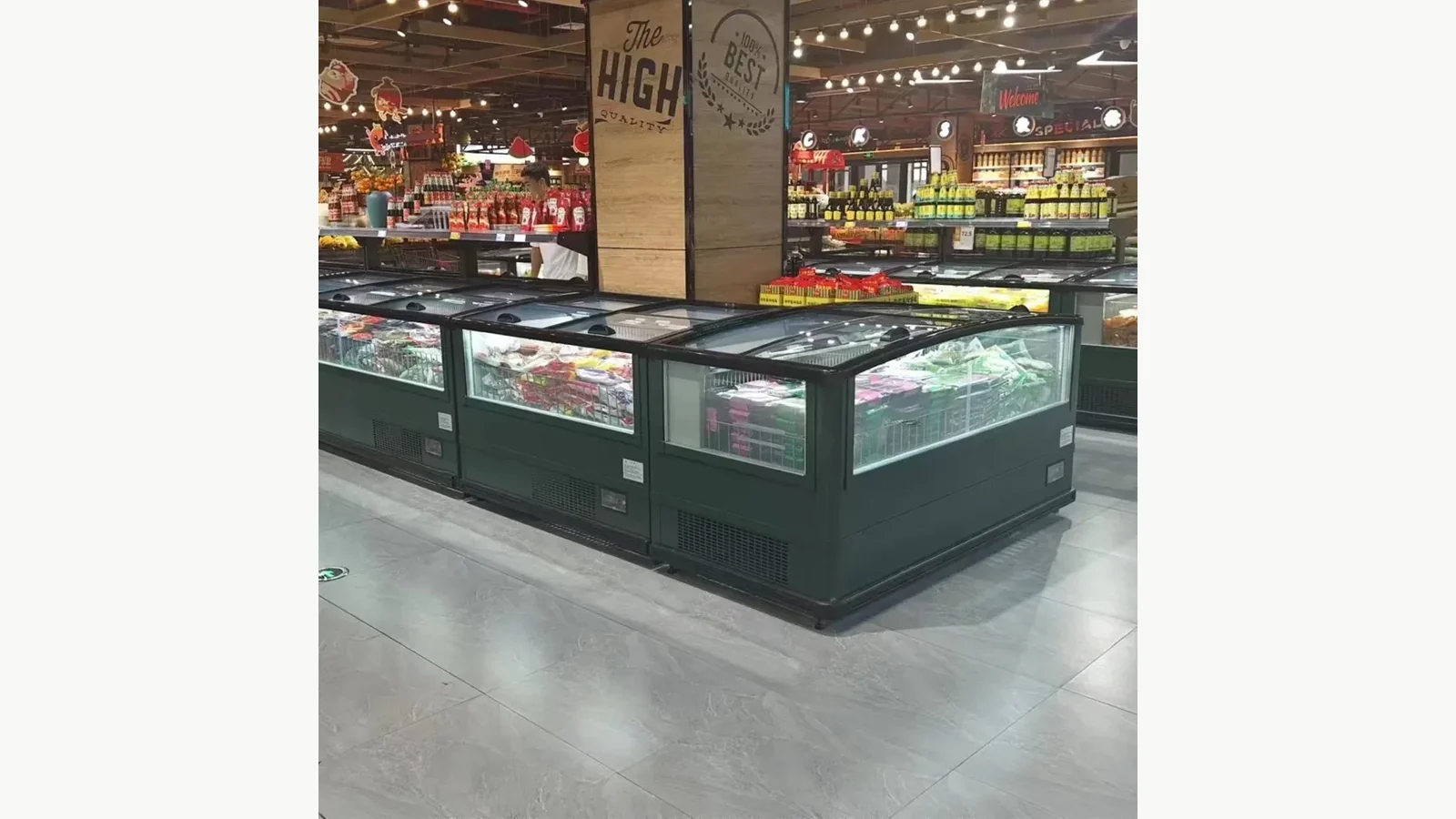
The image above is a useful family comparator because it shows how another island-freezer form can look equally glazed. Appearance alone does not grant it the same specification.
Carry the Claim Into Production and Receiving
Pre-production approval should freeze the exact model row and glass evidence. Pre-shipment records can show the cabinet label, lid arrangement, glass marking where present, sample comparison, packing identity, and inspection result. Keep the records by unit or batch according to the purchase order.
At receiving, first verify cabinet and carton identity. Then inspect lid quantity, access side, travel, seating, frame and glass condition, labels, and supplied documents. Transit damage and specification identity are separate decisions. A cracked or shifted lid needs condition handling even when its paperwork is correct; intact glass still needs the promised model evidence.
When a document revision changes, record which production batch it covers. Reusing a newer brochure to explain an older delivered cabinet can break traceability.
Related Reading
- Combined island-freezer alignment and sliding-lid travel checks covers the mechanical access review that follows glass identity.
- Plug-in double-temperature island-freezer RFQ checks keeps temperature zones separate from glass and lid construction.
- Commercial island-freezer buying guide connects the selected cabinet form with layout, access, and order details.
Send an Evidence-Specific Island-Freezer RFQ
Send XCCOLD the exact island-freezer model, quantity, lineup drawing, shopper access direction, lid arrangement, merchandise category, target temperature class, destination, and required Low-E evidence level. State whether the approval needs a supplier declaration, drawing reference, physical sample, or named performance report. Add the receiving method and revision rules before issuing the purchase order.