
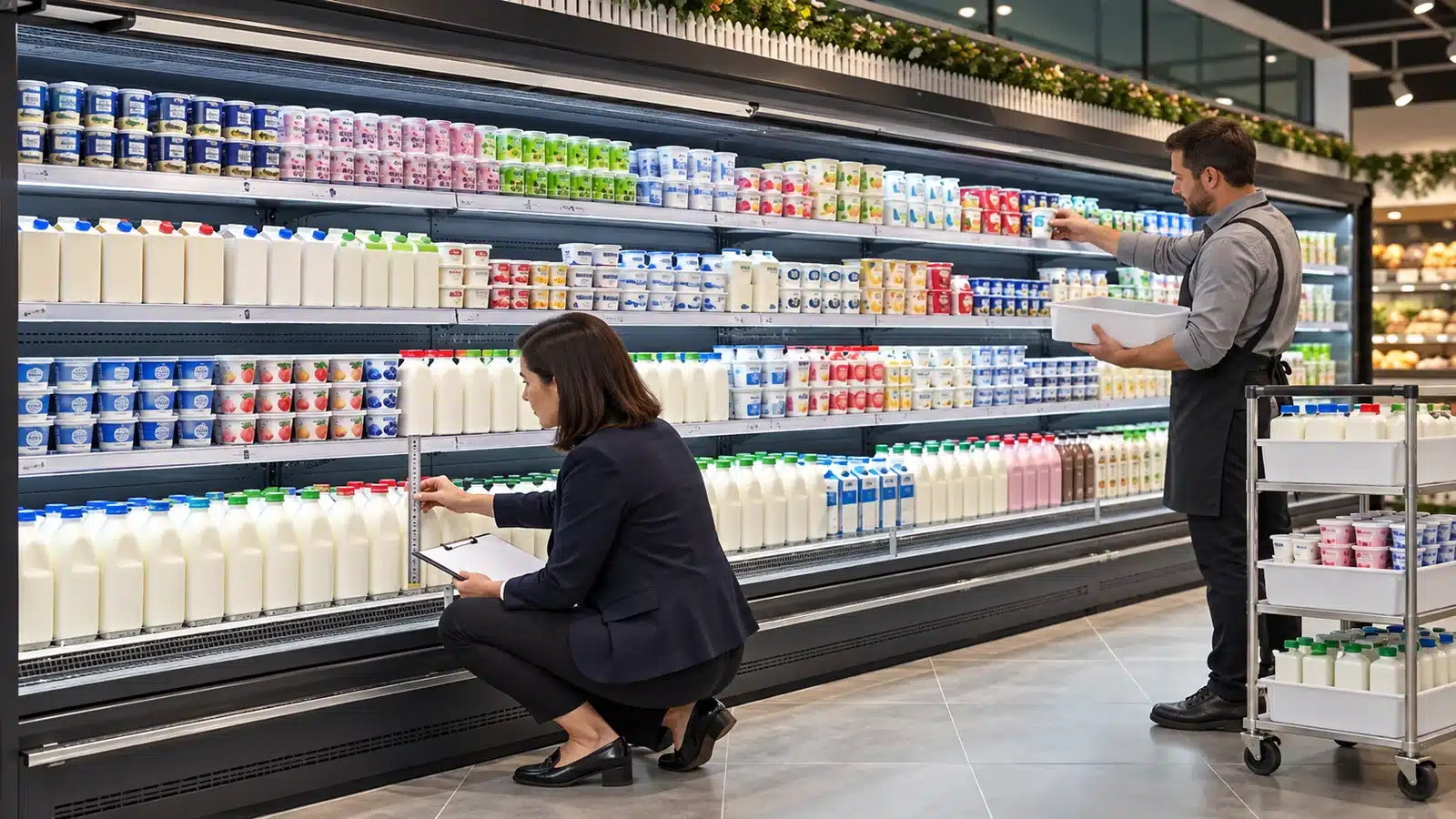
Four shelf levels alone cannot produce a workable dairy display. Milk bottles, cartons and yogurt cups use different heights, depths and facings, while store teams need enough hand space to rotate stock and refill the case. Before an RFQ is released, run a package trial that connects the real assortment to the exact cabinet and store routine.
The exact four-layer open vertical multideck display-chiller page verifies the four-layer, open-front, vertical multideck structure. The product catalog associates the open-chiller family with dairy, beverage, produce and packaged chilled food. The public page does not provide a dependable shelf-clearance schedule, temperature range or refrigeration-system field for this model, so those items must come from the current supplier quotation and drawing.
Start With the Packages, Not a Generic Shelf Count
Build a sample set from the products the store expects to display. Record package height, width, depth, weight, orientation, case quantity and target facings. Include the tallest bottle, widest multipack and smallest cup because each exposes a different shelf or price-rail problem.
Ask the supplier for the current usable shelf schedule for the offered production model. Keep overall cabinet dimensions separate from usable merchandising dimensions. Shelf count, bracket position, lighting, price rails and front retainers can all affect the available opening. Missing dimensions should stay open rather than being estimated from a photograph.
The published open-chiller product load-line and shelf-front guide explains why products should not project into cabinet air paths or obscure the intended shelf front. This four-layer trial applies that control to a dairy assortment and adds refill sequence, package rotation and model-specific evidence.
Run a Four-Level Package Trial
Give the base and each shelf a level number. Place representative bottles, cartons and cups at their proposed level, then record clear height, depth, facings and hand access. Check whether tall packages can be removed without striking the shelf above and whether shallow cups remain visible without unsafe stacking.
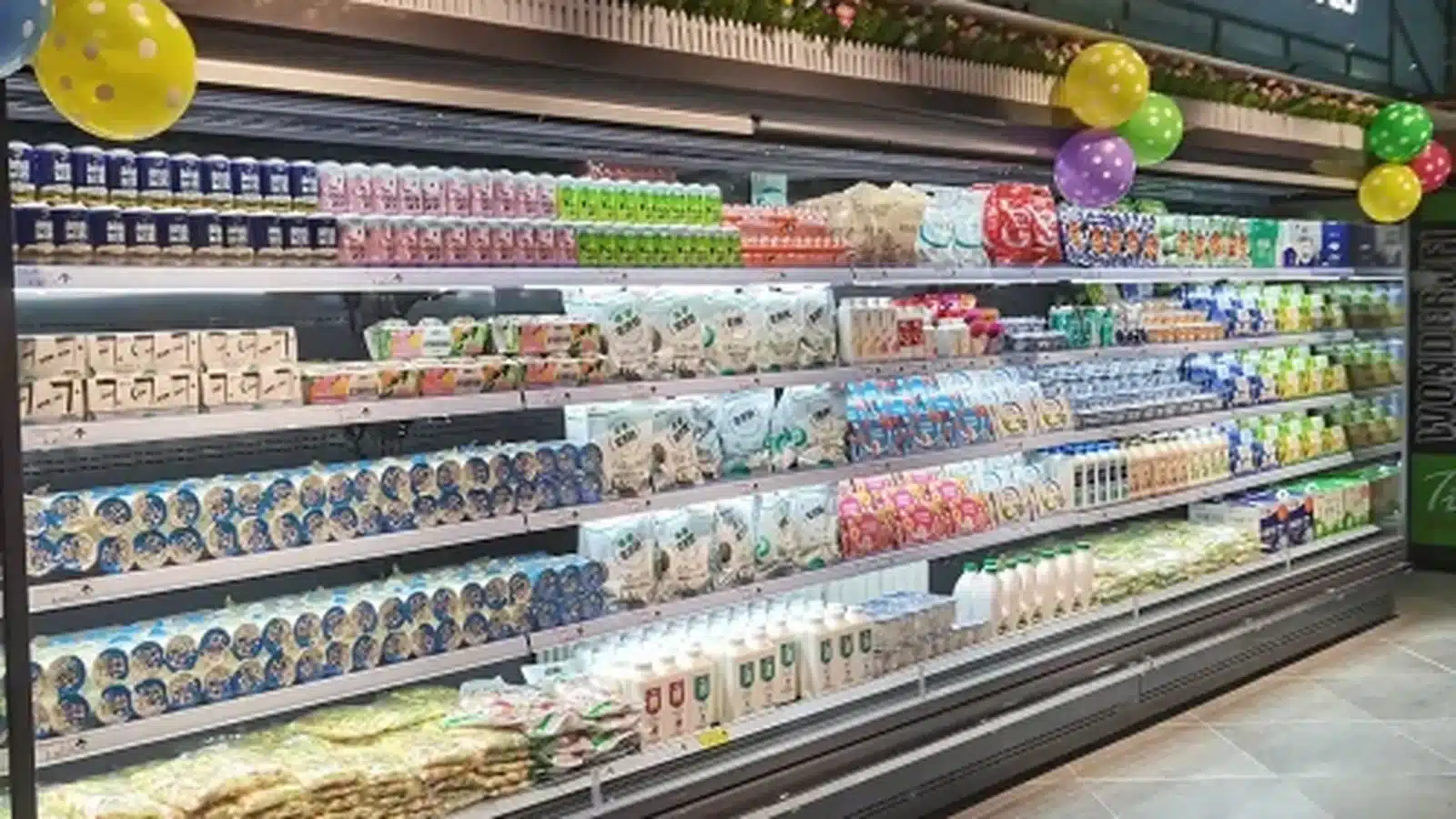
Mark the supplier-defined front loading boundary and any documented air inlet or outlet zones on the trial sheet. Keep packages, shelf labels and accessories behind those limits. Use the current manual, drawing and supplier response for the exact model instead of inventing a universal setback.
Review product rotation at the same time. Staff should be able to reach rear units, read date codes and move older stock forward without unloading an entire level. The buyer's food-safety and merchandising teams define the rotation rule; the cabinet trial only tests whether the proposed layout supports it.
Test the Refill Route During Trading Conditions
Map the route from cold storage to the cabinet, including doors, turns, aisle width, trolley parking and customer flow. Perform a timed observation with representative cases, but treat it as a site workflow record rather than a universal performance claim. Note where cartons are opened, waste is held and empty trays return.
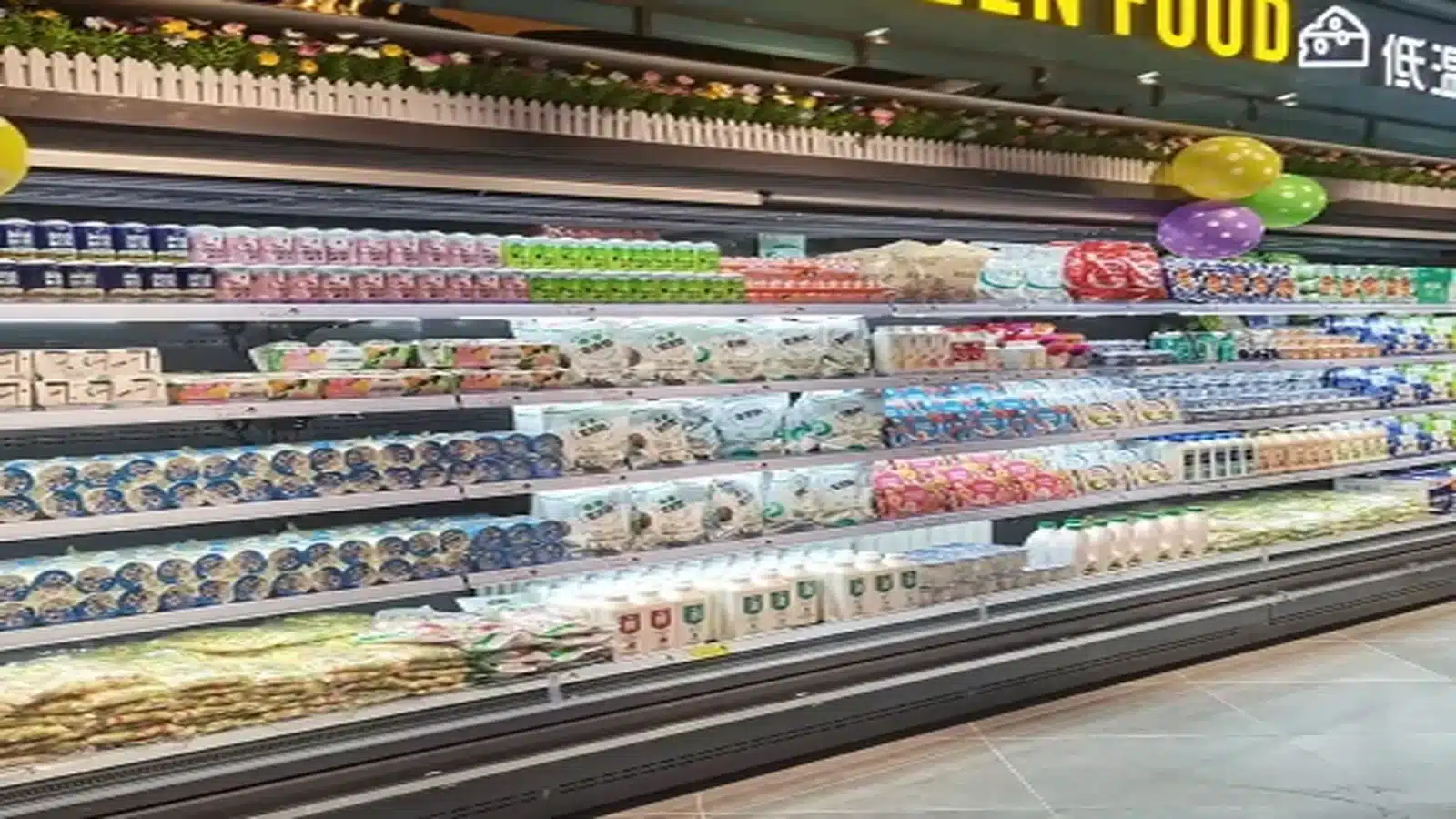
Keep refill equipment clear of the open front and surrounding ventilation or service zones. Confirm where the trolley can stop without blocking shoppers or preventing product access. If refilling requires a step platform, working-at-height procedure or other site control, assign it to the responsible store safety team.
Photograph each approved level immediately after the trial. Use plain level labels and a package list, not brand-dependent memory. If package dimensions, shelf positions or accessories change, repeat the affected level before treating the layout as released.
Return One Model-Bound RFQ Schedule
The RFQ should name the exact four-layer open vertical multideck model, quantity, intended dairy categories, package schedule, shelf arrangement, required temperature, refrigeration system, refrigerant, voltage, frequency, plug, lighting, price rails, accessories, destination, store plan and requested documents. Ask the supplier to return verified values and exceptions on the same schedule.
Temperature suitability must be checked against the required dairy products and local operating conditions. The article does not assign a temperature value that the exact public product page has not verified. Request the latest manual, drawing and production specification before approval.
Related Open-Chiller Planning
- Plan shelves, airflow and aisle flow for an open multideck chiller
- Create a photo baseline after a seasonal shelf reset
- Survey doorways, turns, floor levels and final position
Request a Four-Layer Dairy Review
Send the exact package list and dimensions, shelf quantity, display priorities, refill route, store plan, destination and electrical data through the XCCOLD contact page. Ask for the package trial and returned shelf schedule to remain tied to the exact production model.