
“Glass-door chiller/freezer” can name a product category, but it is not a complete tender line. Chilled merchandise and frozen merchandise require different operating ranges and may lead to different model, refrigeration-system and project-scope decisions. If a buyer places both under one quantity and one ambiguous temperature note, suppliers can price different equipment while appearing to quote the same request.
The correction is to split the RFQ by merchandise condition and required holding range before comparing cabinet style or price. Every line should point to an exact model family and a documented temperature record.
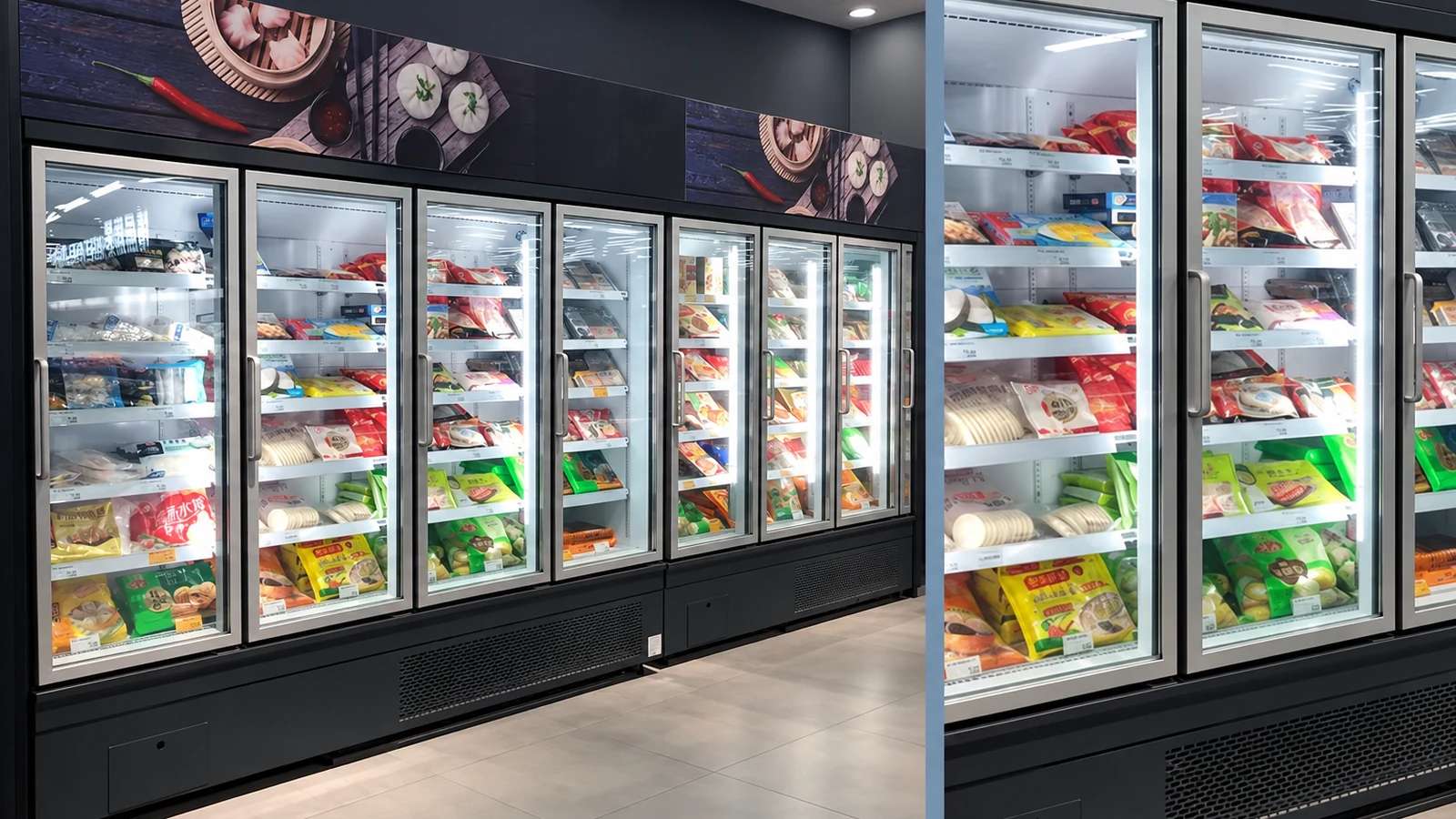
Start With Merchandise and Holding Range
XC Cold's glass-door upright chiller and freezer category contains both chilled and frozen forms. The verified product record lists chilled models at 0–5°C and frozen remote models at −18 to −22°C. That dual category is useful for discovery, but each purchase line still needs one intended range.
List the merchandise family, packaging, loading pattern and required holding condition for every cabinet run. Avoid assigning a temperature from a generic product name. A drinks or dairy line may belong to the chilled range; frozen packaged goods belong to a frozen model line. The buyer's product specification and local operating requirements remain the authority.
Avoid describe 0–5°C and −18 to −22°C as adjustable settings of the same unidentified cabinet. Bind every range to the supplier's exact quoted model and technical sheet.
Split the RFQ Before Selecting Style
Create separate lines even when chilled and frozen cabinets share a visual language. A practical schedule includes:
| RFQ field | Chilled line | Frozen line |
|---|---|---|
| Merchandise | Named chilled categories | Named frozen categories |
| Required range | 0–5°C where model evidence supports it | −18 to −22°C where model evidence supports it |
| System | Plug-in or remote, stated by model | Remote or other documented configuration by model |
| Cabinet style | Type-B, Type-C, top light box, Japanese, luxury or standard as quoted | Japanese, luxury or standard frozen model as quoted |
| Quantity/run | Door or cabinet count with plan reference | Door or cabinet count with plan reference |
| Approval | Technical sheet and sample/photo reference | Technical sheet and sample/photo reference |
The schedule prevents a visually similar chiller from being substituted for a freezer. It also prevents the buyer from comparing a self-contained plug-in line with a remote cabinet-only line that excludes condensing equipment, piping, controls or installation.
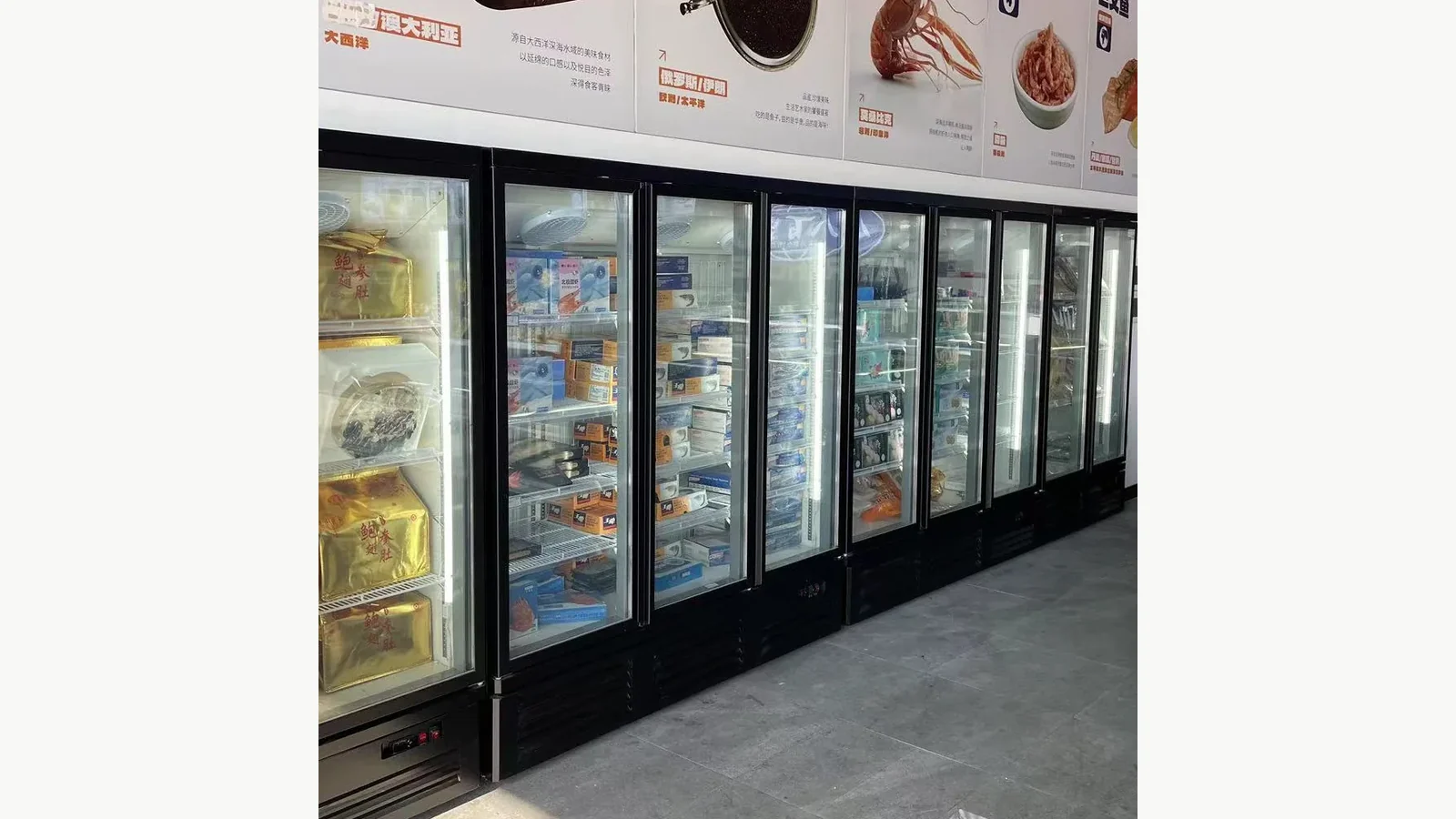
Keep Plug-In and Remote Scope Visible
The verified category includes plug-in bottom-compressor and top-light-box chilled units, plus remote Japanese-style, luxury and standard cabinet families. “Remote” changes the project boundary. The tender must state whether the quotation includes only display cabinets or also plant, piping, controls, refrigerant scope, commissioning and installation.
The Type-B versus Type-C bottom-compressor guide addresses two plug-in chilled structures. Type-C is documented with a pull-out compressor tray, while both listed lines remain 0–5°C chilled models. That comparison should not be reused as evidence for a −18 to −22°C freezer.
For remote frozen lines, request the exact remote freezer model record. The Japanese-style, luxury and standard remote glass-door comparison helps organize style and tender questions, but the current quotation must still bind temperature and system scope to the selected model.
Add Site and Merchandising Evidence
After the temperature split, add cabinet-run length, door count, aisle and door-swing clearance, loading route, electrical points, remote-services route and service access. These fields turn a product-category enquiry into a project line that can be checked against the store plan.
Shelf quantity and pitch should follow the real package-height and loading study. Avoid copy a shelf count from a different cabinet or infer it from a photograph. The four-shelf vertical merchandiser clarification sheet shows how to hold unverified technical fields open instead of filling them with assumptions.
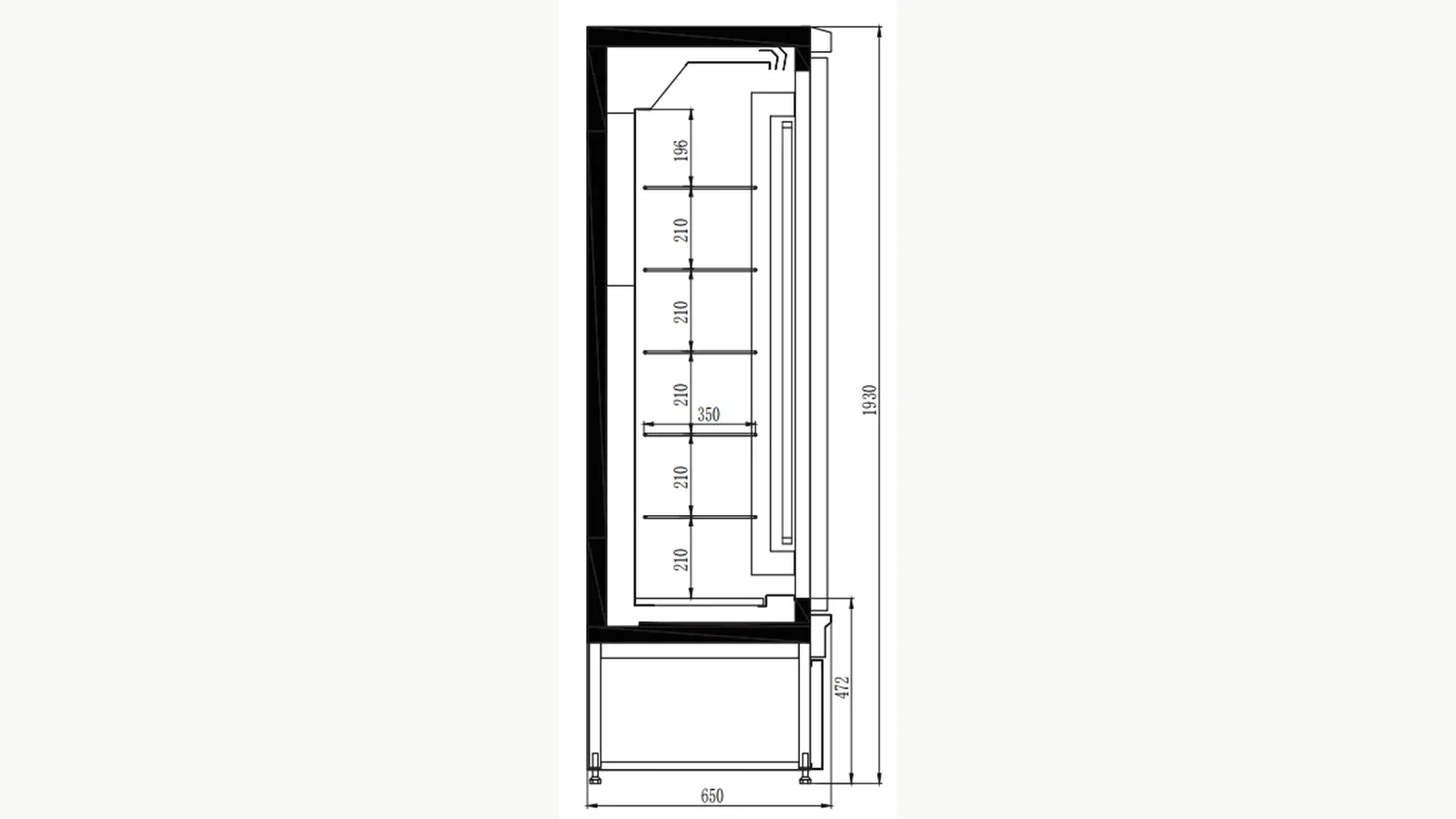
Record whether price strips, lighting, top light box, color or branding are required. These options matter commercially, but they come after the temperature and system decision. An attractive elevation cannot correct a cabinet selected for the wrong holding range.
Compare Quotations on the Same Basis
Normalize each supplier response back to the RFQ schedule. Confirm model, temperature range, plug-in or remote system, included equipment, door/run quantity, options, technical-sheet revision, delivery basis and exclusions. If a response says only “chiller/freezer,” return it for clarification.
Ask each supplier to mark deviations rather than silently pricing an alternative. A proposed different temperature, system or model family is a technical deviation even if the cabinet dimensions look close. Keep chilled and frozen deviations on their respective lines so the project team can approve them independently.
When the order is placed, carry the same line identity into drawings, packing lists and nameplates. The packing-list and nameplate reconciliation guide provides the later receiving control. That check works only when the original RFQ lines were unambiguous.
Related Commercial Refrigeration Guides
- Glass-door upright chiller buying guide
- Glass-door upright freezer display planning
- Glass-door upright chiller condensation pattern log
Request a Model-Bound Quotation
Send the merchandise list, required holding range, cabinet run, plug-in or remote scope, door and style preference, site plan, utilities and destination through XC Cold contact. The response can then separate chilled and frozen lines without inventing performance, energy or installation claims.