
XCCold's current open-chiller range includes exact models listed at 0–5°C and others listed at 2–8°C. That difference should be attached to the full product name, page, and current datasheet—not copied as one temperature for the entire category. The merchandise brief comes first; the model and its documented range come second.
A tender that says only “multideck open chiller, 0–5°C” can still be incomplete. It leaves open the cabinet form, plug-in or remote system, product load, store environment, and test method. A buyer may then compare structures that belong to different listed ranges or commission a cabinet against an assumption that was never confirmed for the ordered model.
Map the Listed Range to the Exact Model
The current multideck open-chiller category contains plug-in and remote equipment in full-height, semi-high, mini-island, and round-island forms. Its product records provide this model-bound map:
| Exact model | System and form | Listed range |
|---|---|---|
| Plug-in Mini Island Open Display Chiller | Plug-in, four-sided mini island | 0–5°C |
| Plug-in Multideck Open Chiller with Top Light Box | Plug-in, vertical multideck | 2–8°C |
| Plug-in Open Chiller with Bottom-mounted Compressor | Plug-in, vertical multideck | 0–5°C |
| Plug-in Semi-high Multideck Open Chiller | Plug-in, semi-high | 0–5°C |
| Remote Japanese-style Multideck Open Chiller | Remote, narrow-frame vertical | 0–5°C |
| Remote Luxury Multideck Open Chiller | Remote, full-height vertical | 0–5°C |
| Remote Round Luxury Island Semi-high Multideck Open Chiller | Remote, round semi-high island | 2–8°C |
| Remote Standard Multideck Open Chiller | Remote, standard vertical | 0–5°C |
| 4 Layers Shelves Open Vertical Multi Deck Display Chiller | Public page with limited verified data | Temperature pending confirmation |
The final row is a useful boundary. Its public title verifies a four-layer, open, vertical display form, but the current evidence does not verify a temperature or system type. A buyer should request the current model datasheet rather than borrowing a value from another open chiller.
Write the Merchandise Brief Before Picking 0–5°C or 2–8°C
The required product condition comes from the merchandise owner, applicable food rules, operating plan, and store risk assessment. List each category—packaged beverages, dairy, produce, or prepared chilled goods—with its target condition and operating limits. Confirm packaging, load pattern, delivery temperature, replenishment frequency, and maximum time outside refrigeration.
The equipment comparison then asks whether an exact model's documented range and test conditions meet that requirement. A broader listed range is not automatically more flexible, and a lower number is not automatically better. Display quality also depends on air-path clearance, loading, ambient conditions, night operation, doorless exposure, and commissioning.
The plug-in open-chiller structure comparison separates top-light-box, bottom-compressor, and semi-high cabinet forms. Use that structural decision after the merchandise requirement is clear, not as a substitute for temperature evidence.
Treat the 0–5°C Group as Several Products
The 0–5°C rows include a mini island, bottom-compressor vertical plug-in, semi-high plug-in, and several remote vertical cabinets. They share a listed range but differ in access, height, installation scope, display geometry, and service arrangement.
The exact bottom-mounted compressor open chiller is a self-contained vertical multideck. Its listed 0–5°C range belongs to that model identity. A remote Japanese-style model may share the same range while requiring a separate condensing-system and piping scope. The tender must retain those differences.
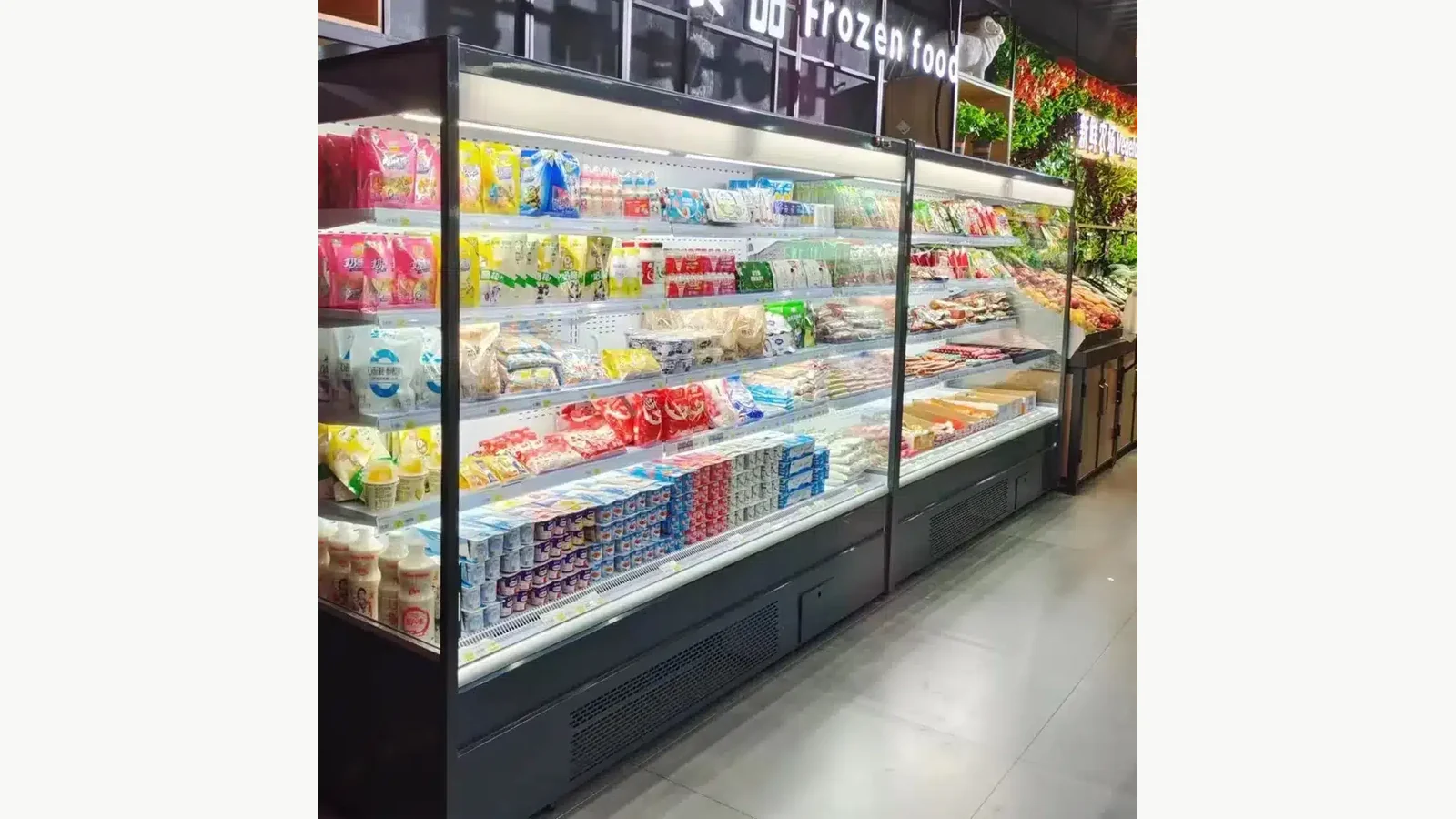
Ask for the current temperature declaration alongside the exact model code, dimensions, electrical data, refrigerant, ambient test condition, shelf/load arrangement, and control setup. If any item changes after sample approval, repeat the relevant review.
Understand the Two 2–8°C Listings
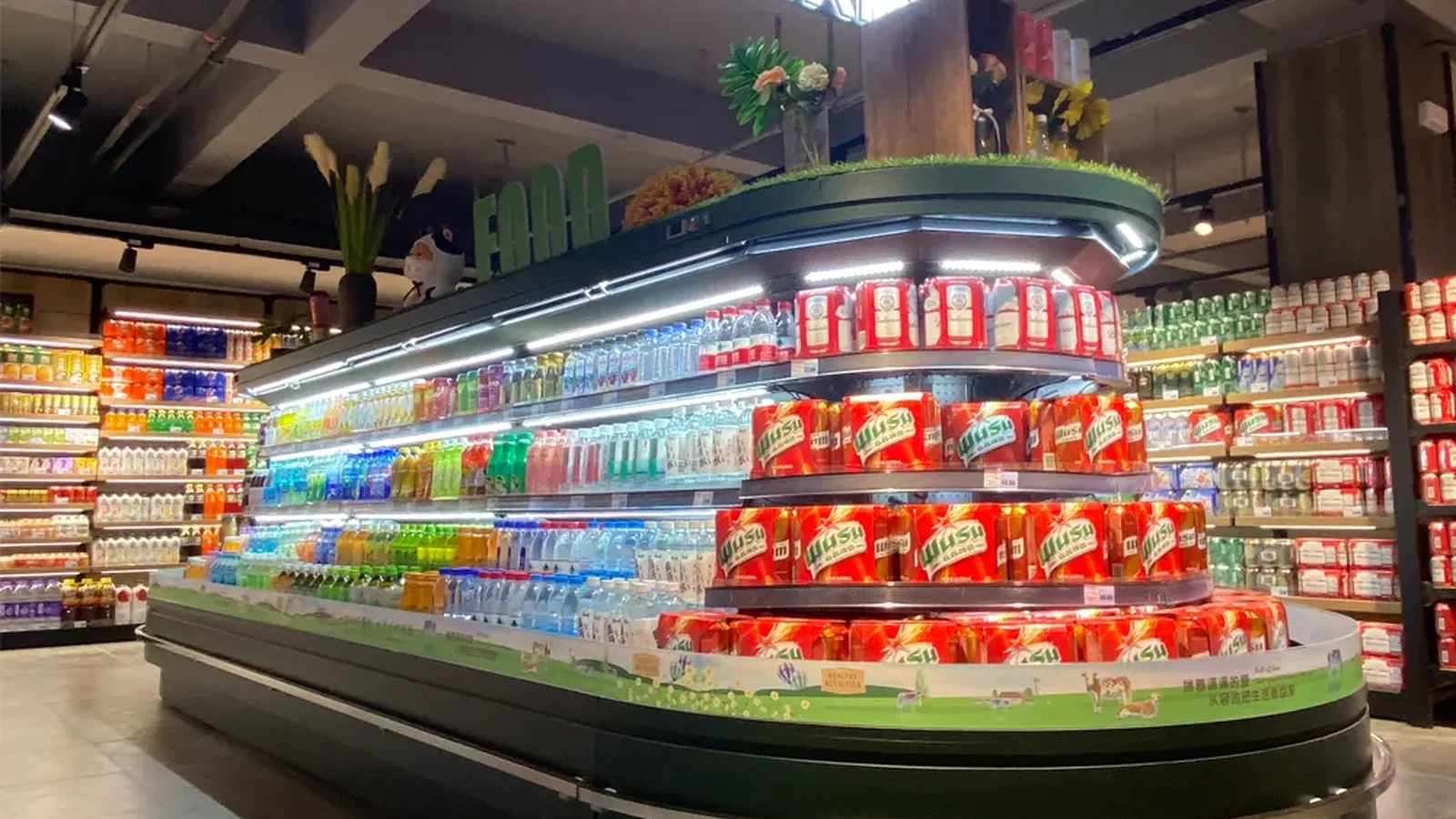
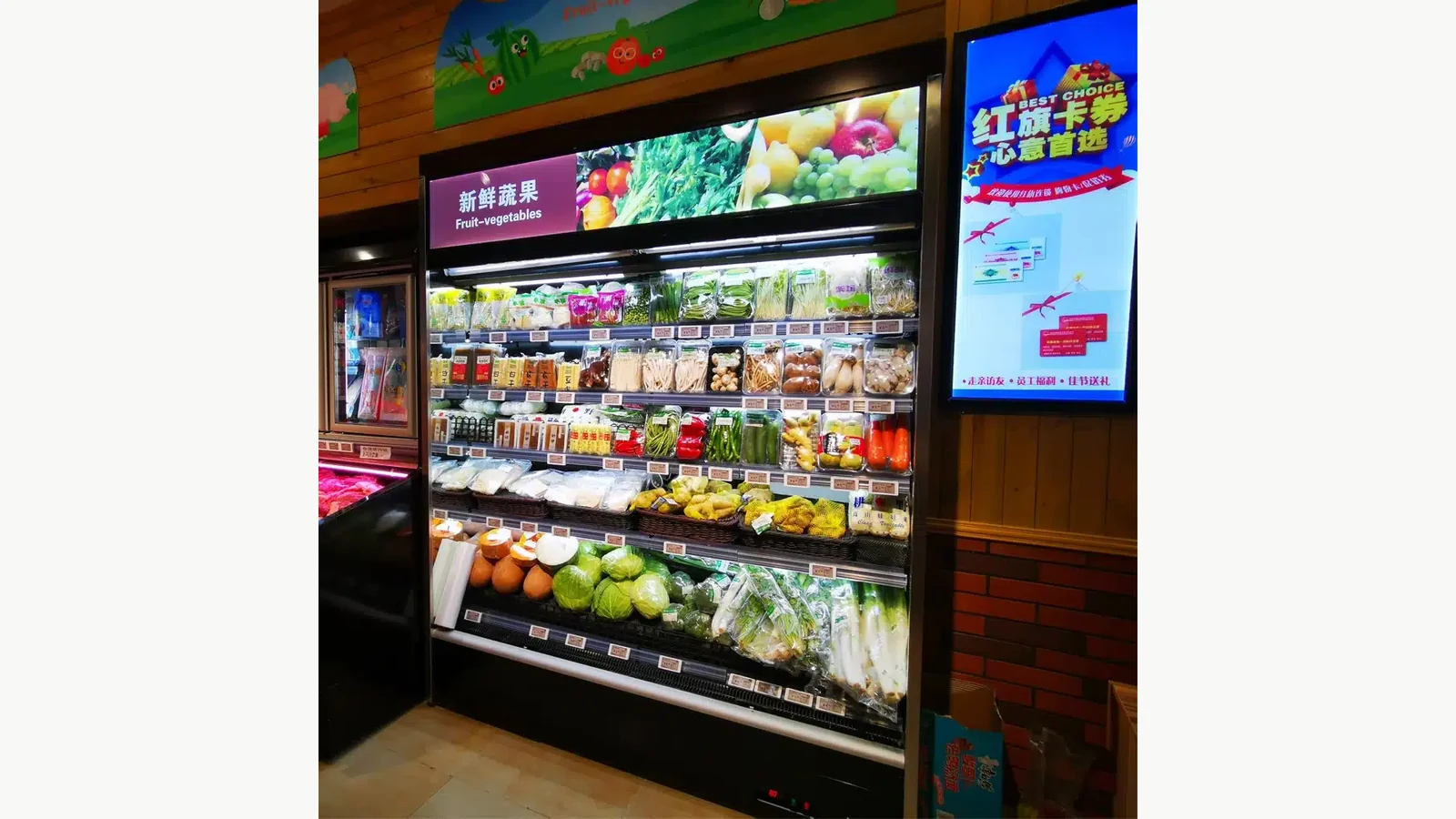
Two current records use 2–8°C: the plug-in multideck with top light box and the remote round luxury island semi-high model. They are visibly and operationally different. One is a vertical wall-line cabinet with a promotional header; the other is a remote, round, 360-degree island display.
The shared temperature range does not make them substitutes. Store plan, access, plant scope, product presentation, staff route, and service interface may point to different solutions. Keep the exact model, system type, and temperature together on every drawing and quotation line.
Put the Temperature Evidence Into the RFQ
A useful open-chiller request contains:
- merchandise categories and required product condition;
- exact product title and product-page reference;
- required operating range and who defined it;
- plug-in or remote condensing scope;
- cabinet quantity, lineup, dimensions, and end conditions;
- voltage, frequency, plug or hard-wiring scope;
- refrigerant and destination-market requirement;
- store ambient design condition and site location;
- shelf arrangement, intended load line, and replenishment pattern;
- current datasheet, drawing, control description, and test evidence requested.
The supplier response should state exceptions. If the selected model has a listed range different from the tender, resolve that line before price comparison. Avoid accepting a category brochure as the only proof when the order names an exact variant.
Define the Site Acceptance Test Before Shipment
Temperature acceptance needs a method. Agree where sensors are placed, how long the cabinet stabilizes, what product or test load is used, how openings and replenishment are handled, and which ambient conditions are recorded. The controller display alone cannot represent every product location.
Record cabinet model, serial or asset ID, controller settings, shelf layout, load line, ambient temperature and humidity, test start, disturbances, and sensor locations. Compare results with the agreed model-specific criteria. If the site differs from the quoted condition, document the difference before assigning cause.
The same discipline applies during commissioning. Verify that the installed cabinet matches the drawing, the plug-in or remote scope is complete, airflow paths remain clear, and staff understand the loading boundary. A correct model can still perform poorly when merchandising blocks the air path.
Control Revisions Across Drawings and Orders
Open-chiller selections often change as the store plan develops. Keep a revision register for model, system type, listed temperature, dimensions, cabinet count, lineup, shelf plan, utilities, and control specification. A change from a bottom-compressor cabinet to a top-light-box cabinet is not merely a visual substitution; it may change the documented range and project interfaces.
Receiving teams should match the nameplate, packing list, and cabinet identity to the approved schedule before installation. Quarantine unexplained substitutions and retain photographs of the model label and shipment documents.
Related Reading
- Remote multideck open chillers for long supermarket runs defines plant and cabinet scope for centralized projects.
- Multideck open-chiller format selection compares full-height, semi-high, mini-island, and round displays.
- Open-chiller product load-line review keeps packages and shelf fronts out of the intended air path.
Send a Model-Bound Open-Chiller RFQ
Send XCCold the merchandise list, required product condition, exact model or shortlisted product pages, plug-in or remote scope, store plan, cabinet quantity, destination, voltage and frequency, refrigerant requirement, ambient design data, shelf/load plan, and acceptance method. Ask for the current model datasheet and drawing so the 0–5°C or 2–8°C value remains attached to the equipment actually being quoted.