
A refrigerated service counter can pass through a container, warehouse, truck, unloading team, and installation crew before it reaches its final position. When glass, panels, or accessories appear damaged, the evidence needs to show when the condition was first visible and which exact unit is involved. Start the record before the package is moved or opened.
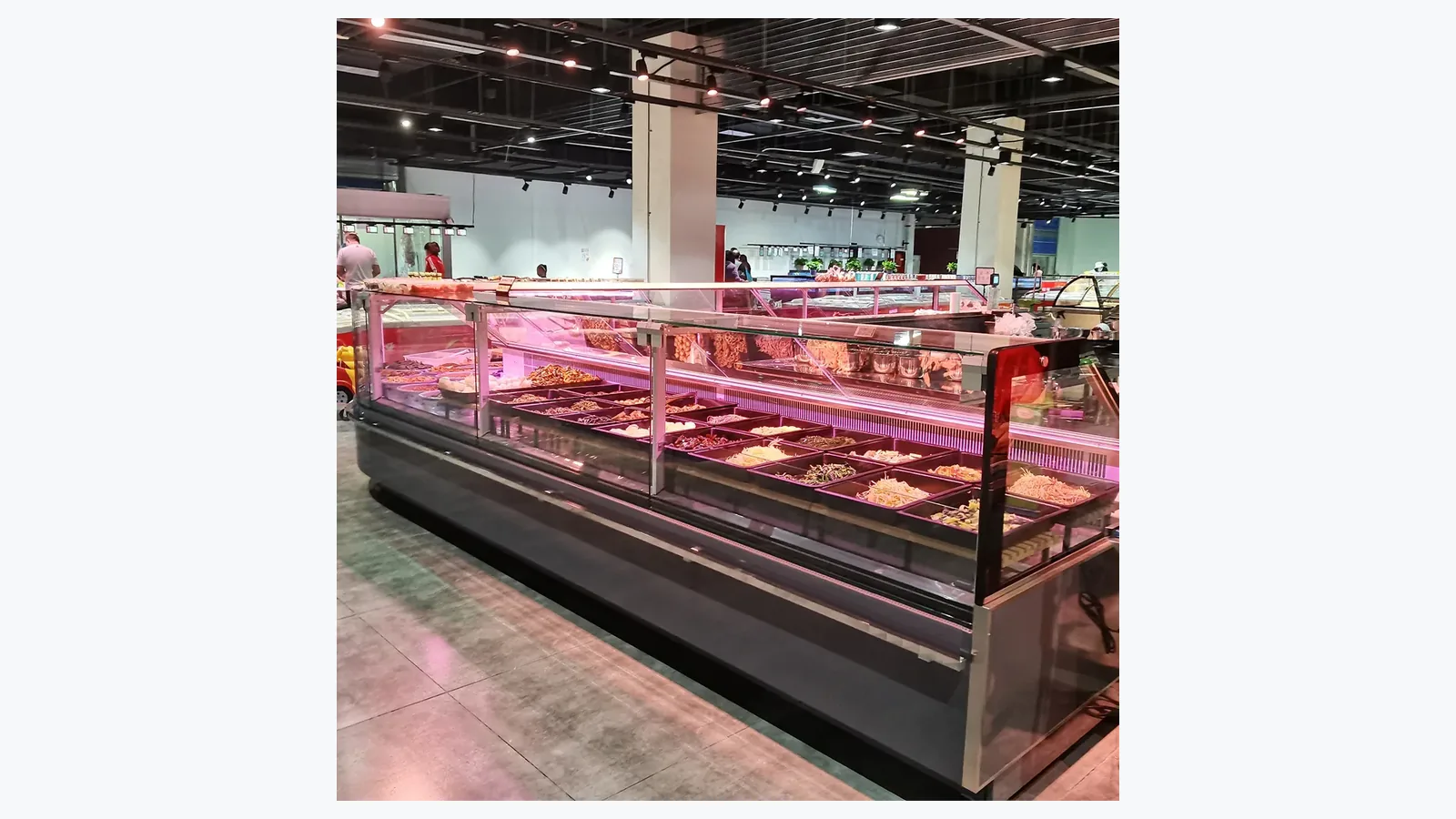
Confirm the Exact Counter Structure
This protocol uses the XCCOLD straight-glass deli food showcase counter as the product entity: a counter-type refrigerated display with straight glass, a customer display side, and a rear service side for deli or prepared food. It is not a curved-glass counter and not a fresh-meat showcase.
Match the shipment labels, order, packing list, and product description before inspection. Record model, quantity, package number, and any serial or unit identifier present on the actual documentation. If several similar packages arrive, keep each photo set tied to one package and unit.
The approved deli food showcase counter page provides the structural reference for identity.
Photograph Before Unloading or Repositioning
Capture the package inside the container or truck when access is safe. Take wide views showing its position, neighboring cargo, restraints, pallet, floor, and doors. Then photograph every side of the package, top, bottom edge, labels, handling marks, crushed corners, punctures, wet areas, broken straps, and shifted supports.
Avoid beginning with only close views. A close puncture image proves the mark exists but not where it sits on the package or how the cargo was arranged.
Where the carrier or receiving procedure requires a delivery note, record visible exceptions before signing. Follow the actual contract and carrier process for notice; this article does not replace those terms.
Create a Controlled Unpacking Sequence
Move and open the package according to the agreed handling method and equipment manual. Keep the camera record continuous enough to connect outer damage with the product beneath it. Photograph each removed layer: crate, carton, foam, corner protector, film, pallet, and accessory box.
If broken glass, severe deformation, leaking fluid, or electrical damage is suspected, stop and obtain qualified guidance. Protect staff from sharp edges and unstable components. Avoid powering the unit merely to see whether it works; shipping, installation, and startup requirements depend on the model and condition.
Number the photos or use time stamps. Keep removed packaging available until the initial review is complete.
Inspect the Straight Glass and Counter Body
View the glass in reflected light and from several angles. Record cracks, chips, edge contact, frame displacement, and whether protective material remained in place. Photograph the entire pane before taking a close view.
Check the cabinet corners, base, front and side panels, rear service area, display deck, doors or access panels, trim, lighting components visible without disassembly, casters or feet if supplied, and connection areas. Look for impact lines that continue from packaging into the cabinet.
| Area | Wide Evidence | Close Evidence |
|---|---|---|
| Straight glass | Full pane and frame | Chip, crack, edge contact, or displacement |
| Cabinet body | Full front, sides, and base | Dent, seam movement, coating damage |
| Rear service side | Complete working side | Door, shelf, panel, or fitting issue |
| Display deck | Whole deck and internal supports | Bend, loose part, or impact point |
| Accessories | All boxes and parts together | Missing, broken, or mismatched item |
Keep fresh-meat counter images out of this record. Similar overall shapes still leave the applications and exact structures distinct.
Check Accessories Against the Packing List
Lay out removable shelves, trays, brackets, glass pieces, doors, trim, manuals, and other supplied accessories without mixing units. Photograph quantity and condition, then compare with the packing list.
Missing accessories and shipping damage are different claim types. A complete record states which item was absent, which was present but damaged, and which package should have contained it.
Avoid installing accessories to force a fit when the cabinet or bracket looks distorted. Preserve the as-received relationship for supplier review.
Separate Shipping Damage From Delivery-Path Damage
After receiving, the counter may travel through doors, ramps, lifts, corners, and unfinished store areas. Photograph the unit again before internal movement and at final position. The commercial refrigeration delivery-path article helps plan this stage.
If a new mark appears after the receiving record, the comparison narrows the event. Without a handoff photo, a carrier, warehouse, and installer may all be looking at the same dent with no evidence of when it appeared.
Use suitable lifting and moving equipment. The cabinet's dimensions, weight, center of gravity, and handling points need to come from the actual model documentation.
Prepare the Evidence File
Include the purchase order, packing list, bill or delivery reference, package and unit identifiers, date, location, people present, carrier notice, wide and close photographs, unpacking sequence, accessory count, and any qualified inspection result.
Write observations rather than conclusions. "Lower-left panel is displaced and the outer crate has an impact at the same location" is useful. "The factory packed it badly" is a conclusion that the evidence still needs to support.
Keep original image files. Messaging-app compression can remove detail and metadata, so retain the full-resolution set and share copies through the agreed channel.
Related Reading
- Commercial Refrigeration Delivery Path helps protect the unit after the receiving inspection.
- Deli Showcase Counter Layout continues into service-side and customer-side positioning after condition is accepted.
Common Questions
Can the counter be moved before photos are taken?
Immediate safety may require movement, but preserve the original position whenever it is safe and practical. Photograph before and after any necessary move.
Should a visibly damaged unit be powered for testing?
Obtain qualified guidance and follow the actual model and claim process. Glass, structural, electrical, or refrigeration damage may make an unsupervised test unsafe or harmful to evidence.
What if damage appears only after packaging is removed?
The staged unpacking record connects hidden damage with the intact or damaged layers above it. Keep packaging and photograph the first visible condition.
Submit a Receiving Case
Send the order reference, package labels, transport position, unpacking sequence, full-unit views, close details, and accessory record through the XCCOLD contact page. Exact product identity and a continuous photo record make the review much clearer.