
A glass door upright chiller is often chosen when a store wants packaged products to remain visible while reducing open-front exposure. It can be used for beverages, dairy, packaged fresh food, frozen products or convenience retail, depending on the cabinet type and refrigeration design. The buying decision should not be based only on door count or cabinet length. Buyers need to confirm door style, shelving, airflow, access, store layout and product category.
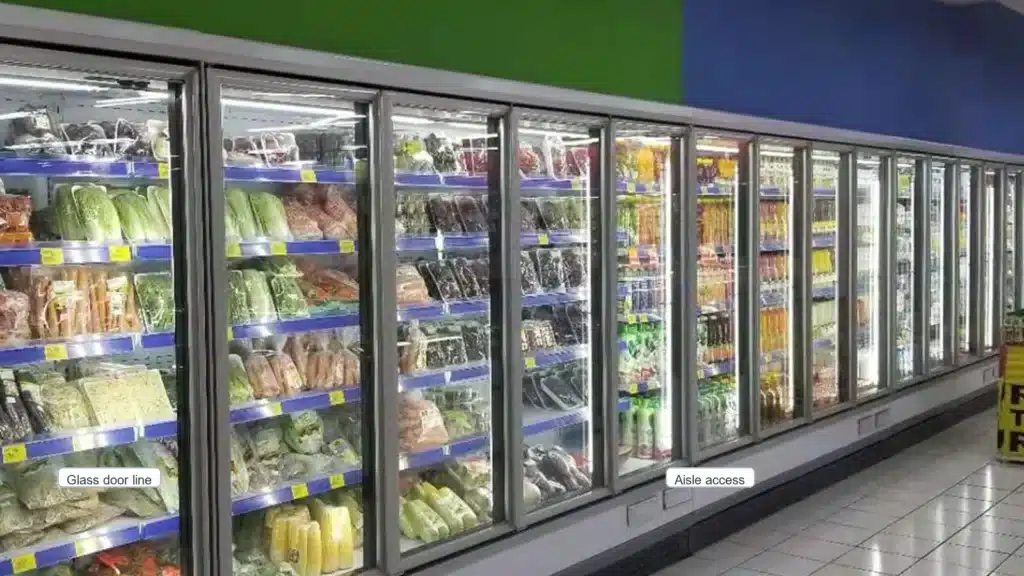
XC Cold lists commercial refrigeration equipment including multi deck open chillers, glass door upright chillers/freezers, island freezers, deli food showcase counters and fresh meat showcase counters. This guide focuses on the glass door upright category and avoids unsupported temperature, energy-saving or service-life claims. Final requirements should always be confirmed according to the actual product model and project conditions.
Define the Product Category First
Before choosing a cabinet, define what will be displayed. A glass door upright chiller for packaged drinks does not need the same merchandising plan as a frozen food cabinet. A convenience store may prioritize quick customer access, while a supermarket may prioritize long display runs and category separation.
Useful questions:
- Will the cabinet display chilled or frozen products?
- Are products packaged, bottled, boxed or bagged?
- How often will staff restock shelves?
- Does the store need single-door, double-door or long continuous runs?
- Will the cabinet sit against a wall, at the end of an aisle or in a dedicated frozen section?
- Is plug-in equipment preferred, or is the project designed for a remote system?
The answer determines the cabinet direction. If the store has not defined the product category, door type and shelving discussions will be premature.
Chiller vs Freezer: Do Not Treat Them as the Same Cabinet
The phrase “glass door upright chiller / freezer” can describe a product family, but a chiller and a freezer serve different product needs. A chiller is for refrigerated products. A freezer is for frozen products. The cabinet structure, refrigeration design, door behavior and defrost planning may differ.
Buyers should avoid asking for one universal cabinet that can handle every category. Instead, divide the store plan by product zone:
| Product Zone | Typical Equipment Direction | Buying Focus |
|---|---|---|
| Drinks and dairy | Glass door upright chiller | Visibility, shelf loading, quick access |
| Packaged chilled food | Glass door upright chiller | Airflow, shelf spacing, label visibility |
| Frozen food | Glass door upright freezer | Door sealing, defrost planning, product organization |
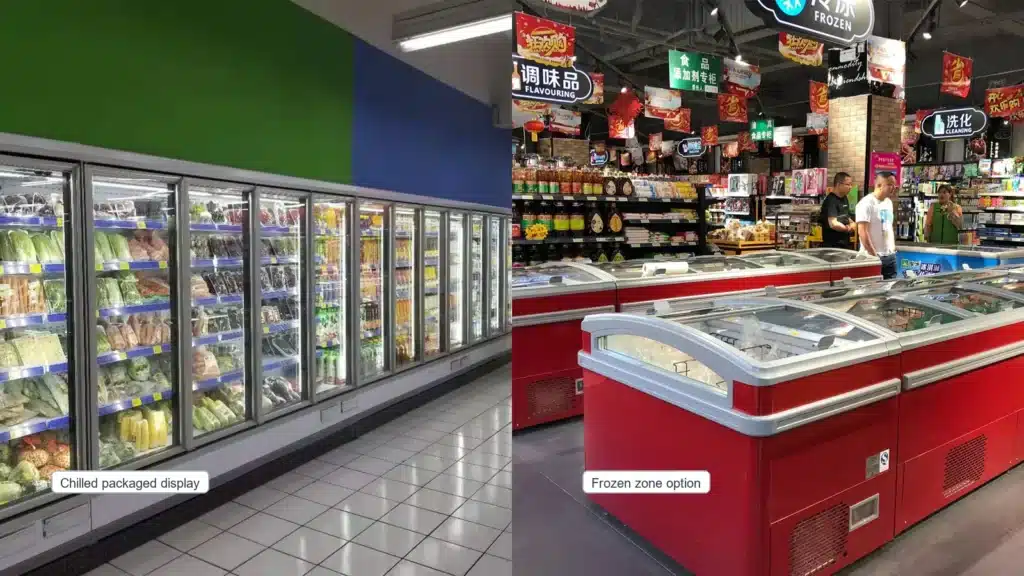
| Promotional frozen products | Island freezer or glass door freezer depending on layout | Customer access and aisle flow |
| Service food counter | Showcase counter, not upright cabinet | Staff service and cleaning access |
If the store sells food, operating practice should also follow applicable food safety rules and local regulations. The FDA Food Code 2022 is one authoritative reference for U.S. food retail and food service discussions, but equipment selection still needs project-specific confirmation.
Door Design and Visibility
The door is not only a cover. It controls how customers see and access the product. Glass door upright cabinets must balance visibility, door swing, sealing, handle design and aisle clearance.
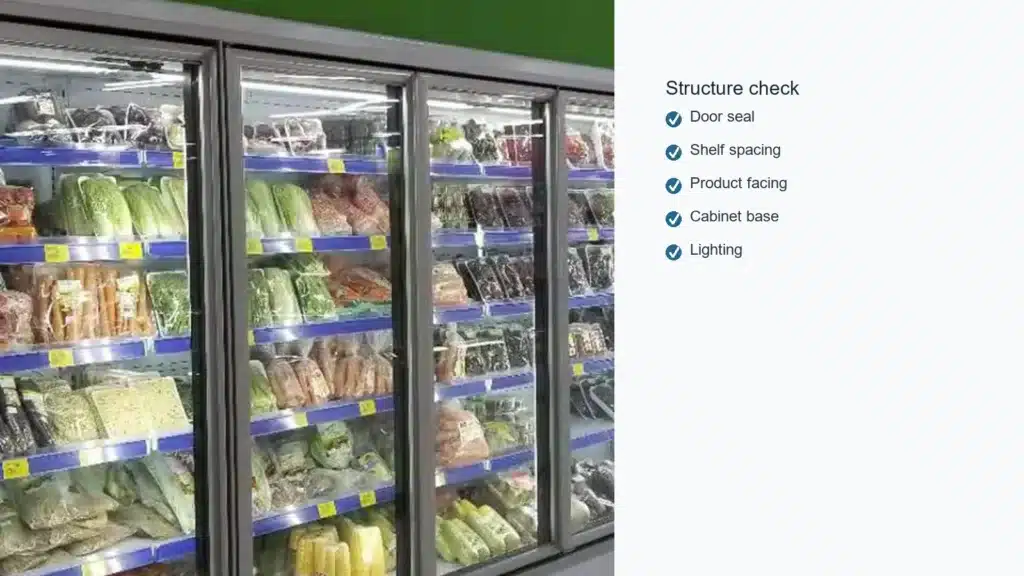
Check:
- Door width and number of doors
- Whether doors open comfortably in the aisle
- Whether customers can reach products without blocking traffic
- Whether lighting and shelf depth make products visible
- Whether labels remain readable after stocking
- Whether door frames interfere with high-value product visibility
- Whether seals and hinges are accessible for service
A cabinet with good photos but poor aisle clearance may frustrate customers. A cabinet with wide access but poor shelf organization may waste display value. Door planning should be done with the store layout, not as a separate specification.
Shelving and Merchandising
Shelving determines product capacity, product visibility and restocking work. Buyers should not only ask how many shelves are included. They should confirm whether shelves can be adjusted, how products sit on the shelf and how staff will restock the cabinet during normal business hours.
For packaged drinks, shelf strength and front-facing rows are important. For dairy or packaged food, shelf spacing and product visibility may matter more. For frozen products, organization and easy product identification can reduce door-open time.
When planning shelves, confirm:
- Product height and packaging format
- Shelf spacing
- Shelf depth
- Number of facings per product
- Restocking direction
- Price label position
- Lighting effect
- Whether heavy product groups need stronger shelf support
Do not copy a competitor’s cabinet size without checking product mix. The same cabinet can perform very differently depending on whether it holds bottled drinks, boxed frozen food, packaged vegetables or mixed categories.
Airflow and Loading Discipline
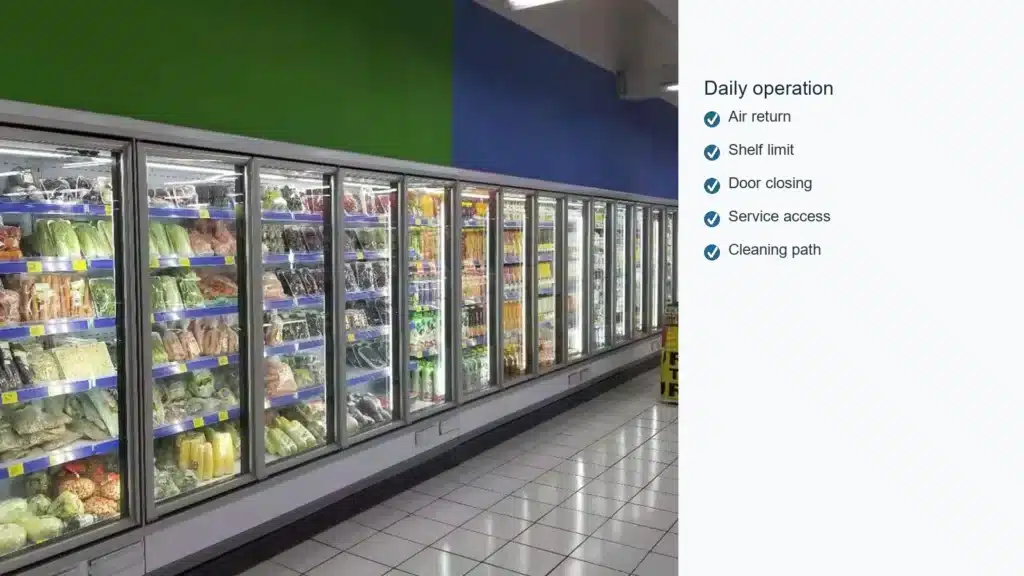
Airflow is one of the most important practical issues in a glass door upright chiller. Buyers do not need to invent technical claims, but they do need to ask how the cabinet should be loaded and maintained so product display does not block airflow.
Ask the supplier:
- Where are the air outlets and returns?
- How much clearance should be kept inside the cabinet?
- What loading line or shelf limit should staff follow?
- How should products be arranged to avoid blocking air movement?
- What daily checks should store staff perform?
Overloading shelves can make even a suitable cabinet perform poorly. Staff need clear loading discipline. If the cabinet has marked airflow zones or shelf limits, those instructions should be part of store training.
Store Layout and Customer Flow
Glass door upright chillers are often installed in long rows. That makes layout important. Customers need enough aisle space to stop, open doors, choose products and pass other customers. Staff also need room for restocking carts and cleaning.
Layout planning should include:
- Aisle width and door swing
- Customer stopping points
- Restocking access
- Electrical or refrigeration connection points
- Drainage or service access if required by the model
- Sightline from entrance or main aisle
- Product category grouping
For supermarket projects, glass door upright chillers often work beside other equipment types. A store may use open multidecks for grab-and-go chilled products, glass door cabinets for packaged chilled or frozen goods, island freezers for promotions and service counters for deli or meat. The cabinet mix should support customer behavior and staff workflow, not just fill available wall space.
Plug-In or Remote System Considerations
XC Cold’s product scope includes commercial refrigeration solutions across different cabinet categories. Depending on project design, buyers may compare plug-in and remote system directions. The right choice depends on store size, installation conditions, service expectations and refrigeration planning.
Plug-in cabinets can be simpler to place because the refrigeration system is integrated into the equipment. Remote systems can be part of larger store refrigeration planning. This article does not claim one is always better. Buyers should confirm site conditions, power, ventilation, service access and project design before choosing.
Key points to discuss:
- Equipment position
- Compressor or remote connection plan
- Ventilation space
- Maintenance access
- Noise expectations for the store area
- Door seal and hinge service
- Defrost and cleaning routine
Avoid selecting a cabinet from a catalog photo alone. Installation environment can decide whether the equipment is practical.
Cleaning and Daily Operation
Glass door upright cabinets are visible to customers, so cleaning affects both hygiene perception and product presentation. Store teams should be able to clean door glass, handles, shelf surfaces and cabinet base areas without disrupting the full section.
Operational checks may include:
- Door glass cleanliness
- Door seal condition
- Shelf cleanliness
- Product arrangement
- Drain or base area inspection where applicable
- Lighting condition
- Door closing behavior
For frozen cabinets, frost or condensation-related issues should be discussed with the supplier according to the model and store environment. Do not solve operational problems by changing temperature settings randomly. Store staff should follow approved operating instructions.
What to Confirm Before Ordering
A good glass door upright chiller inquiry gives the supplier enough information to recommend a realistic model and layout. Vague requests lead to vague proposals.
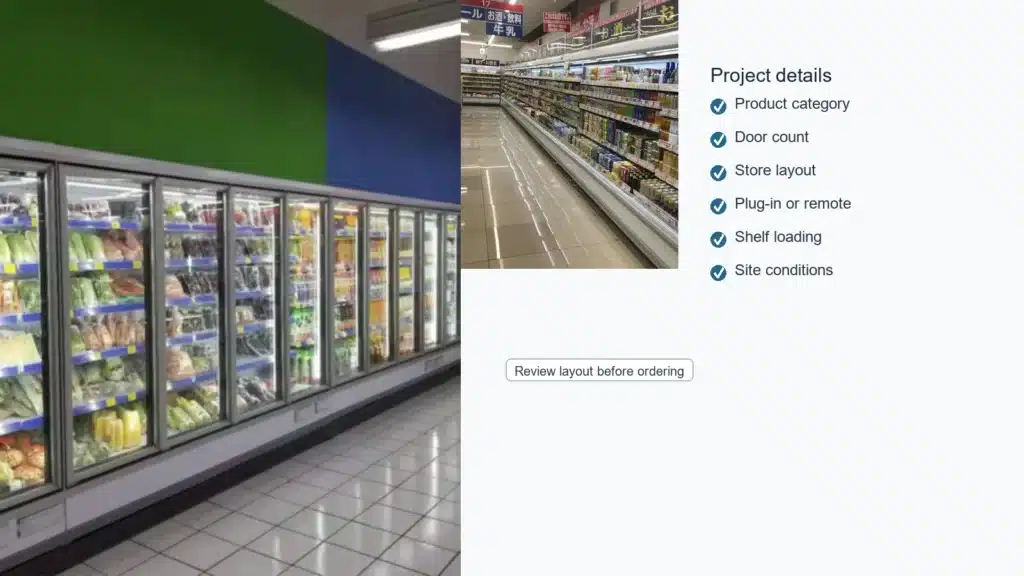
Send:
- Product category: drinks, dairy, packaged food, frozen food or mixed products
- Chiller or freezer requirement
- Store type and layout
- Preferred cabinet length or door count
- Plug-in or remote system preference
- Product packaging size
- Shelf loading expectations
- Power and site conditions
- Required delivery schedule
- Photos or drawings of the installation area
If the buyer is not sure, send the store plan first. The supplier can help narrow the equipment direction before final model selection.
Common Buying Mistakes
The first mistake is selecting by appearance only. A long glass door line may look professional, but it must fit the product mix and aisle.
The second mistake is ignoring door swing. If customers cannot open doors comfortably, the display will not work well.
The third mistake is overloading shelves. Product volume should be planned around airflow and visibility, not only maximum physical space.
The fourth mistake is mixing chilled and frozen needs into one unclear request. Chiller and freezer applications should be separated.
The fifth mistake is forgetting service access. Equipment that cannot be cleaned or maintained easily creates long-term operating problems.
Conclusion
A glass door upright chiller is a merchandising tool, a refrigeration cabinet and a daily operating workstation. The right choice depends on product category, door design, shelf planning, airflow, service access and store layout.
For supermarket, convenience store and retail projects, prepare clear product and site information before asking for a quote. XC Cold can review cabinet type, layout and order details based on your project requirements. Send your store plan and product category through the XC Cold contact page.
FAQ
Is a glass door upright chiller the same as a glass door upright freezer?
No. A chiller is used for refrigerated products, while a freezer is used for frozen products. Buyers should confirm the product category before choosing the cabinet.
What products are suitable for a glass door upright chiller?
Common uses include packaged drinks, dairy, packaged chilled food and convenience retail items. Suitability depends on the cabinet model and operating requirements.
Why is door swing important?
Door swing affects customer access, aisle flow and restocking. A cabinet that fits the wall may still be inconvenient if doors block traffic.
What should buyers provide before ordering?
Buyers should provide product category, store layout, cabinet position, chiller or freezer requirement, door count preference, shelf loading needs and site conditions.
Can one glass door cabinet handle every product category?
No. Chilled and frozen products require different equipment planning. A store may need different cabinet types for different zones.