
A commercial island freezer is one of the most visible fixtures in a supermarket frozen food area. It presents packaged frozen products at customer hand level, creates a strong promotional zone and can be combined with wall cases or upright freezers in a complete refrigeration layout. But the right island freezer is not selected by appearance alone.
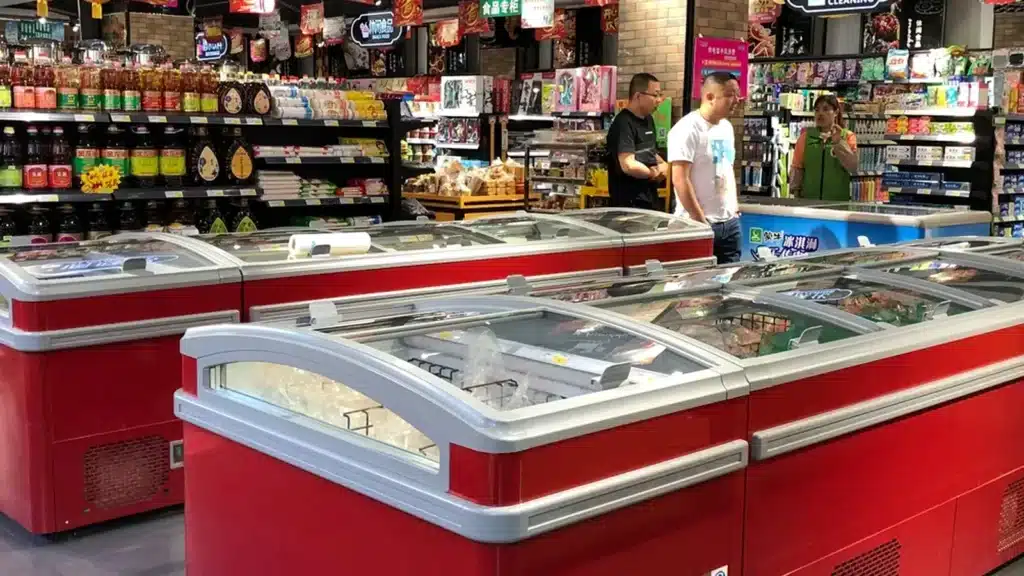
Buyers need to consider product mix, customer access, aisle width, loading line, lid style, drainage, service access, store workflow and installation conditions. A unit that looks attractive in a showroom can still create problems if customers cannot reach products comfortably, staff cannot restock efficiently or the store layout leaves too little space around the cabinet.
This guide focuses on practical procurement details for commercial island freezers within the real product scope of XC Cold’s commercial refrigeration range.
What a Commercial Island Freezer Does Best
Island freezers are typically used for packaged frozen products that benefit from open visual browsing or sliding glass lid access. They can be placed in the center of an aisle, at the end of a frozen food zone or as a promotional island near related categories.
Common supermarket uses include:
- Frozen meat and seafood packages
- Ice cream and frozen desserts
- Frozen vegetables and prepared meals
- Promotional frozen items
- Seasonal frozen products
- Bulk packs where horizontal visibility helps browsing
Compared with a glass door upright freezer, an island freezer creates a different shopping behavior. Customers look down into the cabinet and compare products from above. Compared with an open multideck chiller, it is used for frozen goods rather than chilled fresh categories. A complete supermarket layout may use island freezers together with glass door upright chiller/freezer cabinets and other commercial refrigeration equipment.
Start With Product Mix and Merchandising
Before discussing cabinet size, define what the freezer will hold. Product mix affects access height, display depth, basket arrangement and restocking frequency.
For high-turnover items, staff need easy restocking access and customers need clear product visibility. For premium frozen products, the cabinet should support neat grouping and clean presentation. For promotional items, the freezer may need to be positioned where shoppers naturally slow down.
Useful product planning questions include:
| Question | Why It Matters |
|---|---|
| Are products boxed, bagged or tray-packed? | Package shape affects stacking and visibility |
| Is the freezer for daily sales or promotion? | Promotional cabinets may need more open access |
| How often will staff restock? | High turnover needs comfortable staff workflow |
| Will products be grouped by flavor, brand or category? | Merchandising affects basket and divider planning |
| Is the store using wall freezers nearby? | Island cabinets should support the whole frozen zone |
Food storage and handling should follow applicable local rules and product instructions. For general consumer food storage background, the FDA page on storing food safely is a useful reference, but supermarket operators must follow their own jurisdiction and equipment guidance.
Plan Aisle Clearance and Customer Flow
Island freezer layout is a store planning decision. The cabinet must be visible and accessible, but it should not block the aisle or create a narrow turning point for carts.
Measure the area around the planned cabinet position, not only the cabinet footprint. Customers need space to stop, open or slide lids, compare products and move away without blocking other shoppers. Staff also need a restocking route from the storage area to the cabinet.
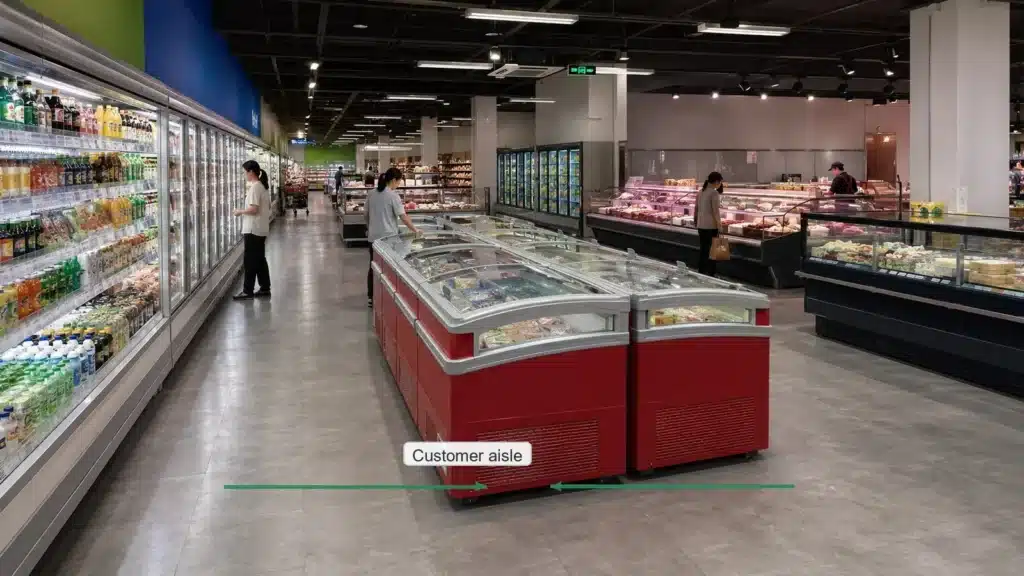
When planning the layout, confirm:
- Cabinet outside dimensions
- Aisle width after installation
- Cart turning points
- Sight lines from main traffic paths
- Position relative to wall freezers or promotional shelves
- Staff restocking route
- Access to electrical and drainage requirements if applicable
Avoid placing the freezer where the customer must stand in a main traffic bottleneck to browse. Also avoid pushing the cabinet too close to columns, walls or other fixtures that make one side difficult to access.
Check Loading Line and Product Access
The loading line is the maximum recommended product height inside the cabinet. Overloading above the intended line can affect airflow and product performance. Buyers should not treat the island freezer as a deep storage bin. It is a display freezer, so presentation and airflow both matter.
A good order discussion should ask how the cabinet indicates or controls the product loading height, how baskets or dividers are arranged, and how staff should restock without blocking airflow.
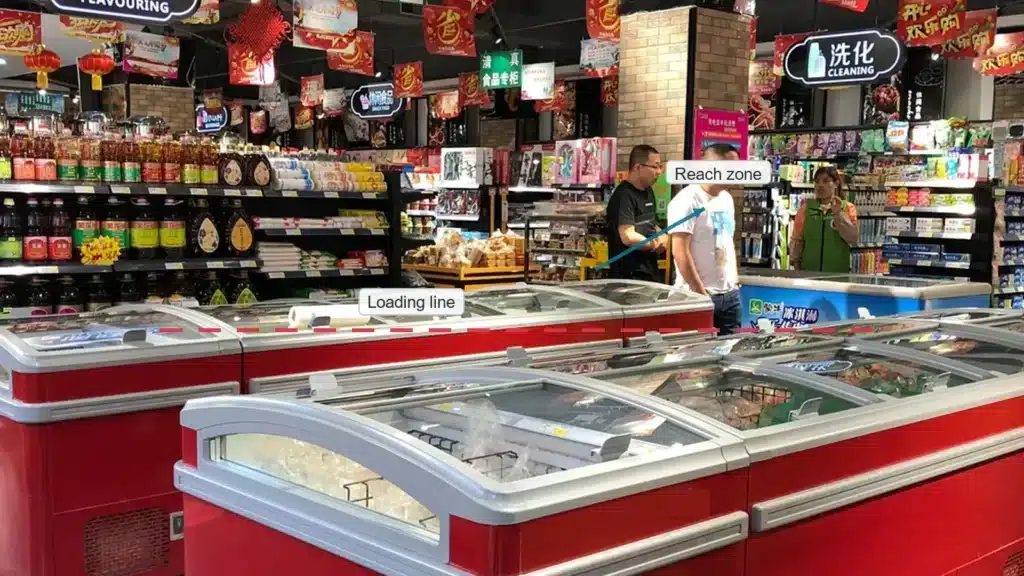
Customer access matters as well. If the cabinet is too wide for the store’s customer profile, shoppers may struggle to reach center products. If the display is too shallow, the store may lose useful capacity. The best size balances usable merchandising volume with comfortable access.
Lid Style, Visibility and Store Operation
Many commercial island freezers use sliding glass lids or other covered designs to help maintain the frozen display environment while allowing customers to see products. The lid should slide or open smoothly, be easy to clean and not conflict with adjacent fixtures.
For buyers, the lid is not just a visual detail. It affects:
- Customer browsing comfort
- Staff restocking speed
- Cleaning routine
- Product visibility
- Risk of lid damage in busy aisles
- Cabinet positioning near other fixtures
Ask whether replacement lid parts are available and how the lid track should be cleaned. In high-traffic supermarkets, small service details can become important over time.
Coordinate With the Whole Refrigeration Zone
An island freezer usually works as part of a broader refrigeration plan. It may sit opposite glass door freezers, near an open chiller section or beside promotional ambient shelves. The buyer should consider how the freezer supports the full category, not only its own cabinet.
XC Cold’s product scope includes multideck open chillers, fresh meat showcase counters and deli food showcase counters. These are different case types for different product zones. Do not use one freezer type as a universal solution for all chilled and frozen categories.
If the buyer is still comparing system concepts for island freezers, the existing article on plug-in vs remote island freezer can help frame that decision. This article focuses instead on the buying details that apply after the store has decided an island freezer is the right display format.
Service Access and Installation Conditions
Installation planning should happen before the order is finalized. The project team should confirm how the freezer will enter the store, where it will be positioned, and whether site conditions support the selected model.
Important checks include:
- Doorway and elevator access for delivery
- Final cabinet position and leveling
- Power supply requirements
- Drainage or defrost water handling if applicable
- Ventilation and heat rejection conditions
- Cleaning access around the cabinet
- Service access for technicians
- Local installation rules and food safety requirements
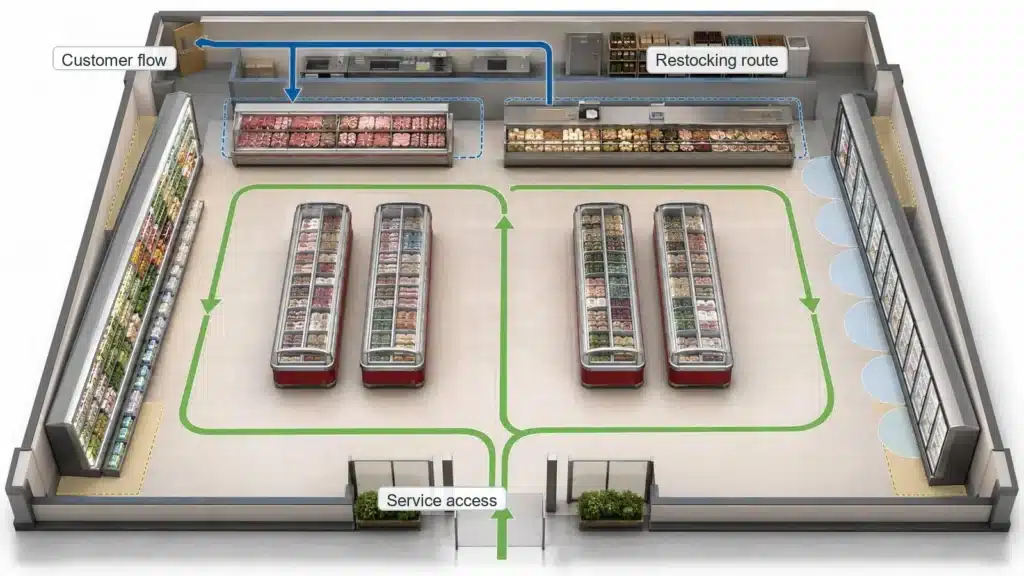
Do not confirm a freezer only from a product photo. A site layout drawing, store photo and basic installation information help the supplier recommend a more suitable configuration.
Order Details to Send the Supplier
A clear RFQ should give the supplier enough information to understand the store, the product mix and the installation condition. This is especially important for importers or supermarket chains comparing multiple quotations.
Include:
- Store type and frozen category plan
- Planned cabinet location and layout drawing
- Required cabinet length or available floor space
- Product types and package sizes
- Preferred lid style or access method
- Whether the cabinet will be used for promotion or regular category display
- Power and site information available from the project team
- Packing, shipping and delivery constraints
- Any required documents that are real and supportable
Do not ask the supplier to promise unsupported energy savings, exact service life or universal temperature performance without project conditions. Refrigeration performance depends on equipment design, installation, ambient conditions, loading, maintenance and store operation.

Common Buying Mistakes
The first mistake is choosing the largest cabinet that fits the floor. A freezer also needs surrounding customer space and service access. Larger is not always better if it blocks the aisle.
The second mistake is treating the island freezer as storage. Product should be displayed within the intended loading area, and the store should keep backup stock in the proper storage location.
The third mistake is ignoring lid operation. Lids must be easy for customers and staff to use repeatedly.
The fourth mistake is comparing quotations without matching specifications. Different cabinet sizes, lid designs, refrigeration configurations and packing methods can make prices look different for valid reasons.
The fifth mistake is separating the freezer purchase from the overall store layout. The island freezer should support the whole frozen food zone, not sit as an isolated object.
Conclusion
A commercial island freezer should be selected through layout, product mix and operation planning. Confirm where the cabinet will sit, how customers will access products, how staff will restock, and what installation conditions the supplier must consider. Then compare quotations using the same cabinet requirements and project information.
If you are planning a supermarket frozen food zone, XC Cold can help review your island freezer layout, product category and order details. Send your store plan, product mix and project requirements through the contact page before final selection.
FAQ
What is a commercial island freezer used for?
It is commonly used for packaged frozen products in supermarkets, including frozen food, ice cream, meat, seafood and promotional frozen categories.
Is an island freezer better than a glass door freezer?
They serve different display needs. An island freezer supports horizontal browsing and promotional zones, while a glass door freezer is often used for vertical category display along walls.
How much space should I leave around an island freezer?
The exact clearance depends on the store layout, cart traffic and local requirements. Plan enough room for customers to browse, lids to operate and staff to restock without blocking the aisle.
Can I use an island freezer for chilled products?
Do not assume that. Island freezers are for frozen applications. Chilled categories usually require suitable chillers or showcase counters designed for that product zone.
What information should I send before requesting a quotation?
Send the store layout, planned location, product category, available floor space, preferred cabinet style, installation conditions and any packing or shipping requirements.