
Cleaning access should be planned before refrigeration cabinets are placed into a store layout.
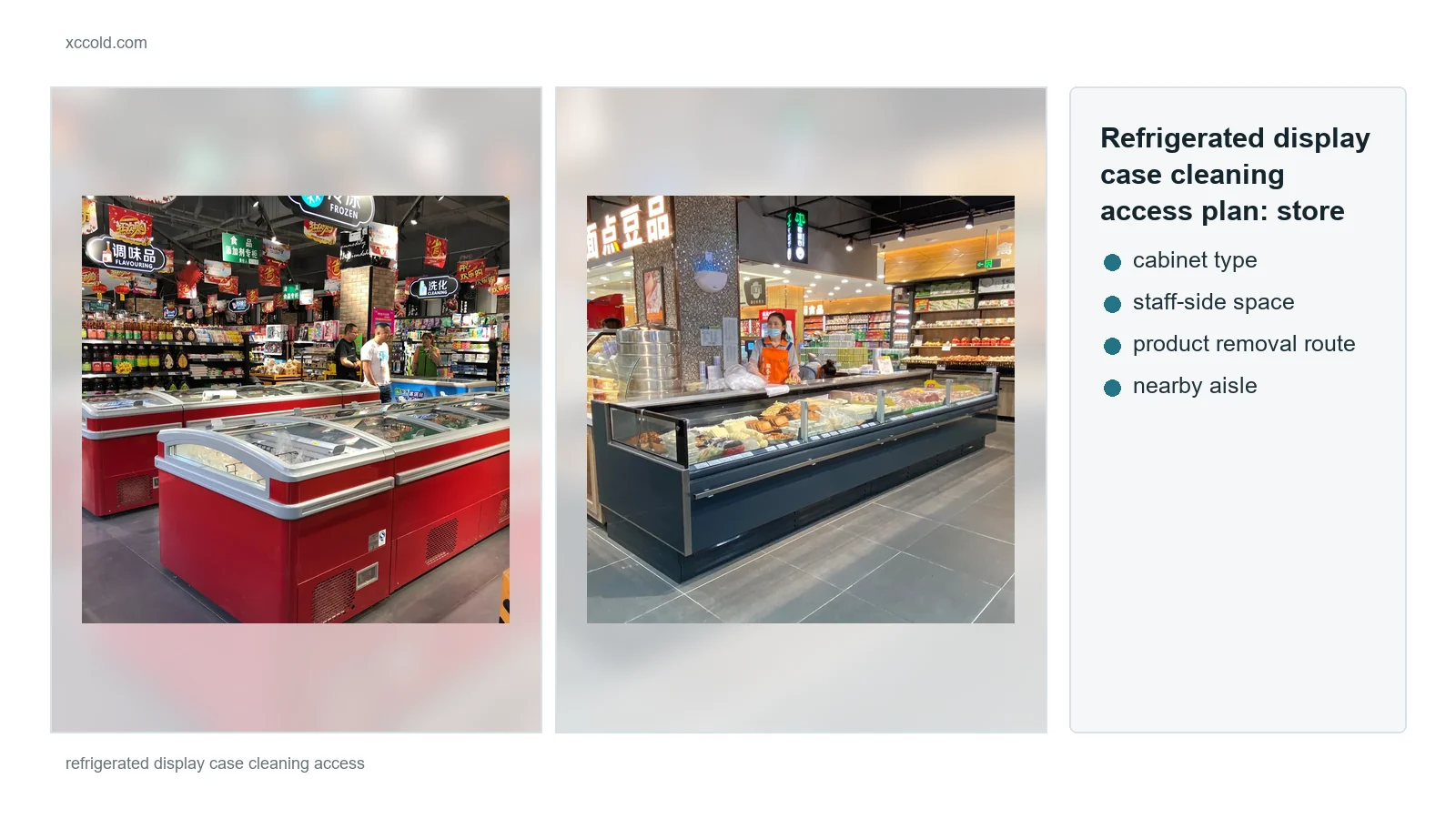
XCCOLD covers commercial refrigeration equipment such as multideck open chillers, glass door upright chillers/freezers, commercial island freezers, fresh meat showcase counters and deli food showcase counters. Do not invent temperature ranges, energy savings or service-life numbers.
Useful internal references include commercial refrigeration products, commercial refrigeration category. For related planning, buyers can also review commercial island freezer buying guide, glass door upright chiller buying guide.
Cleaning Access Is an Operating Cost Issue
A refrigerated display case that is difficult to clean can create daily friction for store staff. Buyers should ask how products will be removed, where staff will stand and how nearby aisles will stay usable during routine cleaning.
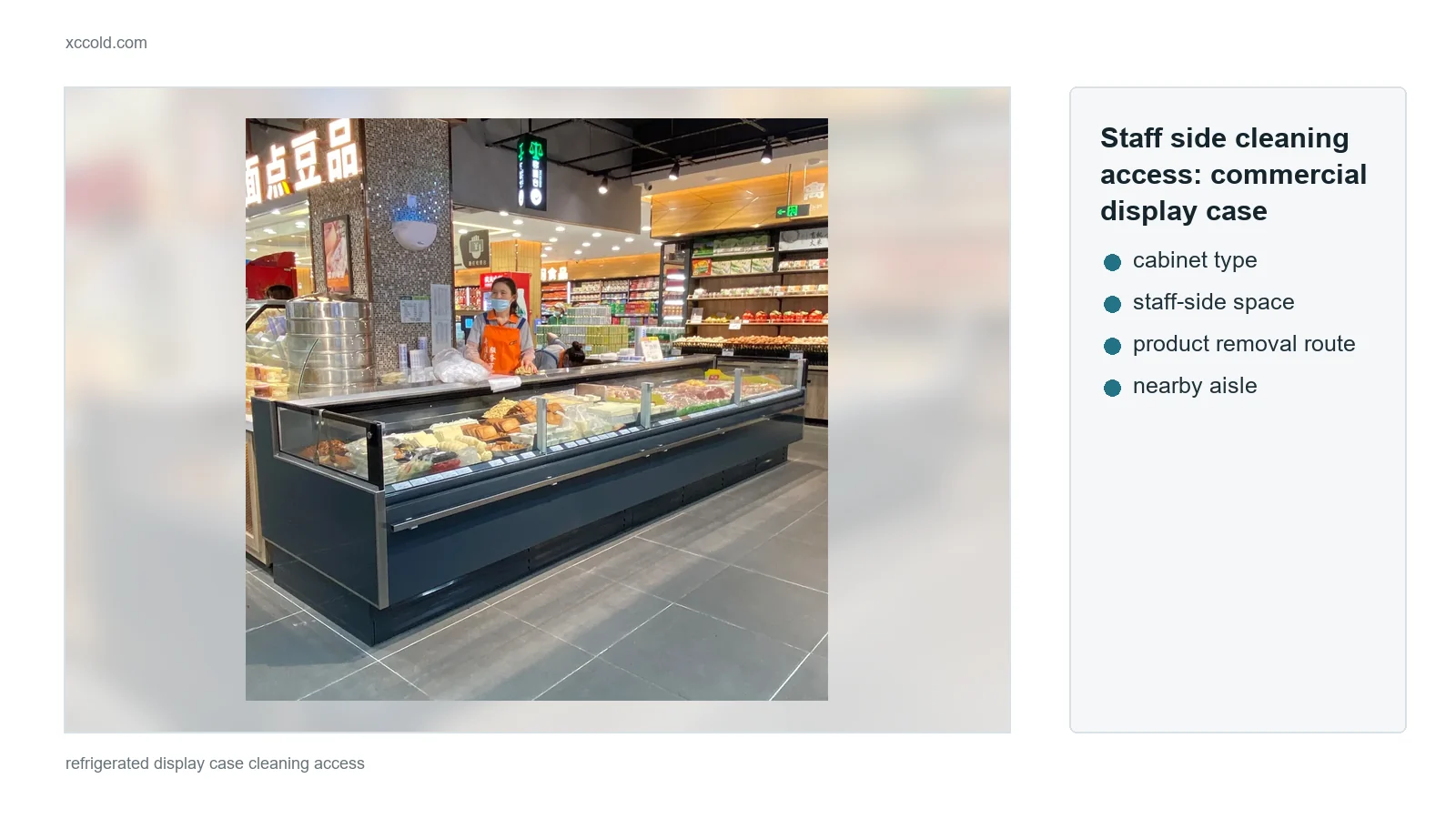
Different Cases Need Different Access
Open chillers, glass door cabinets, island freezers and showcase counters have different surfaces, product zones and staff-side routes. The buyer should describe which cabinet types are in the project before building a cleaning plan.
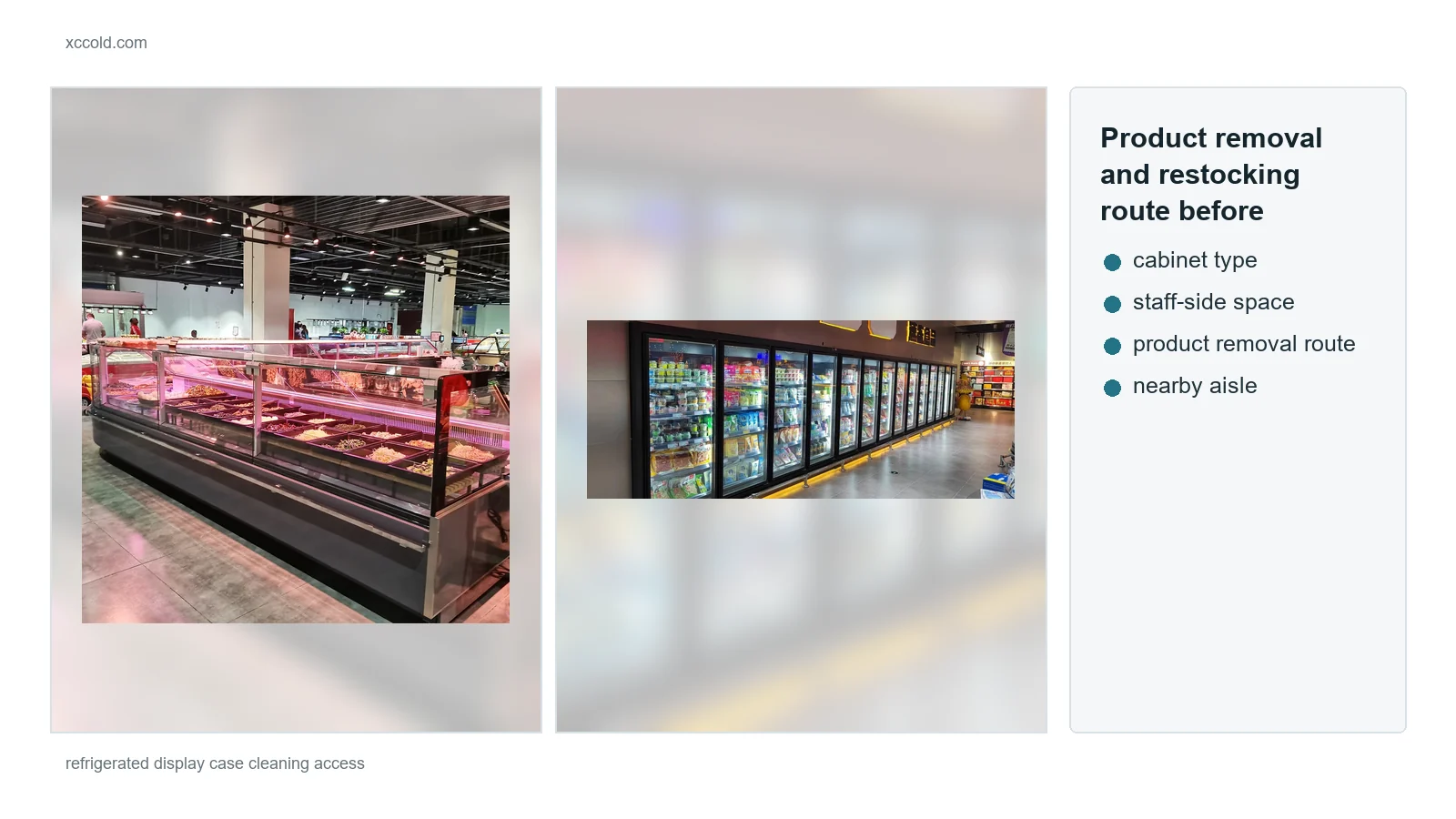
Do Not Confuse Cleaning Planning With Performance Claims
This article stays away from unsupported hygiene, temperature or service-life claims. It focuses on practical access: staff space, product removal, restocking path and layout notes.
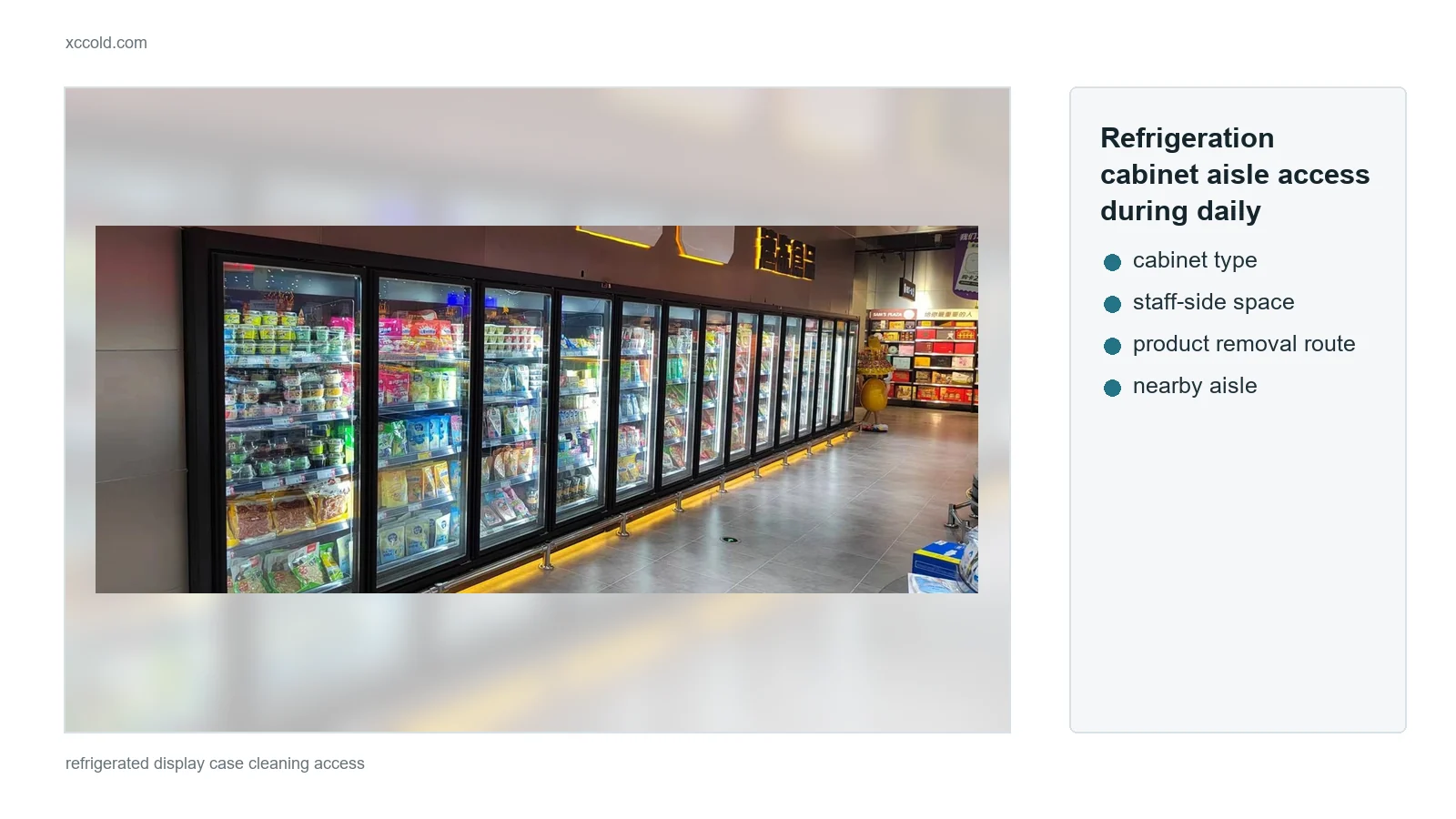
Make Cleaning Notes Part of the Project File
Cleaning access notes should sit beside layout drawings, cabinet lists and delivery notes. When the store changes layout later, these records help the buyer understand why space was reserved.
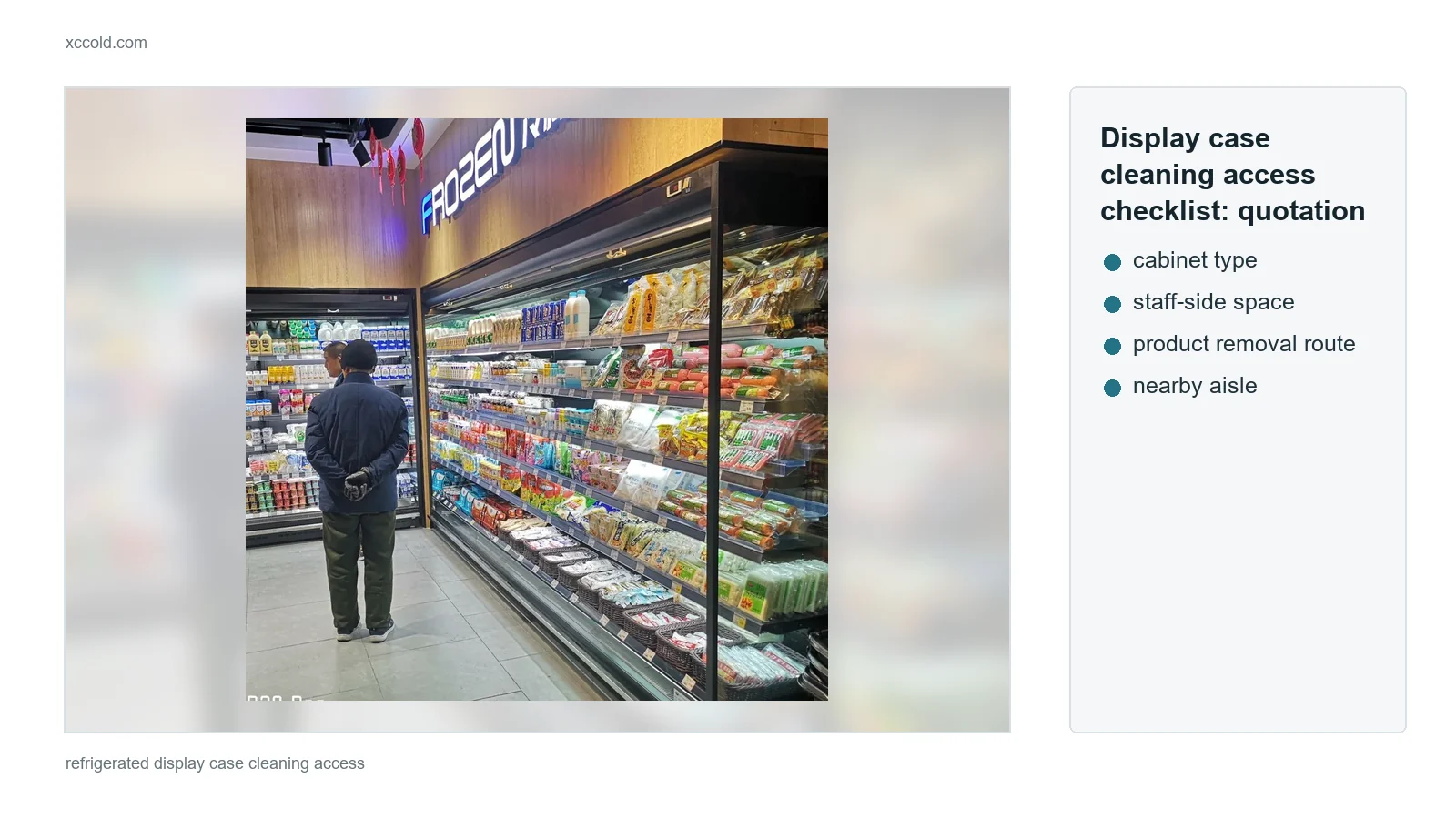
How Buyers Can Use This Guide in a Real Inquiry
Use this article as a working note before sending a quotation request. First separate what is already fixed from what still needs supplier confirmation. In this topic, the buyer should usually lock down cabinet type, staff-side space, product removal route. Then the buyer can ask the supplier to confirm nearby aisle, cleaning frequency, layout drawing according to the selected product, store condition, installation method or production workflow.
This approach makes the conversation more useful because the supplier can respond to real constraints instead of guessing from a short keyword. It also helps the buyer compare replies more fairly. If one supplier changes a material, accessory, cabinet style, packing method or technical assumption, that exception should be visible in the quotation instead of being hidden inside a lower price.
For repeat orders, save the approved sample photos, packing photos, label details, model notes and any site or production feedback. Those records turn the next purchase into a controlled adjustment rather than a new search from zero. They also help a distributor support installers, warehouse staff and end customers with the same set of facts.
Supplier Confirmation Questions
- Which details in the refrigerated display case cleaning access request are fixed, and which details should be confirmed before quotation?
- Does the selected product or accessory set match the buyer's actual use case, site condition or production tool?
- What photos, samples, drawings, labels or packing records should be approved before bulk order?
- Are there any assumptions in the quotation that would change price, packing, lead time or future reorders?
Evidence and Claim Control
Keep the article and the inquiry inside what can be supported by real product information, buyer photos, approved samples or current website pages. Do not add certifications, test results, service-life numbers, energy-saving figures, absolute safety language or temperature claims unless the exact product page or supplier confirmation supports them. This keeps the content useful for buyers and safer for long-term Google indexing.
Buyer Checklist
| Checkpoint | What to Confirm |
|---|---|
| Cabinet Type | Record the buyer requirement, sample note or site condition before quotation. |
| Staff-Side Space | Record the buyer requirement, sample note or site condition before quotation. |
| Product Removal Route | Record the buyer requirement, sample note or site condition before quotation. |
| Nearby Aisle | Record the buyer requirement, sample note or site condition before quotation. |
| Cleaning Frequency | Record the buyer requirement, sample note or site condition before quotation. |
| Layout Drawing | Record the buyer requirement, sample note or site condition before quotation. |
| Site Photos | Record the buyer requirement, sample note or site condition before quotation. |
Common Mistakes to Avoid
- Placing cabinets tightly with no staff-side cleaning room.
- Ignoring how products will be removed before cleaning.
- Treating cleaning access as an after-sales issue instead of a layout issue.
FAQ
Is cleaning access a model-specific issue?
Partly. Buyers should confirm model details, but the store layout also decides whether cleaning is practical.
Should cleaning access be discussed before purchase?
Yes. It affects daily operation after installation.
What information helps the supplier?
Send cabinet type, floor plan, site photos and staff-side workflow notes.
Send a Clear Inquiry
Before asking for price, prepare the checklist above and explain the real buyer scenario. Send the details through the xccold.com contact page so the quotation can match the product, project and packing requirements instead of a vague keyword.