
An open multideck chiller puts shelves and merchandise directly beside the customer aisle. That easy access also exposes shelf fronts, ticket rails, end panels, kickplates, and lower trim to shopping baskets, stocking carts, pallet equipment, and cleaning machines. A small scuff and a strike that changes alignment should not enter the same maintenance note.
The practical response starts with layout evidence. Store teams map traffic direction, turning points, trolley dimensions used on site, temporary promotional fixtures, and the cabinet's visible baseline. After contact, they record the exact location and preserve the load and shelf state before moving components. A qualified role can then decide whether cleaning, adjustment, component replacement, or further inspection is appropriate.
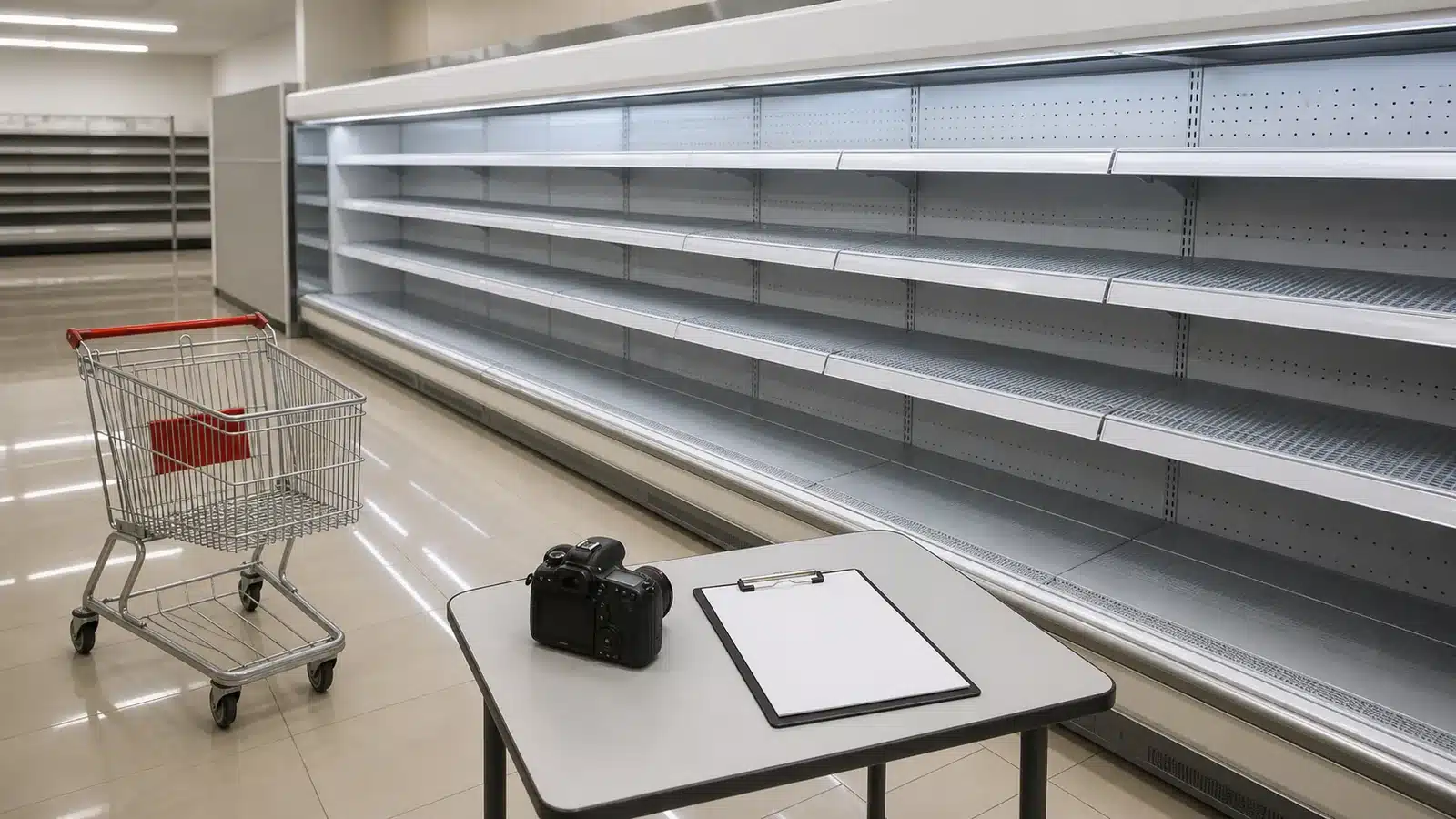
Map Store Traffic Beside the Cabinet
Observe the actual customer, replenishment, cleaning, and waste-removal routes around the chiller run. The working record for this stage covers aisle width by location, trolley types, turning points, queue area, cross aisle, cleaning route, and delivery timing.
Records for this stage
- aisle width by location: source, location, owner, status, and date.
- trolley types: source, location, owner, status, and date.
- turning points: source, location, owner, status, and date.
- queue area: source, location, owner, status, and date.
- cross aisle: source, location, owner, status, and date.
- cleaning route: source, location, owner, status, and date.
Why this stage can fail: Using a nominal plan dimension while seasonal displays and operating carts narrow the real path. Use aisle width by location, trolley types, and turning points to document the exception, and keep queue area with the reviewer's decision.
Release condition: The site drawing shows recurring traffic conflicts and the narrowest operating condition. Record any exception against cleaning route, name its owner and next action, and keep delivery timing open until resolved.
Identify Exposed Edges and Protrusions
Inspect shelf fronts, ticket rails, handles, end panels, trims, and nearby fixtures from trolley height. The working record for this stage covers shelf projection, ticket rail, end-panel corner, kickplate, temporary display, basket stack, and adjacent fixture.
Records for this stage
- shelf projection: source, location, owner, status, and date.
- ticket rail: source, location, owner, status, and date.
- end-panel corner: source, location, owner, status, and date.
- kickplate: source, location, owner, status, and date.
- temporary display: source, location, owner, status, and date.
- basket stack: source, location, owner, status, and date.
Why this stage can fail: Looking only at the cabinet base while a shelf or promotional element projects into the travel line. Use shelf projection, ticket rail, and end-panel corner to document the exception, and keep kickplate with the reviewer's decision.
Release condition: Every exposed point is recorded with its height, location, and normal installed position. Record any exception against basket stack, name its owner and next action, and keep adjacent fixture open until resolved.
Create a Clean Visual Baseline
Photograph the chiller run after shelving and trims are correctly seated and before normal trading begins. The working record for this stage covers full elevation, end view, shelf alignment, ticket rails, lower panel, floor line, and cabinet identity.
Records for this stage
- full elevation: source, location, owner, status, and date.
- end view: source, location, owner, status, and date.
- shelf alignment: source, location, owner, status, and date.
- ticket rails: source, location, owner, status, and date.
- lower panel: source, location, owner, status, and date.
- floor line: source, location, owner, status, and date.
Why this stage can fail: Trying to judge a reported strike without a comparable earlier view or exact bay reference. Use full elevation, end view, and shelf alignment to document the exception, and keep ticket rails with the reviewer's decision.
Release condition: Baseline images show each bay and provide enough context to locate later marks or displacement. Record any exception against floor line, name its owner and next action, and keep cabinet identity open until resolved.
Record an Impact Without Disturbing Evidence
Isolate the immediate area and document contact point, shelf load, visible displacement, sound, and time before adjustment. The working record for this stage covers incident time, cabinet bay, contact height, trolley or basket type, visible mark, shelf state, and photographs.
Records for this stage
- incident time: source, location, owner, status, and date.
- cabinet bay: source, location, owner, status, and date.
- contact height: source, location, owner, status, and date.
- trolley or basket type: source, location, owner, status, and date.
- visible mark: source, location, owner, status, and date.
- shelf state: source, location, owner, status, and date.
Why this stage can fail: Pushing a shelf back into place and restocking before the affected parts and surrounding condition are recorded. Use incident time, cabinet bay, and contact height to document the exception, and keep trolley or basket type with the reviewer's decision.
Release condition: The event file separates observation from diagnosis and reaches the responsible maintenance or service role. Record any exception against shelf state, name its owner and next action, and keep photographs open until resolved.
Correct the Route and Close the Event
Address recurring layout or operating causes after the equipment disposition is known. The working record for this stage covers fixture relocation, trolley route, stocking time, protective detail where approved, staff handoff, completed work, and follow-up view.
Records for this stage
- fixture relocation: source, location, owner, status, and date.
- trolley route: source, location, owner, status, and date.
- stocking time: source, location, owner, status, and date.
- protective detail where approved: source, location, owner, status, and date.
- staff handoff: source, location, owner, status, and date.
- completed work: source, location, owner, status, and date.
Why this stage can fail: Closing a repair ticket while the same turning conflict remains in the aisle. Use fixture relocation, trolley route, and stocking time to document the exception, and keep protective detail where approved with the reviewer's decision.
Release condition: Equipment status, layout response, and follow-up ownership are all recorded and communicated. Record any exception against completed work, name its owner and next action, and keep follow-up view open until resolved.
Shelf-Edge Impact Review
One record can connect the traffic condition, exact contact point, cabinet status, and corrective action without premature diagnosis.
| Review Point | Evidence to Keep | Release Question |
|---|---|---|
| Map Store Traffic Beside the Cabinet | aisle width by location, trolley types, turning points, and queue area | the site drawing shows recurring traffic conflicts and the narrowest operating condition. |
| Identify Exposed Edges and Protrusions | shelf projection, ticket rail, end-panel corner, and kickplate | every exposed point is recorded with its height, location, and normal installed position. |
| Create a Clean Visual Baseline | full elevation, end view, shelf alignment, and ticket rails | baseline images show each bay and provide enough context to locate later marks or displacement. |
| Record an Impact Without Disturbing Evidence | incident time, cabinet bay, contact height, and trolley or basket type | the event file separates observation from diagnosis and reaches the responsible maintenance or service role. |
| Correct the Route and Close the Event | fixture relocation, trolley route, stocking time, and protective detail where approved | equipment status, layout response, and follow-up ownership are all recorded and communicated. |
Aisle and Impact Checklist
- Walk customer, stocking, cleaning, and waste routes with the carts actually used in the store.
- Check protruding shelf fronts, rails, panels, and temporary fixtures at likely contact heights.
- Keep dated baseline photographs for each cabinet bay and end condition.
- Preserve the post-impact shelf load and visible state until evidence is captured.
- Close both the equipment action and the recurring traffic conflict that contributed to the event.
Open Chiller Impact Questions
Can staff keep using a shelf after a trolley strike?
A visual mark alone cannot answer that. Record the strike, isolate anything unstable or uncertain, and have the responsible role assess alignment, support, and cabinet condition against the applicable documentation.
Should protective rails be added around every chiller?
That is a project-specific layout and equipment decision. Any protection must avoid blocking access, ventilation paths, cleaning, service panels, or customer circulation.
Why keep the shelf load in the photographs?
Load position can explain what the shelf was carrying and helps a reviewer understand displacement. Preserve the scene only when it is safe to do so.
Related Product or Reading
- Multideck open chiller: shows the correct open-front product structure
- Open chiller product load lines: covers shelf-front and pack-position control after layout risks are addressed
Review the Aisle Interface
Share the store plan, cabinet run, trolley and basket types, turning points, shelf configuration, end conditions, baseline photographs, incident records, and service responsibilities with XCCOLD. That project evidence lets XCCOLD review the selected multideck open chiller for this buyer task: Help store and project teams identify, record, and respond to trolley or basket contact around an open multideck chiller without guessing internal damage.