
A multi-door upright glass-door chiller can be described as one cabinet, several doors, several vertical bays, and many shelf positions. If the planogram calls one area door two while service calls it bay B and replenishment calls it the middle section, observations are easy to misapply. Stable location codes make category zoning, shelf changes, condensation notes, restocking, replacement-part requests, and project drawings point to the same physical place. The coding method should follow the selected cabinet and viewing direction; it should not imply that every multi-door product shares one internal structure.
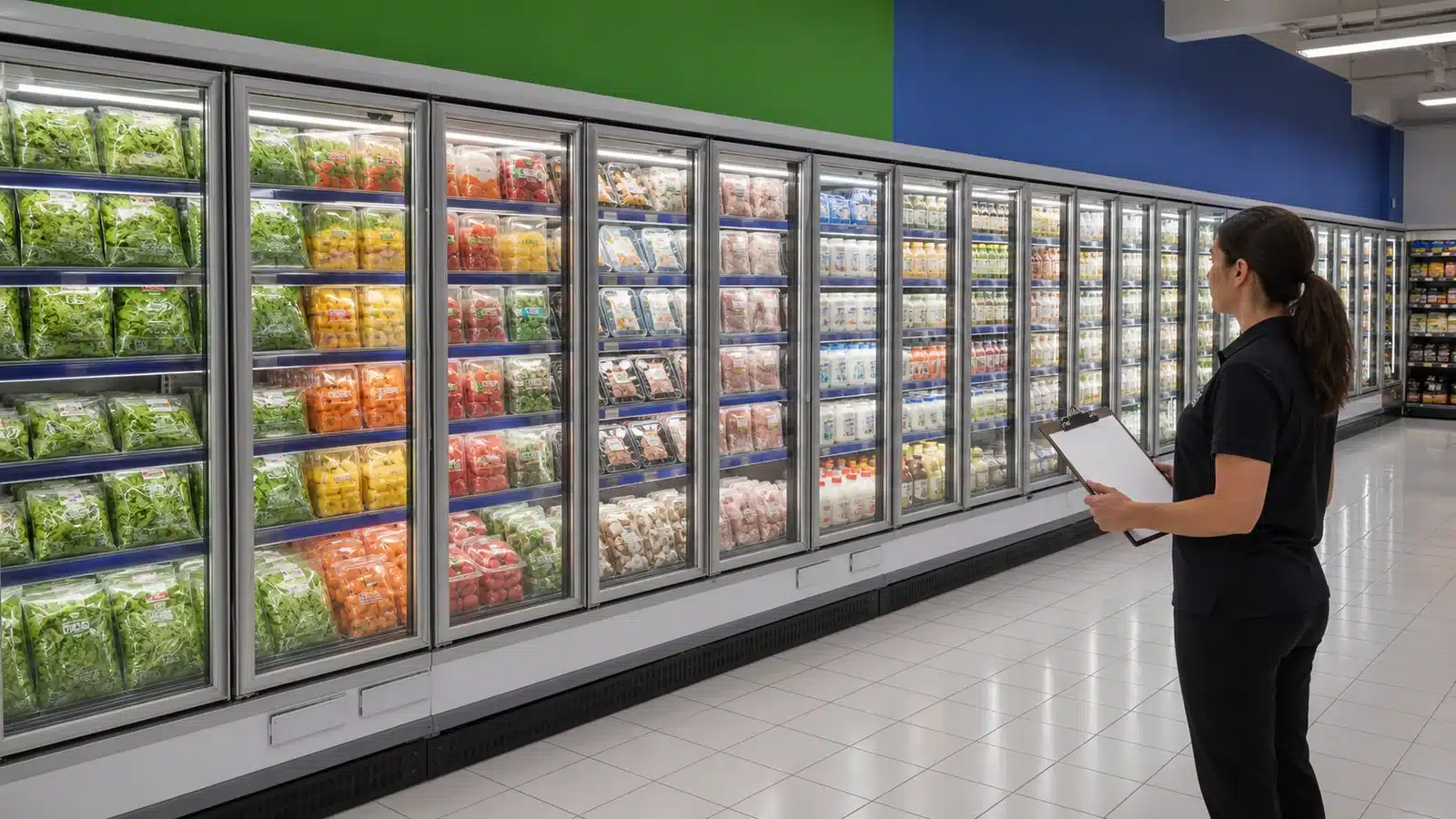
Choose a Fixed Viewing Direction
how left, right, door, and bay references are defined for the exact cabinet lineup For this glass door upright chiller bay numbering category zoning task, the responsible team should state whether codes are assigned from the customer-facing side and mark cabinet sequence on the floor plan. At choose a fixed viewing direction, verify the glass door upright chiller bay numbering category zoning condition together with its identity before the working state changes.
At the choose a fixed viewing direction stage, retain project north or store reference, customer side, lineup start, cabinet IDs, door count, end panels, and adjacent fixtures. Link each photograph, count, mark, drawing, or note to the glass door upright chiller bay numbering category zoning item it describes. For choose a fixed viewing direction, keep the location and responsible role beside project north or store reference, customer side, lineup start, cabinet IDs, door count, end panels, and adjacent fixtures so the next reviewer can repeat the check.
Left-right language without a fixed viewpoint creates mirrored records. That boundary governs glass door upright chiller bay numbering category zoning, not a different product or site. When evidence supports several interpretations, route the glass door upright chiller bay numbering category zoning uncertainty through choose a fixed viewing direction to the role authorized by this release condition: every team can locate cabinet one and bay one.
Close choose a fixed viewing direction only when every team can locate cabinet one and bay one. If open, preserve the glass door upright chiller bay numbering category zoning state and name the unresolved point, owner, next evidence, and follow-up action. Pair project north or store reference, customer side, lineup start, cabinet IDs, door count, end panels, and adjacent fixtures with the next choose a fixed viewing direction review before custody, stock, equipment, or site work changes.
Before moving on, compare project north or store reference, customer side, lineup start, cabinet IDs, door count, end panels, and adjacent fixtures with the release condition: every team can locate cabinet one and bay one. This final comparison gives the glass door upright chiller bay numbering category zoning handoff its usable context. For choose a fixed viewing direction, the receiving role should be able to reconstruct the decision from project north or store reference, customer side, lineup start, cabinet IDs, door count, end panels, and adjacent fixtures without relying on memory.
Separate Cabinet, Door, Bay, and Shelf IDs
which physical unit, opening, vertical display zone, and shelf level each code represents For this glass door upright chiller bay numbering category zoning task, the responsible team should build a hierarchy that matches the real multi-door cabinet rather than forcing an assumed internal division. At separate cabinet, door, bay, and shelf ids, verify the glass door upright chiller bay numbering category zoning condition together with its identity before the working state changes.
At the separate cabinet, door, bay, and shelf ids stage, retain cabinet code, door code, bay code, shelf level, divider, shared component, model, and drawing revision. Link each photograph, count, mark, drawing, or note to the glass door upright chiller bay numbering category zoning item it describes. For separate cabinet, door, bay, and shelf ids, keep the location and responsible role beside cabinet code, door code, bay code, shelf level, divider, shared component, model, and drawing revision so the next reviewer can repeat the check.
A door and a refrigerated bay may not always be identical concepts across designs. That boundary governs glass door upright chiller bay numbering category zoning, not a different product or site. When evidence supports several interpretations, route the glass door upright chiller bay numbering category zoning uncertainty through separate cabinet, door, bay, and shelf ids to the role authorized by this release condition: the code set reflects the selected structure.
Close separate cabinet, door, bay, and shelf ids only when the code set reflects the selected structure. If open, preserve the glass door upright chiller bay numbering category zoning state and name the unresolved point, owner, next evidence, and follow-up action. Pair cabinet code, door code, bay code, shelf level, divider, shared component, model, and drawing revision with the next separate cabinet, door, bay, and shelf ids review before custody, stock, equipment, or site work changes.
Before moving on, compare cabinet code, door code, bay code, shelf level, divider, shared component, model, and drawing revision with the release condition: the code set reflects the selected structure. This final comparison gives the glass door upright chiller bay numbering category zoning handoff its usable context. For separate cabinet, door, bay, and shelf ids, the receiving role should be able to reconstruct the decision from cabinet code, door code, bay code, shelf level, divider, shared component, model, and drawing revision without relying on memory.
Map Chilled Categories to Locations
which beverages, dairy, or packaged chilled foods occupy each approved bay and shelf For this glass door upright chiller bay numbering category zoning task, the responsible team should link category zones and SKU facings to stable location codes and adjustable shelf positions. At map chilled categories to locations, verify the glass door upright chiller bay numbering category zoning condition together with its identity before the working state changes.
At the map chilled categories to locations stage, retain category, SKU, package dimensions, shelf position, facing, label rail, stock owner, and revision. Link each photograph, count, mark, drawing, or note to the glass door upright chiller bay numbering category zoning item it describes. For map chilled categories to locations, keep the location and responsible role beside category, SKU, package dimensions, shelf position, facing, label rail, stock owner, and revision so the next reviewer can repeat the check.
Glass-door visibility does not make this cabinet suitable for frozen products unless the selected model supports freezer use. That boundary governs glass door upright chiller bay numbering category zoning, not a different product or site. When evidence supports several interpretations, route the glass door upright chiller bay numbering category zoning uncertainty through map chilled categories to locations to the role authorized by this release condition: the product map stays inside verified application and model scope.
Close map chilled categories to locations only when the product map stays inside verified application and model scope. If open, preserve the glass door upright chiller bay numbering category zoning state and name the unresolved point, owner, next evidence, and follow-up action. Pair category, SKU, package dimensions, shelf position, facing, label rail, stock owner, and revision with the next map chilled categories to locations review before custody, stock, equipment, or site work changes.
Before moving on, compare category, SKU, package dimensions, shelf position, facing, label rail, stock owner, and revision with the release condition: the product map stays inside verified application and model scope. This final comparison gives the glass door upright chiller bay numbering category zoning handoff its usable context. For map chilled categories to locations, the receiving role should be able to reconstruct the decision from category, SKU, package dimensions, shelf position, facing, label rail, stock owner, and revision without relying on memory.
Decision and Evidence Matrix
Use this compact matrix to keep the physical item, working record, and release decision aligned.
| Review Point | What to Record | Release Question |
|---|---|---|
| Choose a Fixed Viewing Direction | project north or store reference, customer side, lineup start, cabinet IDs, door count, end panels, and adjacent fixtures | every team can locate cabinet one and bay one |
| Separate Cabinet, Door, Bay, and Shelf IDs | cabinet code, door code, bay code, shelf level, divider, shared component, model, and drawing revision | the code set reflects the selected structure |
| Map Chilled Categories to Locations | category, SKU, package dimensions, shelf position, facing, label rail, stock owner, and revision | the product map stays inside verified application and model scope |
| Use the Same Codes During Replenishment | shift, cabinet-door-bay-shelf code, product moved, shelf change, reason, approver, and restoration status | the physical display and current map agree |
Use the Same Codes During Replenishment
whether staff restore product to the intended bay and record shelf or category changes accurately For this glass door upright chiller bay numbering category zoning task, the responsible team should print or display the location map and log substitutions, missing shelf parts, blocked doors, and temporary holds by code. At use the same codes during replenishment, verify the glass door upright chiller bay numbering category zoning condition together with its identity before the working state changes.
At the use the same codes during replenishment stage, retain shift, cabinet-door-bay-shelf code, product moved, shelf change, reason, approver, and restoration status. Link each photograph, count, mark, drawing, or note to the glass door upright chiller bay numbering category zoning item it describes. For use the same codes during replenishment, keep the location and responsible role beside shift, cabinet-door-bay-shelf code, product moved, shelf change, reason, approver, and restoration status so the next reviewer can repeat the check.
A temporary product move should not become an undocumented permanent plan. That boundary governs glass door upright chiller bay numbering category zoning, not a different product or site. When evidence supports several interpretations, route the glass door upright chiller bay numbering category zoning uncertainty through use the same codes during replenishment to the role authorized by this release condition: the physical display and current map agree.
Close use the same codes during replenishment only when the physical display and current map agree. If open, preserve the glass door upright chiller bay numbering category zoning state and name the unresolved point, owner, next evidence, and follow-up action. Pair shift, cabinet-door-bay-shelf code, product moved, shelf change, reason, approver, and restoration status with the next use the same codes during replenishment review before custody, stock, equipment, or site work changes.
Before moving on, compare shift, cabinet-door-bay-shelf code, product moved, shelf change, reason, approver, and restoration status with the release condition: the physical display and current map agree. This final comparison gives the glass door upright chiller bay numbering category zoning handoff its usable context. For use the same codes during replenishment, the receiving role should be able to reconstruct the decision from shift, cabinet-door-bay-shelf code, product moved, shelf change, reason, approver, and restoration status without relying on memory.
Connect Service Observations to Exact Bays
how door, frame, glass, shelf, lighting, or cabinet observations are located without premature diagnosis For this glass door upright chiller bay numbering category zoning task, the responsible team should capture a wide cabinet view and close view labeled with the same location hierarchy. At connect service observations to exact bays, verify the glass door upright chiller bay numbering category zoning condition together with its identity before the working state changes.
At the connect service observations to exact bays stage, retain asset code, door or bay, shelf, observation, time, operating context, photo IDs, and qualified service case. Link each photograph, count, mark, drawing, or note to the glass door upright chiller bay numbering category zoning item it describes. For connect service observations to exact bays, keep the location and responsible role beside asset code, door or bay, shelf, observation, time, operating context, photo IDs, and qualified service case so the next reviewer can repeat the check.
Location coding improves evidence but does not diagnose refrigeration or door performance. That boundary governs glass door upright chiller bay numbering category zoning, not a different product or site. When evidence supports several interpretations, route the glass door upright chiller bay numbering category zoning uncertainty through connect service observations to exact bays to the role authorized by this release condition: service receives a reproducible location and neutral observation.
Close connect service observations to exact bays only when service receives a reproducible location and neutral observation. If open, preserve the glass door upright chiller bay numbering category zoning state and name the unresolved point, owner, next evidence, and follow-up action. Pair asset code, door or bay, shelf, observation, time, operating context, photo IDs, and qualified service case with the next connect service observations to exact bays review before custody, stock, equipment, or site work changes.
Before moving on, compare asset code, door or bay, shelf, observation, time, operating context, photo IDs, and qualified service case with the release condition: service receives a reproducible location and neutral observation. This final comparison gives the glass door upright chiller bay numbering category zoning handoff its usable context. For connect service observations to exact bays, the receiving role should be able to reconstruct the decision from asset code, door or bay, shelf, observation, time, operating context, photo IDs, and qualified service case without relying on memory.
Revise Codes When the Lineup Changes
how replacement cabinets, added doors, moved shelves, or store remodeling affect historical records For this glass door upright chiller bay numbering category zoning task, the responsible team should issue a mapping revision that preserves old codes and dates while activating new ones. At revise codes when the lineup changes, verify the glass door upright chiller bay numbering category zoning condition together with its identity before the working state changes.
At the revise codes when the lineup changes stage, retain old and new floor plan, cabinet movement, effective date, transferred history, labels, training, and owner. Link each photograph, count, mark, drawing, or note to the glass door upright chiller bay numbering category zoning item it describes. For revise codes when the lineup changes, keep the location and responsible role beside old and new floor plan, cabinet movement, effective date, transferred history, labels, training, and owner so the next reviewer can repeat the check.
Renumbering without history can attach an old service issue to the wrong new cabinet. That boundary governs glass door upright chiller bay numbering category zoning, not a different product or site. When evidence supports several interpretations, route the glass door upright chiller bay numbering category zoning uncertainty through revise codes when the lineup changes to the role authorized by this release condition: current labels and archived records remain interpretable.
Close revise codes when the lineup changes only when current labels and archived records remain interpretable. If open, preserve the glass door upright chiller bay numbering category zoning state and name the unresolved point, owner, next evidence, and follow-up action. Pair old and new floor plan, cabinet movement, effective date, transferred history, labels, training, and owner with the next revise codes when the lineup changes review before custody, stock, equipment, or site work changes.
Before moving on, compare old and new floor plan, cabinet movement, effective date, transferred history, labels, training, and owner with the release condition: current labels and archived records remain interpretable. This final comparison gives the glass door upright chiller bay numbering category zoning handoff its usable context. For revise codes when the lineup changes, the receiving role should be able to reconstruct the decision from old and new floor plan, cabinet movement, effective date, transferred history, labels, training, and owner without relying on memory.
Buyer Checklist
- Fix the customer-facing viewing direction before using left and right.
- Build separate cabinet, door, bay, and shelf codes that match the selected structure.
- Map chilled categories and SKUs to stable locations.
- Use the same codes in replenishment, planogram, service, and project records.
- Combine wide and close photographs so the coded location is clear.
- Keep observation separate from technical diagnosis.
- Preserve historical mappings when cabinets or lineups change.
Frequently Asked Questions
Is one door always one bay?
Not necessarily. Confirm the selected cabinet's real internal and door structure before defining codes.
Can the same coding system cover chiller and freezer versions?
The naming hierarchy may be shared, but product application, model, temperature use, shelves, and technical records must remain specific to the selected unit.
Should codes be printed on customer-facing glass?
Placement depends on store design and operating needs. Codes can live in plans, discreet asset labels, shelf maps, or service records as long as teams can locate them reliably.
Related Product or Reading
Use the verified glass-door upright chiller or freezer page to identify the actual model and application before building the bay map.
Discuss the Exact Project
Send XCCOLD the selected upright cabinet, door count, lineup drawing, viewing direction, shelf arrangement, chilled categories, SKU list, asset-label method, replenishment plan, and service-record format.