
The short answer to “plug-in vs remote commercial refrigeration” is that neither system wins in every store. Plug-in equipment contains its refrigeration system in or on the cabinet. It is usually easier to deploy as an individual unit and can suit smaller stores, temporary layouts or projects without a prepared refrigeration plant. A remote system connects the display cabinet to a separate condensing unit or rack. It requires more planning, but can move heat and operating noise away from the sales floor and support a larger coordinated installation.
Choose the refrigeration system together with the product entity. An open chiller, glass-door upright, island freezer, fresh meat showcase and deli showcase counter remain distinct products even when two versions can use plug-in or remote refrigeration.
What plug-in and remote mean
With a plug-in cabinet, the cabinet and its refrigeration components arrive as an integrated piece of equipment. The buyer still needs to plan electrical supply, ventilation clearance, access for cleaning and the path into the store, but the project does not need the same level of field pipework as a remote installation.
With remote refrigeration, the cabinet is connected to an external condensing unit or central rack. The project must define pipe routes, equipment location, controls, drainage, commissioning responsibility and service access. The cabinet can keep the store floor quieter and avoid releasing all condenser heat into the selling area, but the total project is more dependent on site design and installation quality.
| Decision factor | Plug-in system | Remote system |
|---|---|---|
| Initial deployment | Faster for an individual cabinet when power and access are ready | Requires coordinated refrigeration and installation work |
| Heat location | Heat is rejected near the cabinet | Heat can be rejected away from the sales area |
| Noise location | Compressor noise stays near the cabinet | Condensing noise can be moved to the plant area |
| Best project fit | Small or independent cabinets, phased layouts and simpler sites | Larger runs, multiple cabinets and projects with a planned plant |
| Main planning risk | Ventilation and service clearance around each cabinet | Pipework, controls, drainage and responsibility between trades |
Map the system choice to the cabinet entity
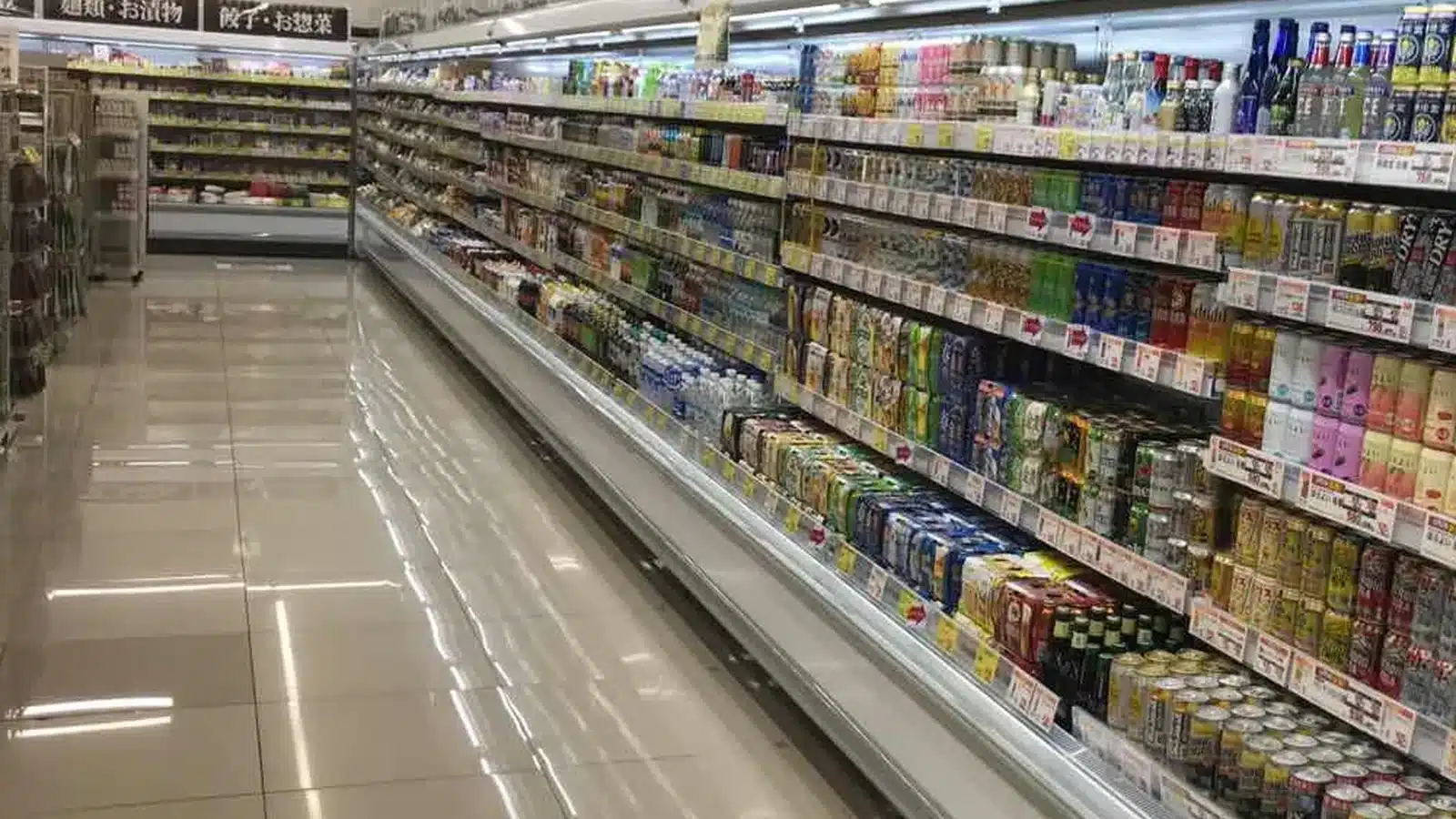
Multideck open chiller
An open chiller is selected for grab-and-go access to chilled products such as beverages, dairy, produce or packaged chilled food. A plug-in model can be useful when the store needs a standalone cabinet or wants to change the layout without building a central plant. A remote multideck can suit a longer refrigerated run where heat and compressor noise should be handled outside the shopping area.
The multideck open chiller range includes both plug-in and remote configurations. The product structure remains open, multideck and upright wall-case; use an open-chiller image when representing it.
Glass-door upright chiller or freezer
Glass-door uprights use vertical shelving and a closed glass-door display. They can be installed as individual cabinets in a small retail store or coordinated with a larger system. If the project uses several upright cases, consider how the cabinet row, heat rejection, service access and electrical distribution will work together.
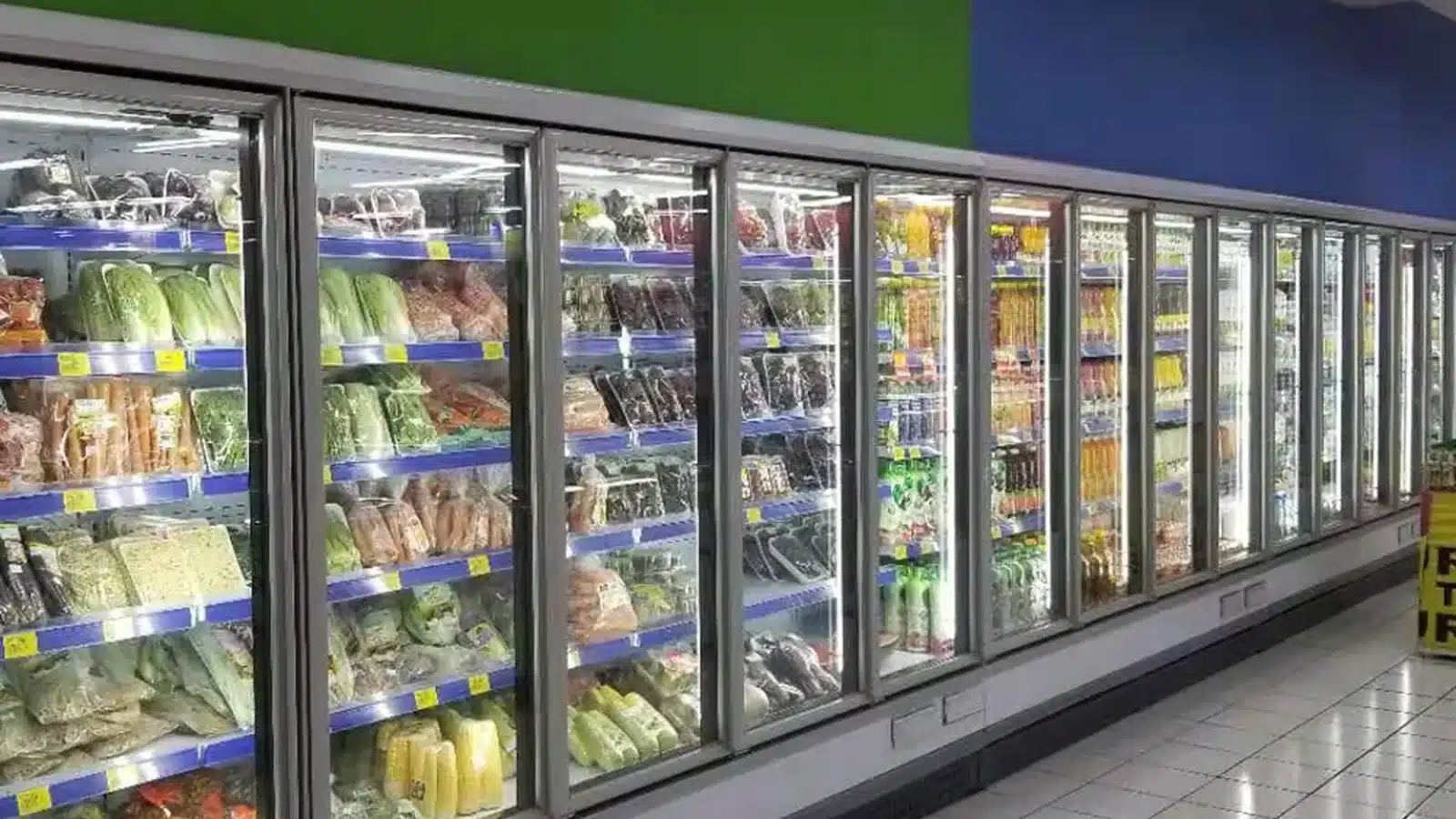
The glass-door upright chiller or freezer range is a separate entity from an open chiller and an island freezer. Specify whether the selected model is for chilled or frozen products instead of assuming that one cabinet handles both conditions.
Commercial island freezer
An island freezer is a low horizontal cabinet with sliding glass lids and an island display footprint. Plug-in versions can simplify installation in an independent frozen-food zone. Remote versions may be appropriate when a larger project has a prepared refrigeration plant and multiple cabinets share the same design approach.
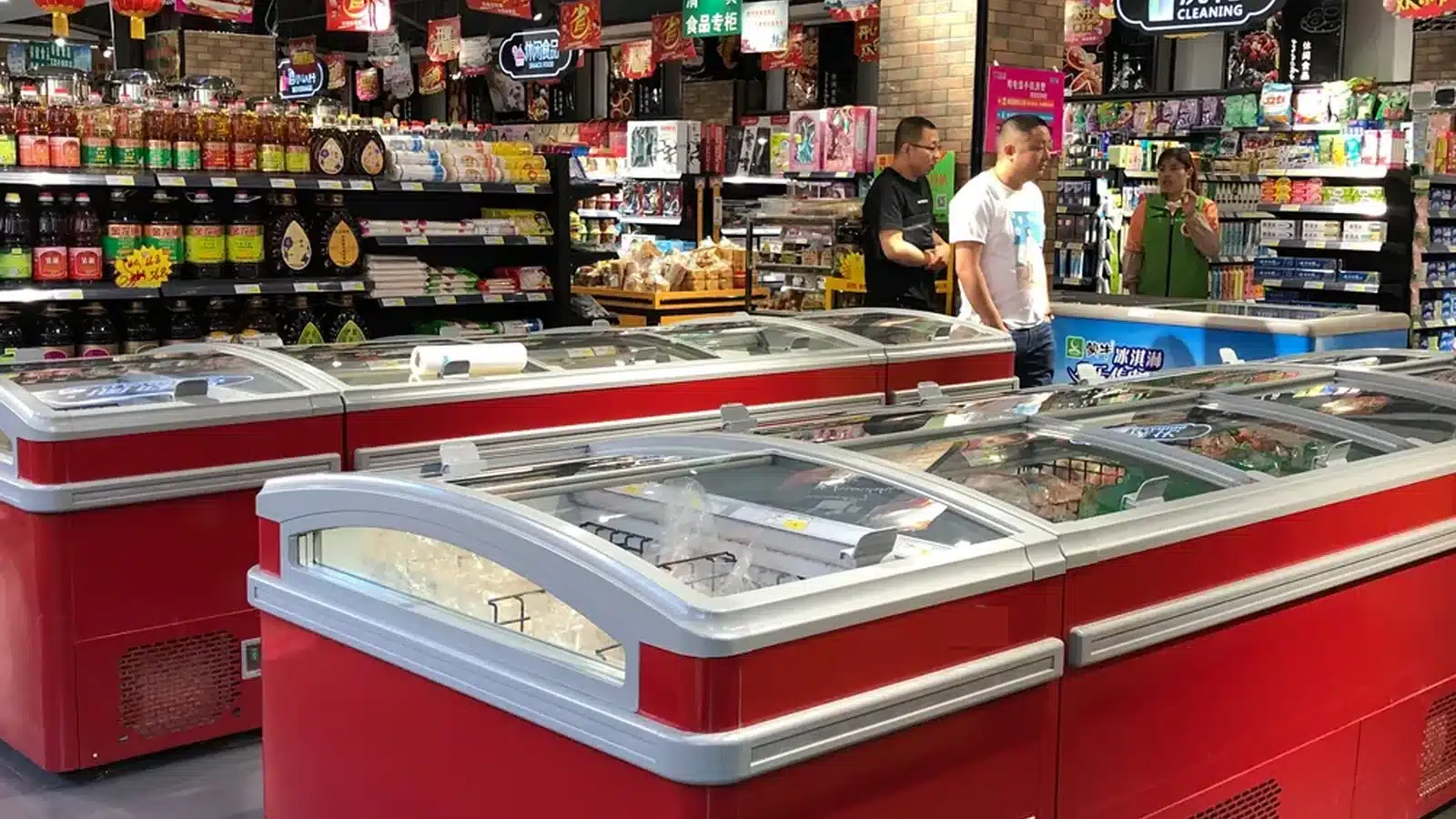
The commercial island freezer range should be specified by island structure, sliding-lid arrangement and frozen-food application. A remote-versus-plug-in choice does not change those physical requirements.
Fresh meat and deli showcase counters
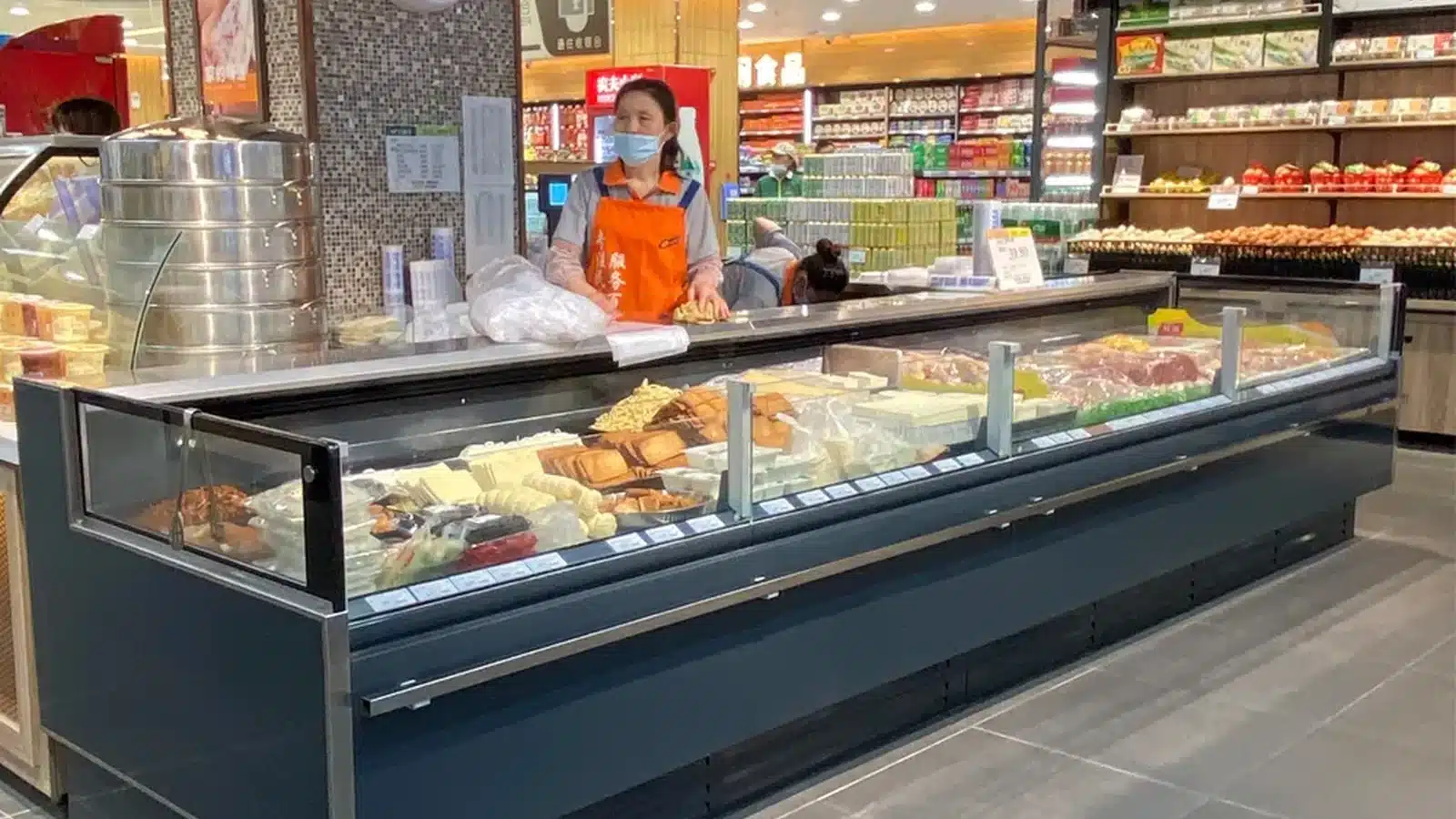
Service counters need a different conversation because the glass shape, service side, working depth and pan or tray arrangement affect the sales workflow. A straight-glass fresh meat showcase is not the same product as a deli food showcase, and a curved glass deli counter is not interchangeable with a straight-glass counter for image or layout purposes.
For a counter project, decide first whether the buyer needs a straight or curved front, counter or service configuration, fresh-meat or deli-food application, and rear-service access. Then evaluate whether plug-in heat and noise are acceptable near staff and customers or whether a remote connection better fits the project.
The fresh meat showcase counter and deli food showcase counter pages should be treated as separate product references. The deli range describes plug-in and remote systems as well as straight and curved glass options; that does not make every structure available for every order.
When plug-in is usually the practical starting point
Plug-in is often easier to justify when the store has a small number of cabinets, a short installation window or a layout that may change. It can reduce the amount of site coordination required at the beginning of a project. It is also useful for an independent beverage wall, a small open chiller run or a separate island freezer zone where a central refrigeration plant is not already available.
That convenience comes with conditions. Leave the clearance specified for air intake and heat discharge. Keep the condenser and service area accessible. Check whether heat and sound near the customer path are acceptable. Confirm the available voltage, plug, phase and electrical protection before the cabinet is ordered. A plug-in cabinet is not “plug and play” if the store route, supply or ventilation was not planned.
When remote is usually worth planning
Remote refrigeration becomes more attractive when the project has multiple cases, a dedicated plant area, strict sales-floor noise requirements or a need to keep condenser heat away from the retail zone. It can also support a cleaner equipment layout when a contractor is already designing the refrigeration system for the store.
The trade-off is project complexity. A remote quote should make the external condensing-unit location, pipe length assumptions, refrigerant and controls, drainage, electrical work, commissioning, insulation and maintenance responsibility visible. If these items are left vague, the lower cabinet price may not represent the final installed cost.
Five questions to answer before choosing
- How many cabinets are being installed now, and is the store likely to add more?
- Where can heat and noise be released without affecting customers, staff or nearby products?
- Does the site already have a refrigeration plant, plant room or approved external condensing location?
- Can the delivery path, pipe route, drainage and service clearances be protected after fit-out?
- Is the cabinet structure fixed, or are straight/curved, open/glass-door and island/upright choices still being mixed in the request?
These questions connect the system decision to the real project instead of treating plug-in or remote as a universal product label.
What to include in a commercial refrigeration RFQ
Send the product entity and structure for every cabinet line. For an open chiller, list open type, multideck, application and desired installation type. For a glass-door upright, list door count, vertical shelving and chilled or frozen use. For an island freezer, list sliding-lid arrangement, footprint and frozen-food display needs. For a service counter, list glass shape, counter type, application, service side and tray dimensions.
Then add the system information: plug-in or remote preference, electrical supply, proposed condensing-unit location, pipe route, drainage, store drawings, ambient conditions, delivery access and installation responsibility. Ask for a cabinet drawing and a project-specific utility schedule rather than relying on a generic catalogue label.
Related equipment to plan together
- Multideck open chillers when an open grab-and-go run is required.
- Glass-door upright cabinets for vertical closed display.
- Commercial island freezers for covered horizontal frozen-food merchandising.
For mixed projects, send the store layout and separate the cabinet entities before requesting a system recommendation through the XC Cold contact page. The right decision is the one that matches cabinet structure, store scale, heat and noise constraints, installation capability and the future service plan at the same time.