
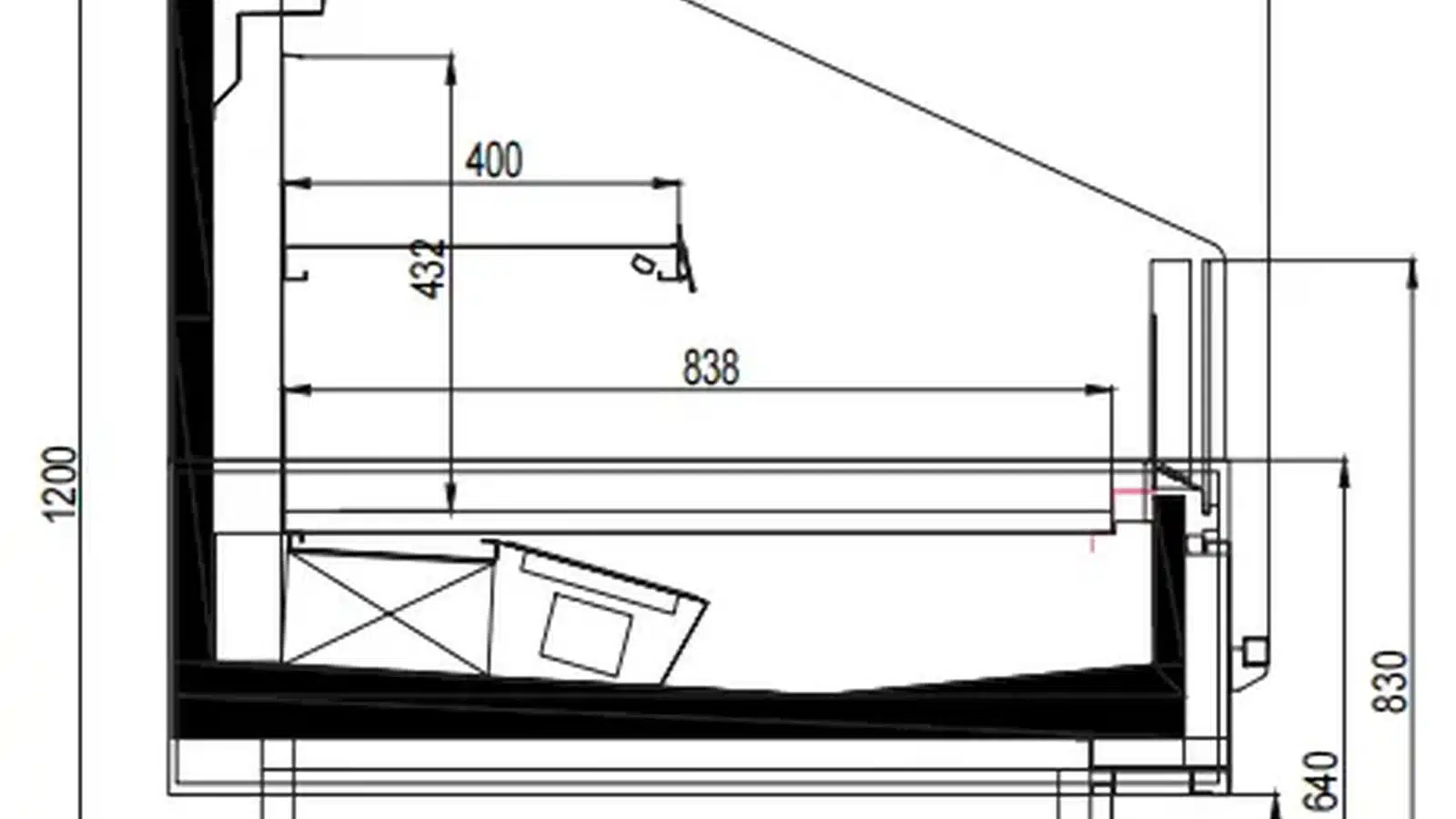
When a supermarket, butcher shop or deli project specifies a fresh meat showcase counter, the refrigeration arrangement matters as much as the glass shape and counter length. A plug-in counter contains its refrigeration equipment within the cabinet. A remote counter connects to a separate condensing arrangement planned elsewhere in the project. The right choice depends on the site, quantity of cabinets, service strategy and available mechanical space.
Plug-in and remote: the basic difference
A plug-in fresh meat showcase counter is a self-contained cabinet. It is usually simpler for a small project because the cabinet can be positioned and connected without designing a separate remote refrigeration circuit for the counter. It may suit a single display line, a shop with limited mechanical infrastructure or a layout that needs relatively straightforward installation.
A remote fresh meat showcase counter places the condensing equipment away from the display cabinet. This can support a larger project or a coordinated refrigeration plant, but it introduces more planning: pipe routing, equipment location, service access, electrical coordination and responsibility for the complete system must be clear in the quotation.
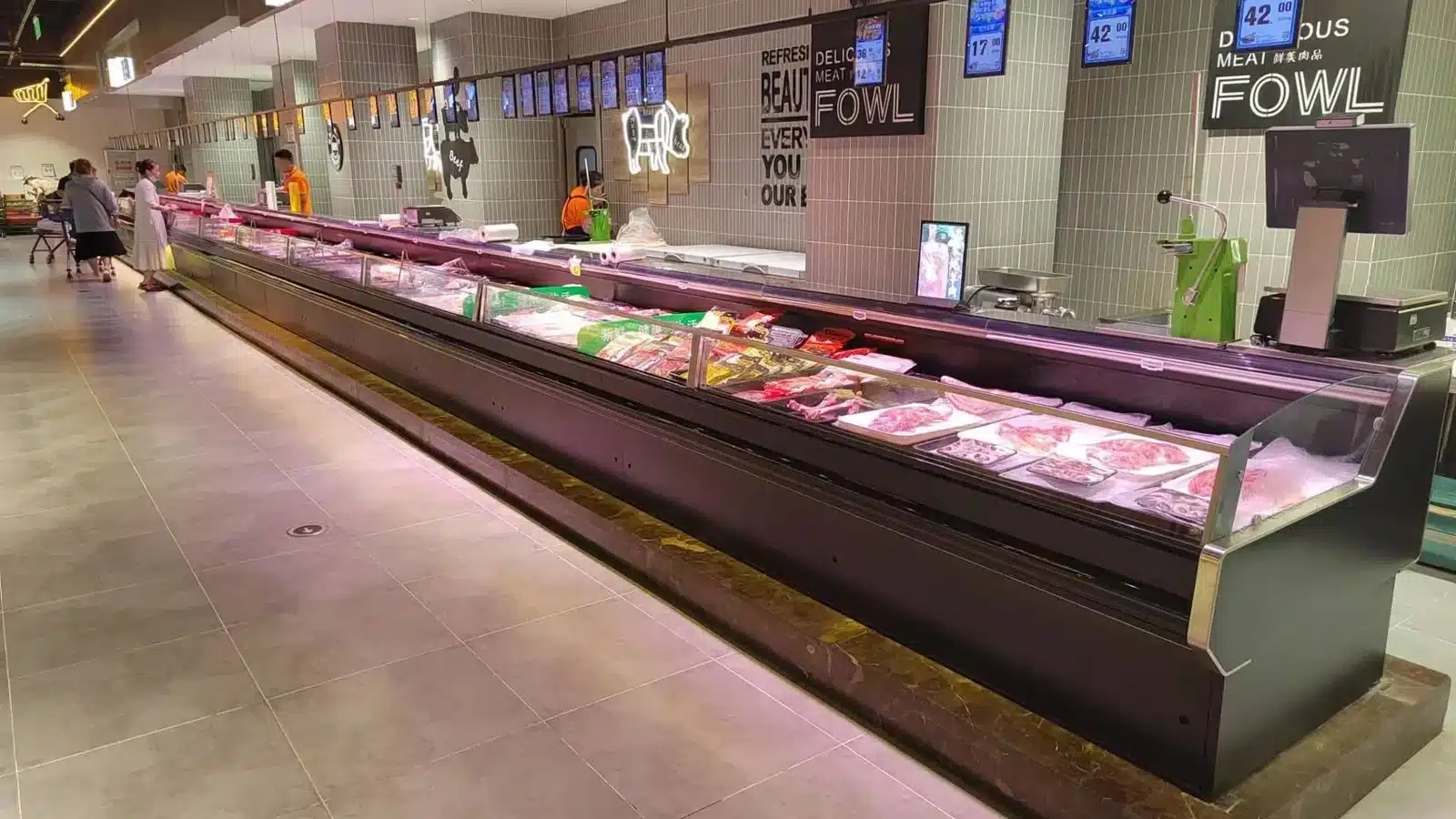
Neither arrangement should be judged from the cabinet photograph alone. Confirm the actual model construction, glass form, display depth, service side, required operating range and project connection method.
When a plug-in counter is usually the practical choice
Plug-in is often easier to evaluate when the project has one or a few counters and the operator wants a cabinet that can be installed with limited building work. It can simplify the early layout because the refrigeration package travels with the cabinet. For a renovation, this may reduce the need to coordinate a new remote plant, although the available electrical supply, ventilation and service clearance still need checking.
The trade-off is that the cabinet contains more equipment. The buyer should ask where service access is located, how much clearance is needed around the cabinet, how noise and heat release are handled, and whether multiple units will compete for the same aisle or back-of-house space. These are project questions, not assumptions about every plug-in model.
When remote refrigeration can suit the project
Remote refrigeration becomes more attractive when the project already has a planned refrigeration plant, several cases need to work as one system, or the operator wants the display area to be coordinated with a dedicated equipment space. It can help the project team separate customer-facing cabinet design from the location of condensing equipment.
The added coordination is real. The RFQ should identify the remote arrangement, connection points, pipe route responsibility, controls interface, commissioning scope and access for future service. If those items are left vague, two suppliers may quote apparently similar counters with different installation boundaries.
Compare the two setups by buyer decision
| Project question | Plug-in counter | Remote counter |
|---|---|---|
| Number of cabinets | Often straightforward for a small line | Can fit a coordinated multi-cabinet project |
| Building work | Usually less remote pipe planning | Requires planned connections and routing |
| Equipment location | Inside or integrated with the cabinet | Separate from the display counter |
| Service planning | Cabinet access and clearance are central | Cabinet plus remote plant access are central |
| Quotation risk | Model and electrical details may be missed | System boundary and connection scope may be missed |
This comparison does not establish a universal performance winner. The final result depends on the selected cabinet and the complete refrigeration design.
Keep straight and curved glass as a separate decision
The refrigeration arrangement does not tell you whether the counter is straight or curved glass. A straight-glass fresh meat showcase can provide a more linear visual profile, while a curved-glass design may change the sight line and the usable display geometry. Confirm the actual glass structure, counter depth, product pans, rear-service access and customer-facing height in the product drawing.
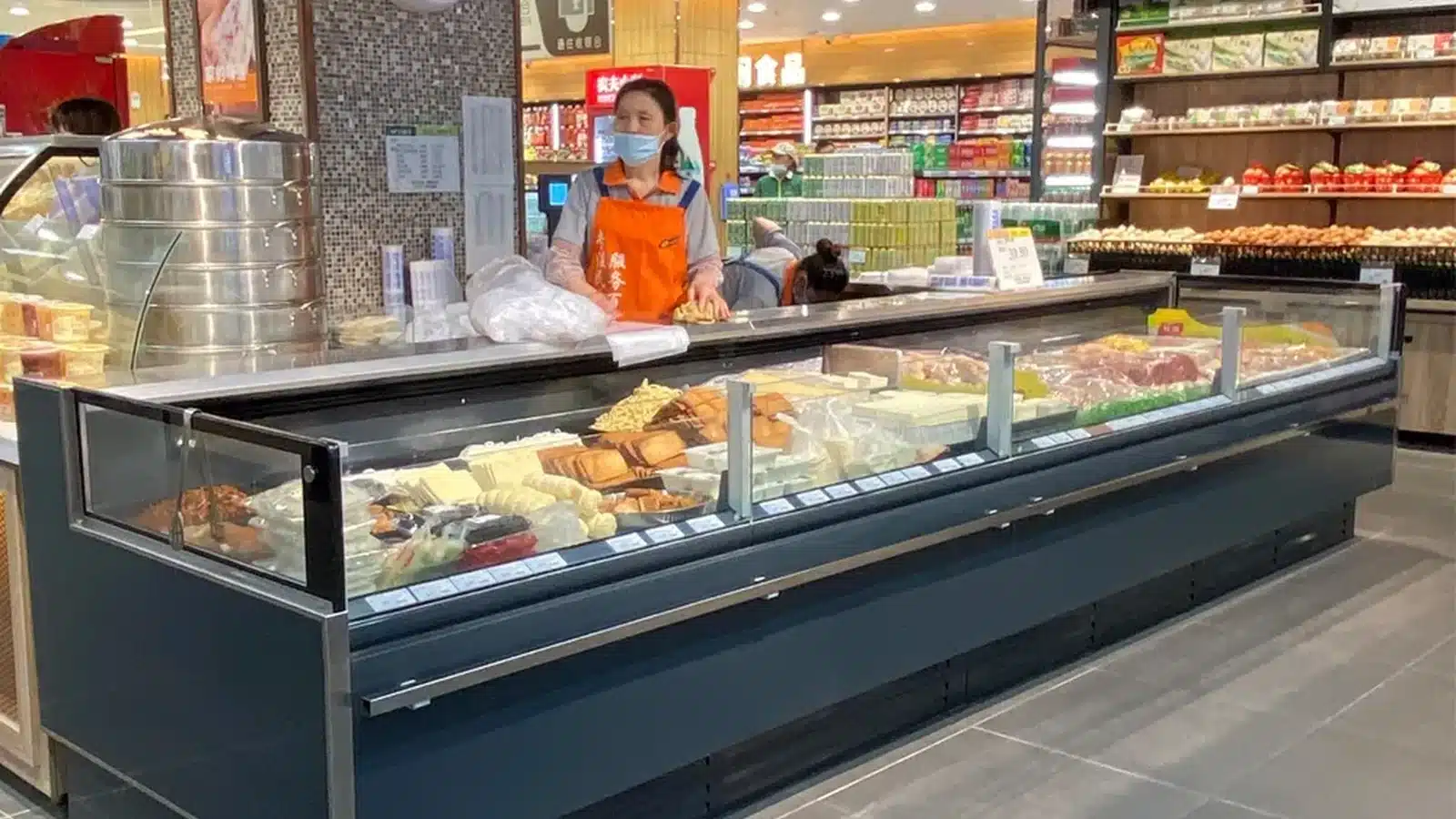
Use a fresh meat showcase image when approving a fresh meat showcase. A fresh meat showcase counter is a separate product entity from a deli food showcase counter. If the project includes an open multideck chiller, keep that open display structure separate as well.
RFQ details that prevent an apples-to-oranges quote
Send the supplier:
- the number of counters and desired line arrangement;
- straight or curved glass requirement;
- counter length, depth and service-side access;
- plug-in or remote preference, with the reason for it;
- product type, display trays and replenishment route;
- available electrical information and site constraints;
- responsibility for remote piping, controls, commissioning and service access.
If the project is still at concept stage, provide a floor plan and photos of the proposed installation area. The supplier can then separate what is a cabinet decision from what belongs to the building or refrigeration plant.
A simple decision path
Choose plug-in when the project values a self-contained cabinet, has a limited number of units and can provide the required electrical and service clearance. Consider remote when the project has an existing or planned remote system, several cabinets or a dedicated equipment area. In both cases, approve the cabinet drawing and the installation boundary before comparing prices.
The best quotation is the one that states what is included: cabinet, refrigeration connection, controls, commissioning, delivery, installation and after-sales service. Send the cabinet structure, layout and site information through the XCCold contact page before final selection.