
A fresh-meat showcase is both a refrigerated display and a staffed service boundary. Customers face the straight glass, form a queue, ask questions, and receive an order, while staff work behind the cabinet with trays, tools, wrapping tasks, and cleaning responsibilities. If front and rear routes are designed separately, crossings and inaccessible work zones appear after the counter is installed. This article covers a straight-glass, rear-service fresh-meat showcase. It must not be represented by a deli-food counter, curved-glass display, open chiller, or island freezer.
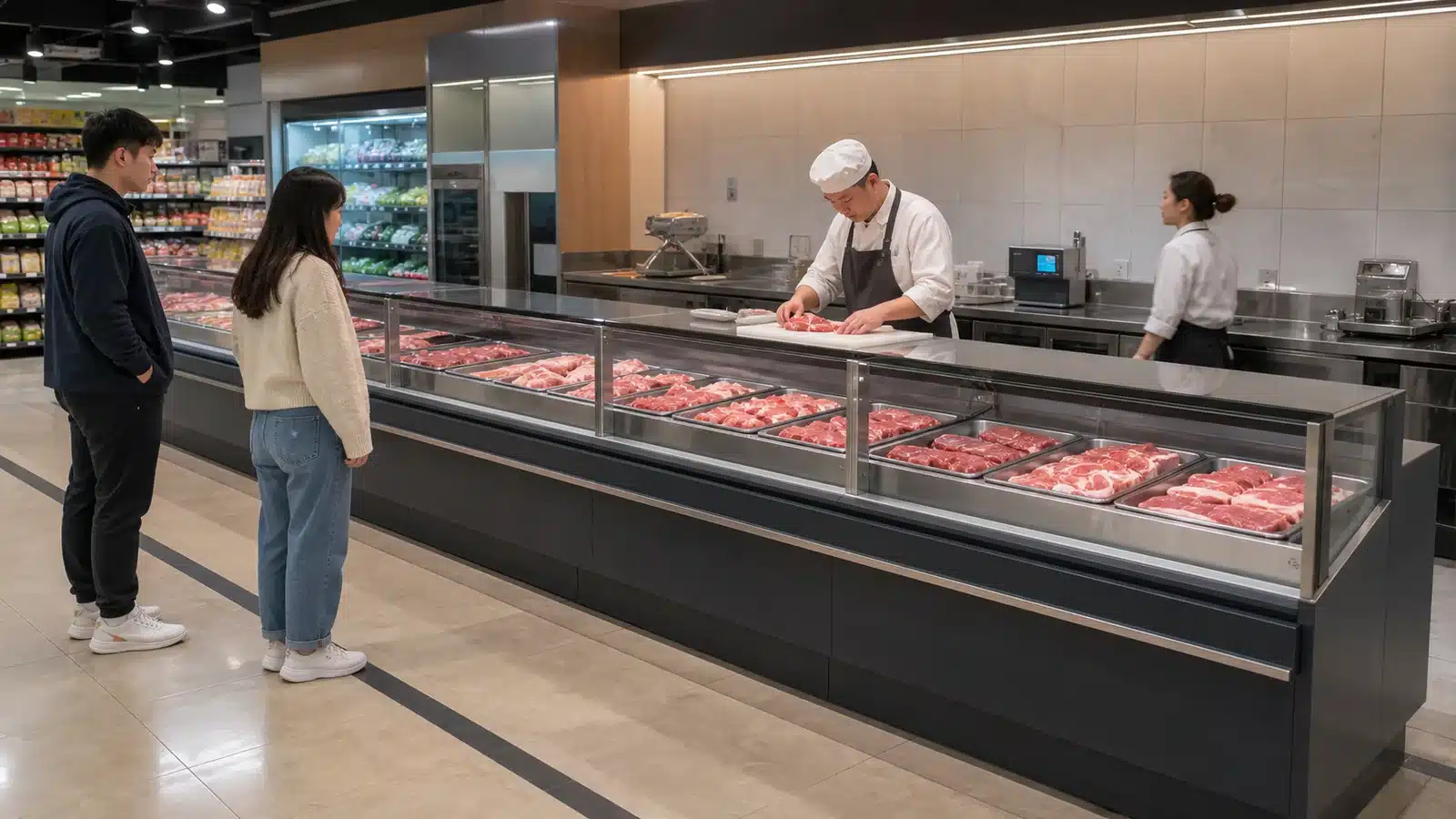
Lock the Fresh-Meat Counter Structure
the plan uses the selected straight-glass, rear-service fresh-meat counter and approved single or other exact display structure. For this fresh meat showcase queue rear service route task, the responsible team should record cabinet model, lineup, glass form, display deck, exposed ends, rear service side, doors or storage only when documented, and application. The check belongs at the point where the physical condition and its identity can still be verified together.
At the lock the fresh-meat counter structure stage, retain product page, selected drawing, elevation, lineup ID, model options, and revision. Link each photograph, count, mark, drawing, or note to the fresh meat showcase queue rear service route item it describes, including the current location and responsible role where those facts matter.
Similar service counters for deli food cannot substitute because application and display identity differ. That boundary governs fresh meat showcase queue rear service route, not a different product or site. When evidence supports more than one interpretation, record the uncertainty and route it to the qualified decision owner.
Close lock the fresh-meat counter structure only when the exact meat-counter structure controls every route drawing. If open, preserve the fresh meat showcase queue rear service route state and name the unresolved point, owner, next evidence, and hold or follow-up action before physical custody or project work changes.
Before moving on, compare product page, selected drawing, elevation, lineup ID, model options, and revision with the release condition: the exact meat-counter structure controls every route drawing. This final comparison gives the fresh meat showcase queue rear service route handoff enough context for the next buyer, supplier, warehouse, installer, operator, or project reviewer to act without rebuilding the chronology.
Place the Customer Queue Before the Glass
waiting customers can see the display, approach the intended service position, and avoid blocking cross aisles or neighboring cases. For this fresh meat showcase queue rear service route task, the responsible team should map entry, queue direction, turning, browsing, service positions, mobility needs, and exit using project-specific requirements. The check belongs at the point where the physical condition and its identity can still be verified together.
At the place the customer queue before the glass stage, retain floor plan, queue markers if used, adjacent departments, peak scenario, customer sightline, and conflict points. Link each photograph, count, mark, drawing, or note to the fresh meat showcase queue rear service route item it describes, including the current location and responsible role where those facts matter.
This article does not create universal queue or accessibility dimensions. That boundary governs fresh meat showcase queue rear service route, not a different product or site. When evidence supports more than one interpretation, record the uncertainty and route it to the qualified decision owner.
Close place the customer queue before the glass only when the retail designer accepts the front-of-counter flow. If open, preserve the fresh meat showcase queue rear service route state and name the unresolved point, owner, next evidence, and hold or follow-up action before physical custody or project work changes.
Before moving on, compare floor plan, queue markers if used, adjacent departments, peak scenario, customer sightline, and conflict points with the release condition: the retail designer accepts the front-of-counter flow. This final comparison gives the fresh meat showcase queue rear service route handoff enough context for the next buyer, supplier, warehouse, installer, operator, or project reviewer to act without rebuilding the chronology.
Define Order and Product Handoff Points
staff and customers know where discussion, weighing or wrapping handoff, payment where applicable, and completed order collection occur. For this fresh meat showcase queue rear service route task, the responsible team should place each function on the plan and test whether customers cross the queue or staff carry product through conflicting zones. The check belongs at the point where the physical condition and its identity can still be verified together.
At the define order and product handoff points stage, retain service point IDs, communication line, handoff surface, neighboring equipment, queue relation, and responsible operator. Link each photograph, count, mark, drawing, or note to the fresh meat showcase queue rear service route item it describes, including the current location and responsible role where those facts matter.
The refrigerated display itself should not be assumed to provide every support function. That boundary governs fresh meat showcase queue rear service route, not a different product or site. When evidence supports more than one interpretation, record the uncertainty and route it to the qualified decision owner.
Close define order and product handoff points only when the handoff sequence is clear without changing product identity. If open, preserve the fresh meat showcase queue rear service route state and name the unresolved point, owner, next evidence, and hold or follow-up action before physical custody or project work changes.
Before moving on, compare service point IDs, communication line, handoff surface, neighboring equipment, queue relation, and responsible operator with the release condition: the handoff sequence is clear without changing product identity. This final comparison gives the fresh meat showcase queue rear service route handoff enough context for the next buyer, supplier, warehouse, installer, operator, or project reviewer to act without rebuilding the chronology.
Fresh-Meat Counter Route Matrix
The front customer zone and rear service zone should be reviewed as one operational system around the exact straight-glass counter.
| Review Point | Evidence | Hold or Release Question |
|---|---|---|
| Customer side | Queue, viewing, discussion and collection points | Can shoppers move without avoidable crossings? |
| Counter structure | Straight glass, display deck and rear-service interfaces | Is every image and drawing the right entity? |
| Staff side | Work route, tray movement and support stations | Can staff complete planned tasks? |
| Combined scenario | Front and rear event walkthrough | Were simultaneous conflicts retested? |
Protect the Rear-Service Work Route
staff can access display trays, service doors, work surfaces, approved support equipment, and exit paths behind the straight-glass counter. For this fresh meat showcase queue rear service route task, the responsible team should trace staff movement for opening, replenishment, service, tray change, closing, and cleaning scenarios. The check belongs at the point where the physical condition and its identity can still be verified together.
At the protect the rear-service work route stage, retain rear aisle path, workstations, door movement, tray staging, staff crossing, obstruction, and selected-model access. Link each photograph, count, mark, drawing, or note to the fresh meat showcase queue rear service route item it describes, including the current location and responsible role where those facts matter.
A wide-looking reference image cannot establish site clearance. That boundary governs fresh meat showcase queue rear service route, not a different product or site. When evidence supports more than one interpretation, record the uncertainty and route it to the qualified decision owner.
Close protect the rear-service work route only when operations and project teams release the rear work zone. If open, preserve the fresh meat showcase queue rear service route state and name the unresolved point, owner, next evidence, and hold or follow-up action before physical custody or project work changes.
Before moving on, compare rear aisle path, workstations, door movement, tray staging, staff crossing, obstruction, and selected-model access with the release condition: operations and project teams release the rear work zone. This final comparison gives the fresh meat showcase queue rear service route handoff enough context for the next buyer, supplier, warehouse, installer, operator, or project reviewer to act without rebuilding the chronology.
Coordinate Tray Movement and Temporary Staging
full, empty, cleaned, or removed trays never cross customer routes or lose their display-map identity during normal operations. For this fresh meat showcase queue rear service route task, the responsible team should identify approved tray paths and temporary positions with food-operation and equipment teams, keeping exact container compatibility tied to the model. The check belongs at the point where the physical condition and its identity can still be verified together.
At the coordinate tray movement and temporary staging stage, retain tray ID or map, route, destination, staging limit, responsible role, and exception procedure. Link each photograph, count, mark, drawing, or note to the fresh meat showcase queue rear service route item it describes, including the current location and responsible role where those facts matter.
This article does not prescribe food-safety procedures or tray dimensions. That boundary governs fresh meat showcase queue rear service route, not a different product or site. When evidence supports more than one interpretation, record the uncertainty and route it to the qualified decision owner.
Close coordinate tray movement and temporary staging only when the store's approved operating process and cabinet layout agree. If open, preserve the fresh meat showcase queue rear service route state and name the unresolved point, owner, next evidence, and hold or follow-up action before physical custody or project work changes.
Before moving on, compare tray ID or map, route, destination, staging limit, responsible role, and exception procedure with the release condition: the store's approved operating process and cabinet layout agree. This final comparison gives the fresh meat showcase queue rear service route handoff enough context for the next buyer, supplier, warehouse, installer, operator, or project reviewer to act without rebuilding the chronology.
Test Front and Rear Routes Together
a customer queue event and a busy rear-service event can be observed at the same time rather than approved on separate drawings. For this fresh meat showcase queue rear service route task, the responsible team should run scenario walkthroughs with representative staff and customer positions, then record crossings, blocked access, communication problems, and layout changes. The check belongs at the point where the physical condition and its identity can still be verified together.
At the test front and rear routes together stage, retain scenario, participants by role, cabinet and fixture positions, issue, owner, retest, and acceptance. Link each photograph, count, mark, drawing, or note to the fresh meat showcase queue rear service route item it describes, including the current location and responsible role where those facts matter.
One calm opening photo cannot validate the busiest planned operation. That boundary governs fresh meat showcase queue rear service route, not a different product or site. When evidence supports more than one interpretation, record the uncertainty and route it to the qualified decision owner.
Close test front and rear routes together only when all critical interactions are closed or explicitly managed. If open, preserve the fresh meat showcase queue rear service route state and name the unresolved point, owner, next evidence, and hold or follow-up action before physical custody or project work changes.
Before moving on, compare scenario, participants by role, cabinet and fixture positions, issue, owner, retest, and acceptance with the release condition: all critical interactions are closed or explicitly managed. This final comparison gives the fresh meat showcase queue rear service route handoff enough context for the next buyer, supplier, warehouse, installer, operator, or project reviewer to act without rebuilding the chronology.
Buyer Checklist
- Confirm the straight-glass fresh-meat product structure.
- Map queue entry, waiting, service, and exit.
- Name discussion and collection points.
- Trace rear-service tasks and door movements.
- Plan tray routes with operating teams.
- Test customer and staff scenarios together.
- Record changes and repeat the walkthrough.
Frequently Asked Questions
Can a deli showcase plan be reused for fresh meat?
No. Keep application, display deck, service process, selected model, supporting operation, and image identity specific to the fresh-meat project.
How wide should the rear aisle be?
Use selected equipment access needs, local project requirements, actual staff tasks, support equipment, and qualified design; this article provides no universal dimension.
Should the queue follow the counter length?
That may be one option, but entrances, cross aisles, neighboring fixtures, service positions, and customer behavior determine the project-specific route.
Related Product or Reading
Review the exact fresh meat showcase counter category before locking tray, service, and queue assumptions into the store plan.
Discuss the Exact Project
Send XCCOLD the selected fresh-meat counter model, straight-glass elevation, lineup, front and rear floor plan, expected service sequence, tray movement, support stations, and route conflicts.